
Feeling stuck in your current role? You are not alone. In a 2024 FlexJobs survey, 69% of professionals said they had changed or considered changing career fields in the past year. People want more than a paycheque — they want purpose, flexibility, and a real path forward.
The good news: today's job market is unusually receptive to career changers. A growing number of employers screen for demonstrable skills and potential rather than a tidy, linear CV. That shift opens a genuine door for anyone ready to pivot.
This guide is a practical roadmap. It covers ten roles chosen for three reasons: strong demand, accessible entry points, and a working style that pairs well with a four-day week. A reduced schedule is a quietly powerful tool during a transition — it buys you the time to learn, network, and build a new professional identity without burning out in the process.
For each role you will find:
- Transferable skills — how to reuse the experience you already have.
- Entry paths — the realistic routes in, from certifications to portfolio projects.
- Realistic expectations — typical pay and progression, grounded in current data.
- Concrete next steps — what to actually do this month.
Let's get into the roles that could define your next chapter.
1. UX/UI Designer
UX/UI designers research, design, and build the interfaces for websites, apps, and software, making sure they are intuitive, accessible, and pleasant to use. The field rewards diverse perspectives and creative problem-solving over a traditional career path, which makes it one of the most welcoming destinations for career changers.
People from psychology, marketing, graphic design, and customer support all bring relevant strengths. A psychology background helps you understand user behaviour; marketing experience sharpens your read on user needs and journeys. The technical layer — tools like Figma and Sketch — can be picked up fairly quickly through focused training.
Why It Suits Career Changers
This field prizes a strong portfolio over formal degrees. A well-crafted portfolio of three to five projects shows your design thinking far more convincingly than a CV. Many people transition after a focused three-to-six-month bootcamp.
The pay is solid. The U.S. Bureau of Labor Statistics groups UX designers under "Web Developers and Digital Designers," a category with a May 2024 median wage of $98,090 and projected 7% growth through 2034 — faster than the average for all occupations.
Why it pairs with a four-day week: Design is deep, iterative work that benefits from uninterrupted blocks of focus. When the calendar isn't wall-to-wall meetings, the actual craft — wireframing, prototyping, synthesising research — gets done faster and better.
Actionable Next Steps
- Build your toolkit. Master industry-standard software like Figma, Adobe XD, and Sketch. Get genuinely proficient in one before moving on.
- Complete a reputable program. A structured bootcamp or course from a provider like General Assembly, CareerFoundry, or Springboard builds your foundation and your first portfolio pieces.
- Study the fundamentals. Go beyond tools — learn user research methods, information architecture, and web accessibility standards (WCAG).
- Network deliberately. Join design communities on Slack or Discord, attend virtual conferences, and connect with designers on LinkedIn for feedback and leads.
For a deeper dive, see the UX Designer career path guide.
2. Data Analyst
Data analysts interpret datasets to help organisations make informed decisions. They collect, clean, and visualise data to surface trends — telling the story hidden in the numbers. The role values analytical thinking and practical skill over a specific degree.

People from finance, marketing, operations, and healthcare pivot into analytics regularly. A finance professional's comfort with spreadsheets and numbers is a direct asset; a marketing manager's grasp of business impact provides crucial context. The core technical skills — SQL and a visualisation tool — can be learned through short, intensive training.
Why It Suits Career Changers
Like design, analytics rewards practical ability. A portfolio of projects built on public datasets from sources like Kaggle proves your skills better than a CV. Career changers often break in after a three-to-six-month bootcamp.
Demand is exceptional. The BLS groups data analysts with data scientists, an occupation projected to grow 34% from 2024 to 2034 — far faster than average — with a May 2024 median wage of $112,590.
Why it pairs with a four-day week: Real analysis needs concentration. A protected day away from meetings is when the harder work happens — exploratory analysis, learning Python or R, or strengthening a portfolio project.
Actionable Next Steps
- Build your toolkit. Master SQL first — it is the universal language of data. Then add a business intelligence tool like Tableau or Power BI, plus advanced Excel.
- Complete a reputable program. A structured analytics bootcamp from a provider like DataCamp, General Assembly, or Springboard gives you a foundation and guided projects.
- Study the fundamentals. Focus on statistics, data cleaning, and clear visualisation. Communicating insight matters as much as the analysis.
- Network deliberately. Join data communities on Kaggle or LinkedIn, share your projects, and ask experienced analysts for feedback.
For a fuller route in, see the guide on becoming a self-taught data scientist, and browse current data and analytics roles.
3. Technical Writer
Technical writers are the translators of the tech world, producing clear documentation for software, hardware, and complex products — user guides, API references, release notes, help content. The core skill is clarity, not coding, which makes the role especially welcoming to people from journalism, marketing, and education.
If you come from a writing-heavy background, you already own the hard part: structuring information logically and explaining complex topics simply. The technical layer — documentation tools, basic familiarity with code — can be learned on the job or through short courses.
Why It Suits Career Changers
This field values a portfolio of writing samples over a specific degree. You can demonstrate ability by documenting an open-source project or even a hypothetical product. Developer-focused companies hire writers from many backgrounds because they understand that clear communication drives product adoption.
A reality check on the market: the BLS reports a May 2024 median wage of $91,670 for technical writers, with projected growth of just 1% through 2034 — roughly 4,500 openings a year. It is a well-paid field, but a competitive one, so a strong portfolio matters.
Why it pairs with a four-day week: Long-form documentation is deep work. It benefits from uninterrupted blocks, and a four-day rhythm leaves room for the research, tooling, and learning that keeps a writer sharp.
Actionable Next Steps
- Master the fundamentals. Learn Markdown — the standard for online documentation — and basic Git for version control.
- Study great examples. Analyse documentation from companies known for it, such as Stripe, Twilio, and Vercel, to absorb best practice in structure and clarity.
- Build a portfolio. Create two or three samples: document an open-source tool, write a "getting started" guide for an app you use, or draft API docs for a fictional product.
- Learn core principles. Get comfortable with information architecture and single-sourcing so your documentation scales.
For more, see the Technical Writer career path guide.
4. Product Manager
Product managers guide a product from concept to launch and beyond, sitting at the intersection of business, technology, and user experience. The role rewards broad business sense and strong communication over a specific degree.
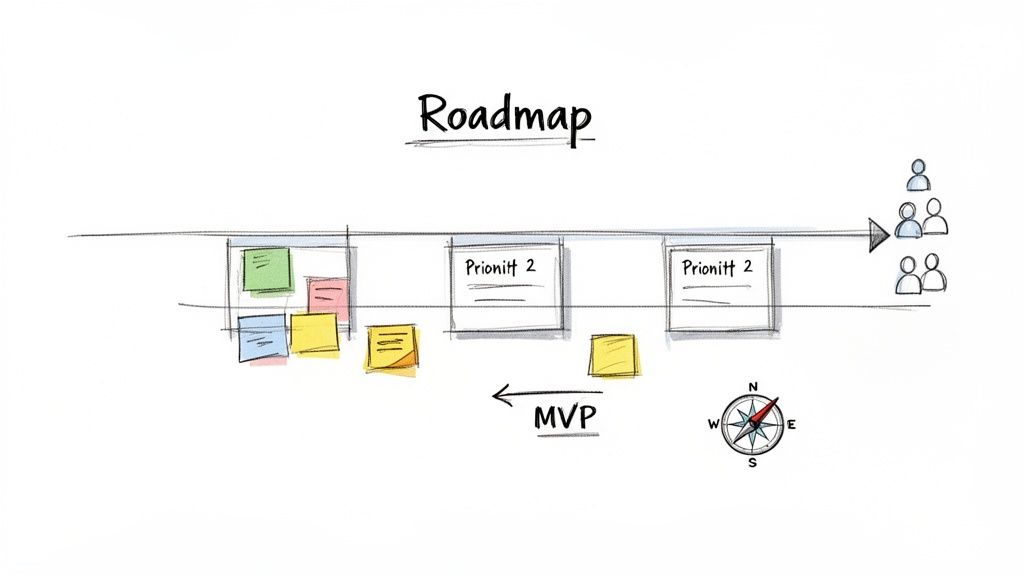
People arrive at product management from marketing, engineering, sales, and operations. A marketer understands acquisition and messaging; an engineer brings technical depth; an operations lead knows how to streamline messy processes. Those varied perspectives are exactly what builds good products.
Why It Suits Career Changers
Success in product management hinges on influence, prioritisation, and clear communication rather than a linear pedigree. The ability to empathise with users, align stakeholders, and make data-informed decisions matters more than a specific background. Many companies run Associate Product Manager (APM) programs designed to train high-potential candidates from non-traditional routes.
Why it pairs with a four-day week: A PM's week is dominated by meetings and context-switching. A dedicated day for strategic thinking — roadmap work, customer synthesis, writing — is where the higher-leverage decisions actually get made.
Actionable Next Steps
- Study the fundamentals. Read the essentials — Inspired by Marty Cagan and The Lean Product Playbook by Dan Olsen — to build a theoretical base.
- Develop analytical skills. Learn the basics of SQL and product analytics tools like Amplitude or Mixpanel so you can make and defend data-driven calls.
- Practise the craft. Learn to write clear Product Requirements Documents and work with frameworks like Jobs to be Done, OKRs, and Design Thinking.
- Target entry-level roles. Associate Product Manager programs at larger tech companies are an excellent way in.
- Gain adjacent experience. Roles in product marketing, customer success, or data analysis build relevant skills and can lead to an internal move.
For a closely related path, see the Product Owner career guide.
5. Content Strategist / Content Manager
Content strategists are the planners behind a company's digital voice. They build plans that align content — blogs, social, video, guides — with business goals, blending marketing, SEO, and storytelling. The role rewards communication and analytical skill, both highly transferable from journalism, education, and PR.
If you come from one of those fields, you can already research, write compellingly, and read an audience. A former journalist excels at interviewing experts for case studies; a teacher can break complex topics into digestible posts. The technical layer — SEO tools, analytics platforms — comes through courses and on-the-job practice.
Why It Suits Career Changers
This field values a portfolio of writing and strategy over a specific degree. Build sample content, run a personal blog, or freelance for small businesses to show your range. Plenty of companies have grown on the back of high-quality content, which proves strategic communication is a core function, not a support task.
Why it pairs with a four-day week: Content strategy needs deep work — strategic planning, long-form writing, in-depth SEO analysis. A protected day without constant context-switching is where the substantive output happens.
Actionable Next Steps
- Build your portfolio. Create three to five strong samples — blog posts, a case study, a sample content strategy document for a fictional company.
- Master SEO fundamentals. Learn keyword research with a tool like Ahrefs or Semrush, on-page optimisation, and the basics of technical SEO. Courses from Moz or Ahrefs are good starting points.
- Understand the metrics. Get comfortable with Google Analytics to track traffic, engagement, and conversions. Reporting on content ROI is a critical skill.
- Learn a framework. A simple, durable model: gather, analyse, plan, create, deliver, measure.
- Network with marketers. Join marketing communities on Slack, connect with content managers on LinkedIn, and ask about coordinator-level roles to get a foot in.
6. Customer Success Manager
Customer Success Managers (CSMs) are strategic partners who help clients get real value from a product. They build long-term relationships, advocate for the customer inside the company, and drive retention, adoption, and expansion. The role draws on relationship management and problem-solving rather than a specific degree.
People from customer service, sales, account management, and project management transition smoothly. A support background gives deep empathy for customer pain; sales or account management provides a foundation in managing relationships and spotting growth. The core of the job is proactive engagement, not reactive firefighting.
Why It Suits Career Changers
This field values emotional intelligence, communication, and strategic thinking alongside technical knowledge. Your ability to build rapport and guide customers to success matters more than knowing how to code. Many SaaS companies hire CSMs from varied backgrounds, recognising that strong interpersonal skills are the hardest to teach. The transition usually means learning a specific product and a customer success methodology, achievable on the job or through certification.
Why it pairs with a four-day week: High-touch, relationship-driven work carries a real burnout risk. A four-day rhythm gives CSMs room to decompress while still leaving focused time for success planning and proactive check-ins.
Actionable Next Steps
- Master the metrics. Learn the key SaaS numbers — Net Revenue Retention, churn rate, Customer Lifetime Value — so you can articulate your value.
- Develop deep product knowledge. Pick a SaaS product you admire and learn it inside-out. Product expertise is non-negotiable for a strong CSM.
- Learn the tools. Get proficient with CRM software like Salesforce and customer success platforms like Gainsight or Catalyst. Many offer free training.
- Build a proactive mindset. Practise writing customer success plans — for a company you know, outline the first 90 days for a new client and where the upsell opportunities sit.
You can browse open customer success roles to see what employers are asking for.
7. Full-Stack Developer
Full-stack developers build complete web applications end to end, handling both the frontend (the user-facing interface) and the backend (server, logic, database) with languages like JavaScript and Python and frameworks such as React or Django. The role rewards logical thinking and a genuine appetite for building.
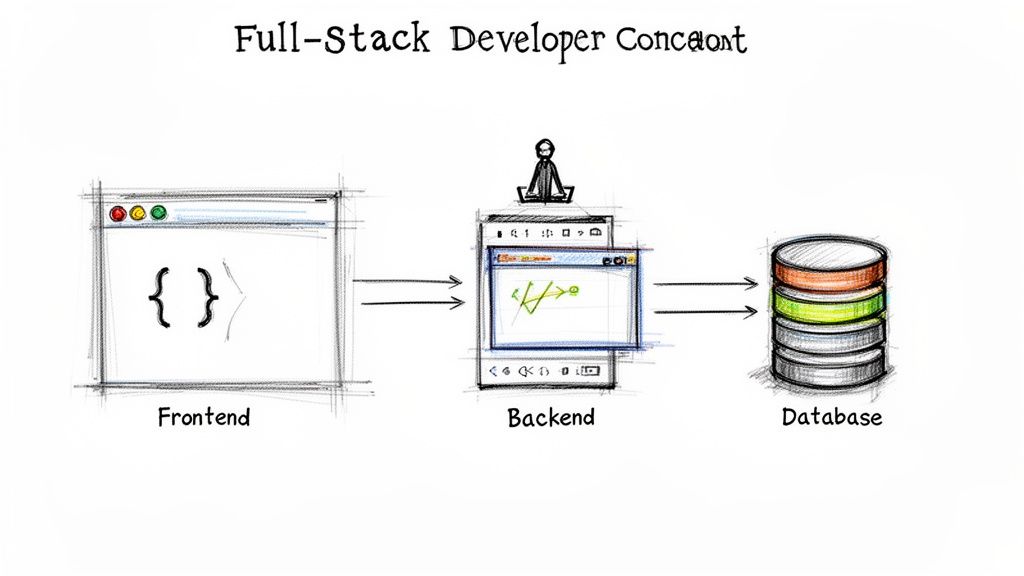
Whether you are an analyst with strong problem-solving instincts or a designer learning to bring your work to life, the path is well-defined. Demand for developers is consistently high, and the industry is known for valuing a strong portfolio over a traditional computer science degree.
Why It Suits Career Changers
The tech industry cares more about what you can build than where you studied. Intensive coding bootcamps offer a structured route to job-ready skills in three to six months. The project-based model means you finish with a portfolio that demonstrates your abilities directly to employers, smoothing the transition from a previous career.
Why it pairs with a four-day week: Writing good software requires deep, uninterrupted focus. A full day for rest and personal projects tends to produce higher-quality code and lower burnout — which is why reduced-hours schedules suit engineering teams well.
Work-Life Balance Jobs with Genuinely Reduced Hours
Save one to come back to it — it's free.

Actionable Next Steps
- Choose a reputable bootcamp. Programs known for strong outcomes — Codesmith, Hack Reactor, General Assembly — provide structured learning and career support.
- Build your portfolio. Create three to five real-world projects covering both frontend and backend. Go beyond tutorials and build something you care about.
- Master foundational tech. Start with HTML, CSS, and JavaScript, then focus on a modern stack such as MERN (MongoDB, Express, React, Node.js).
- Learn version control. Proficiency in Git and GitHub is non-negotiable. Contributing to an open-source project shows you can collaborate on a real codebase.
- Practise for interviews. Use platforms like LeetCode and HackerRank to sharpen problem-solving for the technical interviews common in hiring.
8. QA Engineer / Quality Assurance Specialist
QA engineers are the guardians of product quality. They test software, websites, and applications to find and fix bugs before they reach users — designing test plans, running manual and automated tests, and working closely with developers. The role offers a structured entry into tech that does not initially demand deep coding knowledge.
People from detail-oriented backgrounds — customer support, IT operations, project coordination — have a natural advantage. A support specialist already understands user pain points and common issues; an IT professional brings a systematic mindset. Those analytical, user-centric skills transfer directly, and the technical side of QA can be learned through dedicated training.
Why It Suits Career Changers
The path into QA often starts with manual testing, which relies on critical thinking and attention to detail more than programming. That gives you a practical way to learn a product inside-out before advancing into more technical automation roles. Many teams value the fresh perspective of a career changer who can spot issues a developer, deep in the code, might miss.
Why it pairs with a four-day week: QA work is typically sprint-based, with clear testing cycles that map neatly onto a four-day rhythm. The freed-up time is well spent learning a new automation framework or testing tool.
Actionable Next Steps
- Master the fundamentals. Learn manual testing methods, how to write clear test cases, and how to document bugs effectively in a tool like Jira.
- Learn core tools. Get hands-on with API testing tools like Postman and with browser developer tools — both essential for modern testing.
- Progress to automation. Start learning a language like Python or JavaScript and an automation framework such as Selenium or Cypress. This meaningfully raises your earning potential.
- Build a practical portfolio. Create a small project where you document test cases, report bugs, and write a few automated test scripts.
9. Project Manager / Scrum Master
Project Managers and Scrum Masters are the organisational anchors of a team, guiding work from conception to completion — managing timelines, budgets, resources, and communication. A Project Manager may use methodologies like Waterfall or Agile; a Scrum Master is a specialised role focused on facilitating a team using the Scrum framework. Both rely heavily on transferable soft skills: organisation, communication, leadership.
People from event planning, operations, and even military logistics transition smoothly. Experience coordinating complex activities and managing stakeholders applies directly. The core function is not technical execution but enabling the team to execute — an accessible entry point into tech, construction, or consulting without being a subject-matter expert on day one.
Why It Suits Career Changers
Certifications, rather than degrees, often open the first door. A short course toward a Certified Scrum Master (CSM) or a Certified Associate in Project Management (CAPM) provides the foundational knowledge and credential to land an entry-level role. The pay is healthy: the BLS reports a May 2024 median wage of $100,750 for project management specialists, with 6% projected growth through 2034 and roughly 78,200 openings a year.
Why it pairs with a four-day week: A leaner meeting load frees a full day for the work that genuinely improves delivery — strategic planning, risk assessment, process improvement.
Actionable Next Steps
- Earn a foundational certification. Start with the CSM to enter the Agile world, or the CAPM for a broader introduction. Both are quick wins that lift your CV.
- Master the tools. Get proficient with industry-standard software like Jira, Asana, and Trello. Build sample projects to show you can manage roadmaps, backlogs, and progress.
- Learn the frameworks. Go beyond the certificate — read foundational texts on Agile and Scrum and understand the principles, not just the ceremonies.
- Reframe your past. That event you planned had a budget, a timeline, and stakeholders. That launch you coordinated was a project with clear deliverables. Make those explicit on your CV.
10. Remote Customer Support / Support Engineer
Remote Customer Support specialists and Support Engineers are the frontline problem-solvers for a company's product. They help customers by email, chat, and phone, resolving issues and protecting the user experience. It is one of the most accessible gateways into tech for people who value empathy and communication.
People from hospitality, retail, teaching, and administrative backgrounds often thrive here. Experience managing expectations, communicating clearly, and solving problems in real time transfers directly. Customer support focuses on general assistance; a support engineer role adds a technical layer — troubleshooting and basic code analysis — that can be learned on the job or through short courses.
Why It Suits Career Changers
This field often values patience and empathy as much as technical expertise, which makes it genuinely accessible. Many companies hire for aptitude and train for product knowledge. The growth trajectory is clear too: you can advance to senior support, move into support engineering, or pivot into QA, product management, or customer success.
Why it pairs with a four-day week: Customer-facing work carries a steady burnout risk. An extra day to decompress and recharge makes the role far more sustainable over the long term.
Actionable Next Steps
- Master communication. Practise writing clear, concise, empathetic responses to common complaints. Tone and clarity are everything.
- Learn the tools. Get familiar with help desk software like Zendesk, Intercom, or Help Scout. Many offer free trials.
- Develop a troubleshooting mindset. Learn to diagnose systematically: replicate the issue, isolate variables, document each step.
- Gain product expertise. Pick a product you admire, study its help docs, and practise answering questions as if you were the support agent.
Quick Comparison: Ten Roles for Career Changers
Salary ranges below reflect typical market spreads for these roles; the U.S. median figures cited in each section come from the Bureau of Labor Statistics.
| Role | Entry difficulty | Typical training | Pay range (US) | Best fit for |
|---|---|---|---|---|
| UX/UI Designer | Moderate | Bootcamp 3–6 mo, or 6–12 mo self-study | $60k–$120k+ | Graphic design, marketing, psychology |
| Data Analyst | Moderate | Bootcamp / cert 3–6 mo | $60k–$110k+ | Finance, marketing, operations |
| Technical Writer | Low–Moderate | Self-study or short certificate 1–3 mo | $70k–$120k+ | Journalists, educators, marketers |
| Product Manager | High | APM program, or 1–3 yr role transition | $100k–$200k+ | Marketing, ops, design, engineering |
| Content Strategist | Moderate | Self-study or certificates 2–6 mo | $60k–$110k+ | Journalists, marketers, communicators |
| Customer Success Manager | Moderate | Transition from related roles 6–12 mo | $55k–$100k+ | Customer service, sales, account management |
| Full-Stack Developer | High | Bootcamp 3–6 mo, or 6–12 mo self-study | $80k–$160k+ | Technical fields, bootcamp graduates |
| QA Engineer | Low–Moderate | Online courses / bootcamp 3–6 mo | $60k–$110k+ | Support, IT, operations |
| Project Manager / Scrum Master | Moderate | CSM / CAPM, or 1–2 yr transition | $65k–$120k+ | Operations, event planning, business analysis |
| Remote Customer Support | Low | On-the-job training | $45k–$80k+ | Retail, hospitality, teaching |
Your Career Change Starts Now
A career change can feel like standing at the base of a mountain with the summit lost in cloud. It is a real undertaking — but the path is more accessible and better defined than it has ever been. The roles in this guide are gateways to modern, flexible, fulfilling work, and they reflect a labour market that increasingly values transferable skills over rigid career histories.
Your past experience is not something to discard or downplay. It is the foundation you build on. The communication skills you honed as a teacher matter for a Product Manager. The analytical rigour you developed in finance is exactly the mindset a Data Analyst needs. The empathy you built in customer service is a UX Designer's secret weapon. Recognising and articulating those connections is the first, most important step.
From Aspiration to Action
Reading is a start; progress comes from doing. The move from "aspiring career changer" to "newly hired professional" is built on small, deliberate steps. Don't try to do everything at once — work through a structured, phased approach instead.
-
Identify your top two roles. Pick the one or two positions that genuinely excite you and align with your strengths. Focus prevents analysis paralysis. Ask: which role's daily tasks sound engaging? Which one leans on skills I already enjoy using?
-
Run an honest skills-gap analysis. For each chosen role, make a two-column list — required skills (from this guide and from real job descriptions) on one side, your existing transferable skills on the other. The gaps you need to close will be obvious immediately.
-
Start micro-learning. You don't need a full degree to begin. Commit to one high-quality introductory course on a platform like Coursera or Udemy, or a specialised bootcamp. The goal is not just to learn but to produce a small portfolio project — a UX case study, a data dashboard, a basic web app — that makes your skills tangible.
-
Rebrand your professional narrative. Refresh your CV, career-change cover letter, and LinkedIn profile. Treat them as marketing tools for your future self, not historical records. Use a strong career-change resume to rephrase past accomplishments in the language of your target role. Instead of "Managed retail store operations," write "Analysed customer purchasing data to optimise product placement and lift sales by 15%" — a natural fit for a Data Analyst.
-
Network with intent. Don't add connections at random. Find people on LinkedIn who hold the title you want and who also changed careers. Send a personalised request mentioning your shared path, and ask for a brief fifteen-minute chat. People are often generous with their time when they recognise their own past in someone else.
The Mindset That Carries You Through
The most important ingredient is mindset. Embrace curiosity, resilience, and a commitment to lifelong learning. The best destinations for career changers are fields that keep evolving — and that constant change levels the playing field, because your ability to learn quickly outweighs decades of experience in a static industry.
Treat every application, interview, and even rejection as a data point. What worked? What didn't? How do you refine the next attempt? That iterative loop is how good products get built — and it is the right framework for building a new career. Your journey starts not when you accept an offer, but the moment you decide to take the first deliberate step. The roles are out there, the employers are more open than ever, and a healthier way of working is genuinely within reach.




Get 4-day week jobs in your inbox
Create a free account to receive curated opportunities weekly.
Sign up for freeFree forever. No spam, unsubscribe anytime.