
High pay and remote work are no longer a trade-off. A decade ago, the biggest salaries were tied to a desk in an expensive city. Today, some of the best-compensated roles in tech, design, marketing, and operations are done from anywhere — and a growing number of the companies hiring for them have also dropped to a four-day week.
That combination is the real prize. A six-figure salary matters, but so does what you give up to earn it. The roles below pay well and are structured around output rather than hours-at-a-desk, which is exactly what makes them portable to remote and flexible schedules.
This guide covers ten high-earning remote careers. For each one you'll find a realistic pay benchmark anchored to public data, why the work suits a distributed or four-day setup, and a concrete way to move toward it. Salary figures are U.S. medians from the Bureau of Labor Statistics May 2024 Occupational Employment and Wage Statistics where a clean occupational match exists; where the job title is an industry role the BLS does not track separately, the range is drawn from current market salary data and labelled as such. Treat every number as a benchmark, not a quote — your offer depends on seniority, location, and company.
A note on salary numbers
Job-title salary claims float around the internet with no source attached, and they are often inflated. This guide keeps two things separate:
- BLS medians — the U.S. government's wage survey. These are conservative, well-defined occupations, and they are the most trustworthy benchmark available.
- Market estimates — for newer or industry-specific titles (Product Manager, DevOps Engineer, Customer Success Manager) the BLS has no matching occupation. Here the range comes from aggregators like Glassdoor, Levels.fyi, and RepVue, which lean toward self-reported tech-sector pay and skew higher than a true national median.
When a role spans both, the BLS figure is the floor and the market figure shows what specialists at well-funded companies actually command.
1. Senior Software Engineer
Senior software engineers design, build, and maintain the systems a business runs on. Beyond writing code, they set technical direction, review others' work, and make the architecture decisions that are expensive to get wrong.
The BLS reports a median annual wage of $133,080 for software developers as of May 2024, with the top 10% earning more than $211,450 (BLS, Software Developers). Senior and staff engineers at well-funded tech companies sit at the upper end of that distribution, and total compensation including equity can run higher still. The same BLS data projects 15% employment growth for the occupation from 2024 to 2034 — much faster than average — driven by AI, automation, and continued software demand.
Why it suits remote and four-day work
Senior engineering is deep-focus work. Architecture and complex problem-solving benefit from long uninterrupted blocks, which are easier to protect in a remote setting than in an open office. Fully distributed companies like Automattic (the company behind WordPress.com) and GitLab have run engineering teams remote-first for years. Buffer went further, making a 32-hour four-day week permanent after a successful trial — 91% of its team reported being happier on the shorter schedule.
How to position yourself
Lead with architectural impact, not a list of languages. In interviews, explain why you made a technical choice and quantify the result — a latency reduction, a cost saving, an outage avoided. Distributed teams also weigh asynchronous skill heavily, so show evidence of clear written design docs and decisions made without a meeting. Mentorship matters too: code review and levelling up junior engineers prove you can lift a team from anywhere.
The strongest remote senior engineers are not just strong coders — they are clear writers and decisive communicators who move work forward with minimal supervision.
2. Product Manager
Product managers sit between business goals, user needs, and engineering. They own the roadmap, decide what gets built next, and are measured by whether the product succeeds — not by hours logged.
The BLS does not track "product manager" as a distinct occupation, so there is no government median to cite. Market data from Glassdoor and Levels.fyi puts experienced PM base pay roughly in the $110,000–$160,000 range, with total compensation at large tech companies running well above that. Because this is self-reported tech-sector data, treat it as an indicator of what funded companies pay, not a national average.
Why it suits remote and four-day work
A PM's highest-value work — synthesising research, writing a crisp strategy, prioritising ruthlessly — is thinking work, and thinking work survives a compressed week far better than a calendar packed with status meetings. Replacing standing syncs with written updates and clear decision frameworks (RICE or ICE scoring, for example) lets a strong PM run a team on four focused days.
How to position yourself
Show outcomes, not activity. Adoption, retention, and revenue numbers prove impact; "launched X features" does not. Demonstrate that you can drive a decision in writing — a tight product spec that removes ambiguity is worth more on a distributed team than any meeting. And show you can align engineering, design, and sales around one goal without being in the same room.
3. UX/UI Designer
UX/UI designers shape how people interact with a product — running research, building wireframes and prototypes, and turning user needs into interfaces that work.
For a public benchmark, the closest BLS occupation is web and digital interface designers, with a median annual wage of $98,090 as of May 2024 (BLS, Web Developers and Digital Designers). Senior product designers and UX specialists at tech companies typically earn above that median; the BLS figure is a reasonable floor rather than a ceiling.

Why it suits remote and four-day work
Design output is judged by quality, not desk time. Journey mapping and interface work need consolidated, quiet hours — fragment a designer's week with meetings and the work suffers. A remote or compressed schedule protects exactly the focus the craft depends on.
How to position yourself
Build a portfolio that shows your process, not just polished final screens — research findings, user flows, wireframes, the dead ends you discarded. Get fluent with asynchronous feedback in Figma so reviews don't require a live call. Tie design decisions to evidence: analytics, A/B tests, usability findings. And highlight any design-system work, which signals you can keep a team consistent and fast.
4. Data Analyst / Data Engineer
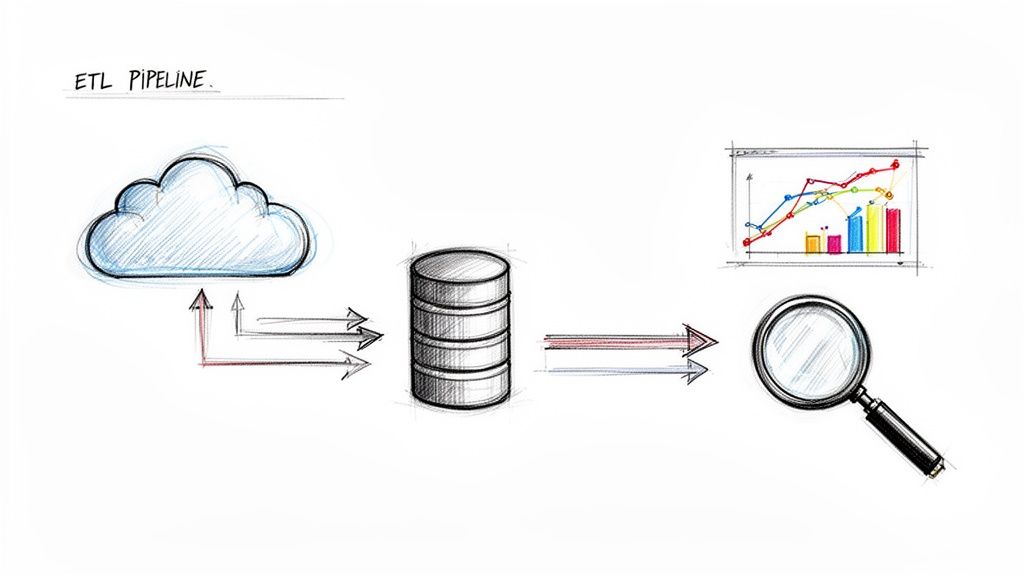
Data professionals turn raw data into decisions — building pipelines, models, and dashboards, and answering the questions a business actually needs answered.
The BLS reports a median annual wage of $112,590 for data scientists as of May 2024, with the top 10% above $194,410 (BLS, Data Scientists). It is one of the fastest-growing occupations the BLS tracks, projected to grow 34% from 2024 to 2034. Data engineering roles, which lean heavily on software skills, often pay toward the upper part of that band.
Why it suits remote and four-day work
Querying data, building models, and developing visualisations are self-directed, project-based tasks that thrive on deep focus. The value is in the clarity of the finding, not the hours at the desk — which makes the work naturally portable to asynchronous, remote, and compressed schedules.
How to position yourself
Build an end-to-end portfolio: extraction, cleaning, analysis, visualisation, and a plain-English statement of the business value. Before reaching for Python or R, make sure your SQL and at least one BI tool (Tableau or Power BI) are genuinely strong — those are the daily tools. Show that you automate routine reporting so the business can self-serve, and connect every project to an outcome a non-technical reader cares about.
5. Technical Writer
Technical writers translate complex products into clear documentation — user guides, API references, knowledge bases — that lets customers succeed without contacting support.
The BLS reports a median annual wage of $91,670 for technical writers as of May 2024, with the top 10% above $130,430 (BLS, Technical Writers). Growth is modest at 1% over 2024–2034, but the BLS still projects roughly 4,500 openings a year, and developer-tools companies pay a premium for writers who understand engineering.
Why it suits remote and four-day work
Distilling a complex feature into clear, accurate prose needs sustained concentration, not constant meetings. The work is naturally individual and deadline-driven — a good fit for the quiet blocks a remote or four-day schedule provides.
How to position yourself
Your portfolio is the whole interview — include real API docs, user manuals, and tutorials that show you can structure information logically. Learn docs-as-code tooling (Git, Markdown, a static site generator) so you can work inside engineering workflows rather than alongside them. Show that you gather information from engineers asynchronously, and quantify impact: fewer support tickets, faster onboarding, measurable adoption of the docs.
6. Content Marketing Manager / Strategist
Content marketing managers build and run the content engine — strategy, editorial calendar, and execution across blog, video, and other formats — to drive traffic, leads, and brand authority.
There is no clean BLS occupation for this role; the broader advertising, promotions, and marketing managers category had a high median wage in May 2024 and is projected to grow 6% through 2034 (BLS, Advertising, Promotions, and Marketing Managers). Specialist content strategists usually earn somewhat below that broad management median; a working estimate for experienced individual contributors is roughly $75,000–$120,000, depending on company size and industry.
Why it suits remote and four-day work
Content work is project-based and outcome-driven. The strategic core — research, planning, creative development — benefits from focus, and a well-built content calendar plus repurposing workflow lets a small team produce consistently on four days.
How to position yourself
Lead with strategic impact: case studies showing how content moved a business metric — leads, rankings, acquisition — not just a list of posts published. Show the systems you build (calendars, templates, asset management) that let a team collaborate without constant syncs. And demonstrate repurposing: turning one strong idea into a blog post, a talk, social clips, and a guide is what efficiency looks like in practice.
7. DevOps Engineer / Site Reliability Engineer
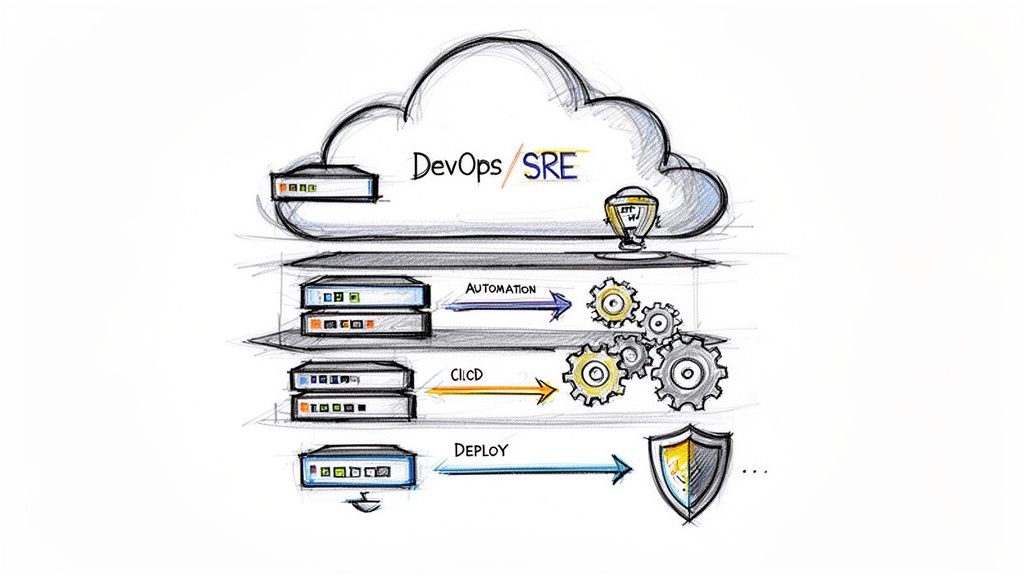
DevOps engineers and SREs keep software infrastructure scalable, reliable, and shipping. They build the CI/CD pipelines behind fast releases and own automation, monitoring, and infrastructure-as-code.
The BLS does not track DevOps as a standalone occupation. Market data is consistent that it pays well above the general software median: Glassdoor and Levels.fyi both put typical DevOps pay around or above $140,000–$170,000, with senior engineers higher. As self-reported tech data, this reflects funded-company pay rather than a national median.
Why it suits remote and four-day work
The whole point of good DevOps work is building resilient, automated systems that need less manual intervention. Done well, it reduces emergencies rather than creating them — which makes it a better fit for a compressed week than its on-call reputation suggests. Documented playbooks and asynchronous incident communication are now standard practice on distributed teams.
How to position yourself
Quantify automation impact in concrete terms — "cut build time 40%", "automated 95% of provisioning". Show you can run incident response across time zones with playbooks rather than heroics. A public GitHub with real infrastructure-as-code projects (Terraform, Ansible, CloudFormation) is strong evidence, and framing your work around uptime and efficiency proves you understand the business case, not just the tooling.
Remote Jobs with a Great Work-Life Balance
Save one to come back to it — it's free.

8. Customer Success Manager
Customer Success Managers (CSMs) make sure customers actually get value from a product, driving retention and expansion revenue. In SaaS especially, this is a strategic role, not a support queue.
A caution on salary: this role is easy to confuse with "customer service representative", which the BLS reports at a median wage of $20.59/hour — roughly $43,000 a year (BLS, Customer Service Representatives). That is a different job. The CSM role tracked by salary aggregators is far better paid: RepVue reports a median CSM base salary around $106,000 with median on-target earnings (base plus variable) around $150,000. A reasonable base range for experienced CSMs is $80,000–$130,000.
Why it suits remote and four-day work
Strong customer relationships are built on consistent, proactive value — quarterly business reviews, health-score monitoring, well-timed check-ins — not on being reachable every minute. That cadence suits a focused, scheduled week.
How to position yourself
Quantify revenue impact: retention improvements and expansion revenue you've driven make you a revenue-critical hire, not a cost centre. Show the scalable systems you build — resource libraries, health-scoring dashboards, communication templates — that let you manage a large book of accounts without being chained to a desk. And set clear scheduling expectations with customers, which demonstrates you can protect a four-day week while keeping service excellent.
9. SEO Specialist / Growth Marketer
SEO specialists and growth marketers drive online traffic and turn visitors into customers — analysing data, optimising content, and running experiments to grow visibility and revenue.
This is another role without a dedicated BLS occupation; it overlaps with marketing analyst and marketing manager categories. A working estimate for experienced individual contributors is roughly $70,000–$120,000, varying with company size and whether the role carries management responsibility. Senior growth roles at well-funded companies sit at the top of that band.
Why it suits remote and four-day work
Growth work is measured by clear outcomes — traffic, leads, conversion rate — not desk time. It is research-heavy, experiment-driven, and report-oriented, which maps cleanly onto asynchronous collaboration. Physical presence adds little.
How to position yourself
Build a results-first portfolio with concrete metrics — "grew organic traffic 150% in six months, lifting qualified leads 40%" beats "managed SEO". Show genuine depth in the analytics stack (Google Analytics, Ahrefs, SEMrush, testing tools). And present a structured experimentation method — how you hypothesise, test, and iterate — so employers see a repeatable system, not one lucky campaign.
10. HR Manager / People Operations Specialist
HR managers and People Operations specialists own the employee experience — recruitment, employee relations, benefits, and organisational development. In a distributed company these roles become strategic, because culture no longer happens by proximity.
The BLS reports a median annual wage of $140,030 for human resources managers as of May 2024 (BLS, Human Resources Managers). Individual-contributor People Ops specialists earn less than that manager-level median; the manager figure is the benchmark for the senior end of this track.
Why it suits remote and four-day work
People Ops is largely systems work — hiring pipelines, onboarding programmes, policy documentation — and systems run asynchronously. A People Ops specialist's value shows up in organisational health and process quality, both of which a remote or compressed schedule supports rather than hinders.
How to position yourself
Show fluency with HRIS platforms (BambooHR, Workday) and the automation you've built to cut manual administration. Demonstrate asynchronous culture-building — onboarding programmes and communication frameworks that work across time zones. Quantify outcomes: retention, time-to-hire, employee net promoter score. And highlight documentation — clear handbooks and policy guides that let employees self-serve are the backbone of remote HR.
The ten roles at a glance
| Role | Salary benchmark | Source of figure | Why it travels to remote / 4-day work |
|---|---|---|---|
| Senior Software Engineer | ~$133k median (developers) | BLS May 2024 | Deep-focus architecture work; output-measured |
| Product Manager | ~$110k–$160k base | Market data (Glassdoor, Levels.fyi) | Strategy and prioritisation survive a compressed week |
| UX/UI Designer | ~$98k median (web/digital designers) | BLS May 2024 | Design quality needs consolidated focus time |
| Data Analyst / Engineer | ~$113k median (data scientists) | BLS May 2024 | Self-directed, project-based, deep-focus tasks |
| Technical Writer | ~$92k median | BLS May 2024 | Clear writing needs quiet, uninterrupted blocks |
| Content Marketing Manager | ~$75k–$120k | Market estimate | Project-based; calendars and repurposing enable 4 days |
| DevOps / SRE | ~$140k–$170k | Market data (Glassdoor, Levels.fyi) | Automation reduces emergencies; playbook-driven |
| Customer Success Manager | ~$80k–$130k base | Market data (RepVue) | Value is proactive cadence, not constant availability |
| SEO / Growth Marketer | ~$70k–$120k | Market estimate | Outcome-measured; experiment- and report-driven |
| HR / People Ops | ~$140k median (HR managers) | BLS May 2024 | Systems work runs asynchronously |
What these roles have in common
Look past the job titles and one pattern runs through every role on this list: each is measured by output, not presence. That is the single trait that makes a job portable to remote and four-day work. When a company can judge your contribution by what you ship — a system, a roadmap, a working pipeline, a renewed account — the question of where and when you did it largely disappears.
This is not just a logistical shift. The evidence increasingly says focused, deep work beats long hours. A Stanford-led randomised trial of more than 1,600 employees found hybrid work had no negative effect on productivity or promotions and cut quit rates by about a third (Stanford, hybrid work study). And in the UK's 2022 four-day-week pilot — the largest of its kind, covering 61 organisations and around 2,900 workers — 71% of employees reported reduced burnout while company revenue held broadly steady; 56 of the 61 organisations chose to continue afterward (4 Day Week Global, UK pilot results).
Turning this into a job offer
Three moves give you the best shot at one of these roles:
-
Make impact your currency. Rewrite your resume and interview answers around results, not responsibilities. How much revenue, how much cost saved, how much faster — every claim should carry a number. The STAR structure (Situation, Task, Action, Result) keeps those stories tight.
-
Specialise rather than generalise. The top of every salary band belongs to people who solve a specific, high-stakes problem well — a niche, a platform, a domain. Pick the in-demand skills inside your target role and go deep.
-
Prove you can work asynchronously. High-paying remote roles run on clear writing and self-direction. Show you can document a process, post a crisp written update, and move a project without constant oversight — that is the skill remote employers are really screening for.
A practical first step: pick your top two or three target roles, list the skills each requires against what you have today, and build a plan to close the gaps — through courses, certifications, or real projects you can point to. Then make sure your application materials and portfolio show that evidence rather than just asserting it.
The pursuit of a high-paying remote job is, in the end, a pursuit of a high-value life — a career that funds what matters to you, respects your time, and lets you decide where and when the work gets done. If you want to see which companies are hiring on these terms right now, browse remote and four-day-week roles or explore the companies offering a four-day week. The work is well-paid, the schedules are humane, and both are more available than they were even a year ago.




Get 4-day week jobs in your inbox
Create a free account to receive curated opportunities weekly.
Sign up for freeFree forever. No spam, unsubscribe anytime.