
There is a particular kind of unhappy worker who is easy to miss. They have not quit. They have not even really checked out. They show up, they do the job, and underneath it all they quietly resent every minute of it, staying only because leaving feels impossible.
That is resenteeism. It is one of the quieter, sadder workplace states, and in a world of expensive rents and uncertain job markets, it is spreading. Here is what it is, why it happens, how it differs from its better-known cousins, and how to get unstuck.
What is resenteeism?
Resenteeism is the state of staying in a job you are fundamentally unhappy in, usually because you feel you cannot afford to leave, while quietly building up resentment toward it.
The word is a blend of "resentment" and "presenteeism", and it captures something specific: not the drama of quitting, not the deliberate pullback of quiet quitting, but the slow burn of staying somewhere you no longer want to be and resenting it more with every passing month.
The term was coined by the workforce-management company RotaCloud, and it gained traction after the pandemic. As the Great Resignation gave way to a cost-of-living squeeze and a cooler job market, the calculus flipped. Leaving felt risky. So a lot of people who might once have walked simply stayed instead, unhappily, and resenteeism was the result: trapped by circumstance, unhappy in place, and quietly seething.
Resenteeism vs quiet quitting vs presenteeism
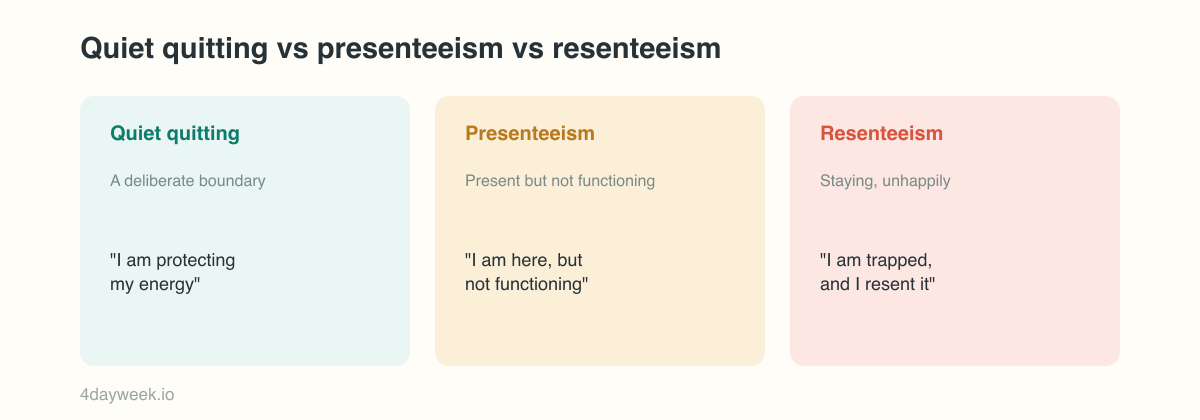
Resenteeism is often confused with its neighbours, but the distinction is about the underlying feeling.
| What it is | The core feeling | |
|---|---|---|
| Quiet quitting | Doing the job and no more, a deliberate boundary | "I am protecting my energy" |
| Presenteeism | Being physically present but unwell or unproductive | "I am here, but not functioning" |
| Resenteeism | Staying, unhappily, in a job you resent | "I am trapped, and I resent it" |
The defining feature of resenteeism is the resentment born of feeling stuck. A quiet quitter has made a conscious choice and may be quite content with it. Someone with presenteeism is struggling to function. A resenteeist is often still doing the work, but doing it while quietly bitter, staying not because they want to but because they feel they have to.
The signs of resenteeism
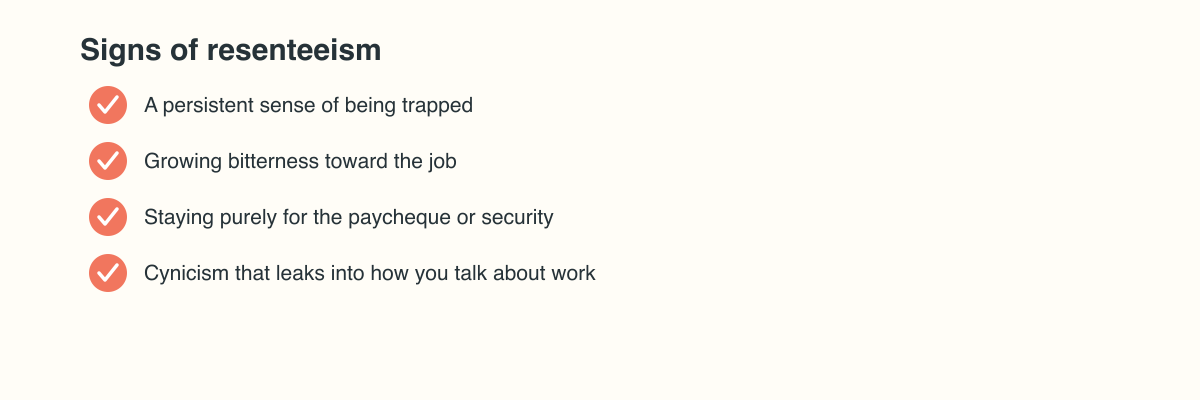
Resenteeism can be hard to spot, because the person often keeps performing. Some tell-tale signs:
- A persistent sense of being trapped: you want to leave but feel you cannot, financially or practically.
- Growing bitterness toward the job, the company or your manager that colours your whole day.
- Staying purely for the paycheque or security, with no other reason to be there.
- Cynicism and negativity that leaks into how you talk about work, to colleagues and at home.
- A gap between how you act (still doing the job) and how you feel (resentful, disengaged, counting down).
- Fantasising about leaving while feeling powerless to actually do it.
The signature is that combination: still turning up and doing the work, while the resentment quietly builds underneath.
Why resenteeism happens
Resenteeism is usually less about a single terrible job and more about the collision of an unhappy situation with a lack of options.
- Financial pressure. When rent, bills and cost-of-living are high, the security of a steady paycheque can feel too risky to give up, even a paycheque you resent.
- A tough job market. When roles are scarce or hiring is slow, leaving feels like a gamble, so people stay put.
- Golden handcuffs. Good pay, benefits or seniority can bind someone to a job that makes them miserable.
- Fear and inertia. The uncertainty of change can feel scarier than the certainty of being unhappy, so people default to staying.
- An unaddressed unhappiness. Underneath it all is a real problem with the job (a bad manager, no growth, a values mismatch) that has been left to fester rather than confronted.
The result is a trap that is part real and part perceived: genuinely constrained circumstances, made heavier by a feeling of powerlessness that is often more changeable than it seems.
Why it matters
Resenteeism is not a stable place to sit. Left alone, it corrodes.
For the individual, chronic resentment is genuinely bad for wellbeing. Spending forty-plus hours a week somewhere you resent, feeling powerless to change it, wears down mental health, spills into home life, and can harden into a lasting bitterness. It is a slow drain on the parts of life that have nothing to do with work.
For teams, resenteeism spreads. A resentful person radiates it, and negativity is contagious. One quietly bitter colleague can pull down the morale of everyone around them, without anyone quite naming why the mood has soured.
How to break out of resenteeism
The good news buried in resenteeism is that the trap is often looser than it feels. Some ways out:
- Name the resentment honestly. Get specific about what you actually resent: the pay, the manager, the lack of growth, the values. Vague bitterness is paralysing. A named problem can be acted on.
- Fix what is fixable where you are. Sometimes the situation can be improved without leaving: a conversation about progression, a change of team, renegotiated responsibilities. It is worth trying before you write the job off.
- Rebuild your options. Much of the trapped feeling comes from having no alternatives. Quietly updating your CV, building skills, and seeing what is out there can restore a sense of choice, even if you do not leave immediately. Options dissolve the feeling of being stuck.
- Get honest about the finances. Sometimes the "I cannot afford to leave" is real, and sometimes it is fear wearing a spreadsheet. Actually running the numbers can reveal more room than the anxiety suggested.
- Protect your wellbeing in the meantime. If you genuinely must stay for now, set boundaries, invest in your life outside work, and do not let the resentment become your whole identity.
- Remember that trapped is usually temporary. Circumstances change, markets shift, and the job you feel chained to today is rarely a life sentence. The situation is more fluid than resenteeism lets you believe.
Work-Life Balance Jobs with Genuinely Reduced Hours
Save one to come back to it — it's free.



Why employers should worry about resenteeism
It is tempting for an employer to think resenteeism is not their problem. The person is still turning up and still doing the work, so where is the harm? The harm is real, it is just delayed and hidden.
- It is a productivity drain in disguise. A resentful employee does the minimum, contributes no discretionary effort, and brings no energy or ideas. You are paying a full salary for a fraction of the person.
- It poisons the team. Resentment is contagious. One quietly bitter person can pull down the mood and motivation of everyone around them, and a cluster of them can define a culture.
- It is a retention time-bomb. Resenteeism is not stable. The moment the job market improves or circumstances change, your resentful "stayers" become your first leavers, and often your best people go first, because they have the most options.
- It masks fixable problems. Because resenteeism is quiet, it hides the very issues, poor management, no progression, an always-on culture, that are driving it. The feedback you need is sitting silently in your building, unspoken.
The fix for employers is the same as the fix for the individual, addressed from the other side: give people genuine reasons to stay that go beyond the paycheque. Real progression, fair recognition, respect for their time, and a culture worth being part of. When staying is a choice people make gladly rather than a trap they feel caught in, resenteeism has nowhere to grow.
The bigger picture
Resenteeism is what happens when people feel they have no choice but to stay somewhere that makes them unhappy. And while some of that is down to individual circumstance, a lot of it reflects a working world that too often forces a grim choice between security and satisfaction.
It does not have to be that way. The reason resenteeism festers is usually a job that gives people little reason to stay beyond the paycheque: no flexibility, no respect for their time, no sense that the work fits a life. The antidote is work that people actually want to be in. Employers who offer genuine flexibility, reduced hours and a four-day week tend not to breed resenteeism, because they give people something worth staying for that is not just the money.
If you are stuck in a job you resent, the most powerful thing to remember is that the door is usually less locked than it feels. Rebuilding your options, even slowly, is often the first step from resenting where you are to choosing where you go next.
Frequently asked questions
What is resenteeism? Staying in a job you are deeply unhappy in, usually because you feel you cannot afford to leave, while quietly building up resentment toward it. The term blends "resentment" and "presenteeism".
How is resenteeism different from quiet quitting? Quiet quitting is a deliberate choice to do your job and no more, and the person may be content with that boundary. Resenteeism is defined by feeling trapped and resentful: still doing the work, but staying unhappily because leaving feels impossible.
Why is resenteeism becoming more common? It rose after the pandemic gave way to a cost-of-living squeeze and a cooler job market. With leaving feeling riskier, more people stayed put in jobs they were unhappy in, and the resentment of feeling stuck set in.
What are the signs of resenteeism? Feeling trapped, growing bitterness toward the job, staying only for the paycheque, creeping cynicism, and a gap between still doing the work and quietly resenting every minute of it.
How do I get out of resenteeism? Name exactly what you resent, try to fix what is fixable where you are, rebuild your options by updating skills and seeing what is out there, run the real numbers on your finances, and remember that feeling trapped is usually more temporary and changeable than it seems.
Stuck in a job you resent? Browse four-day-week and reduced-hours roles worth staying for on 4dayweek.io.




Get 4-day week jobs in your inbox
Create a free account to receive curated opportunities weekly.
Sign up for freeFree forever. No spam, unsubscribe anytime.