
Nearly 48% of the global workforce now works remotely as of 2026, almost double the number before the pandemic. That shift shows how deeply remote work has reshaped business operations and company culture.
The challenge is clear. A remote setup alone doesn’t guarantee inclusion. Team members across time zones face barriers like accessibility gaps, unconscious bias, and limited face-to-face interaction. Without inclusive workplace practices, these issues hurt employee satisfaction, engagement, and retention.
This guide explains what inclusive remote work really means, why it matters, and the strategies you can use to build stronger, more connected teams.
What Does Inclusive Remote Work Mean?
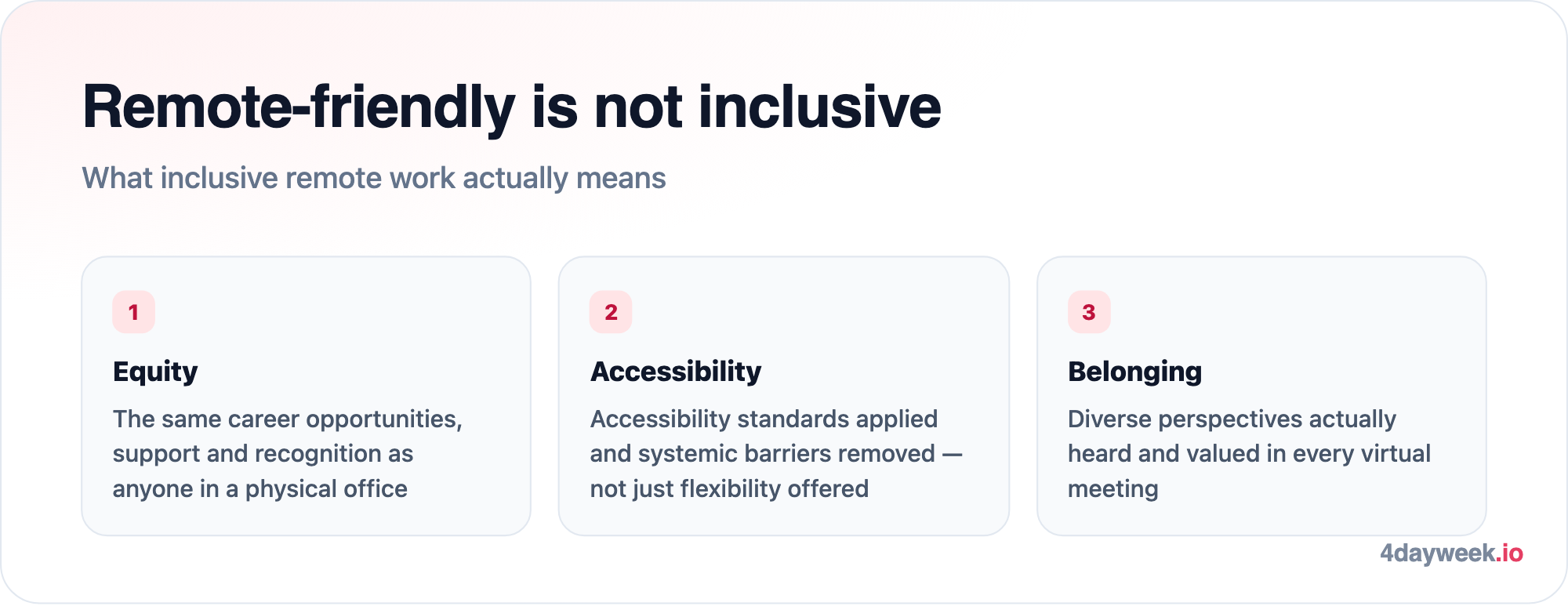
Inclusive remote work goes beyond simply letting people log in from home. It means building a virtual environment where equity, accessibility, and belonging are baked into everyday practices. Team members should feel they have the same career advancement opportunities, support, and recognition as anyone working in a physical office.
A remote-friendly setup just provides flexibility, like video calls or flexible schedules. Whereas a truly inclusive workplace takes it further. It removes systemic barriers, applies accessibility standards, and makes sure diverse perspectives are heard and valued in every virtual meeting.
Why Inclusive Remote Work Matters
Inclusive remote work shapes how companies grow, how teams connect, and how long employees choose to stay.
Let’s break down why it matters.
Expanding Global Talent Pools
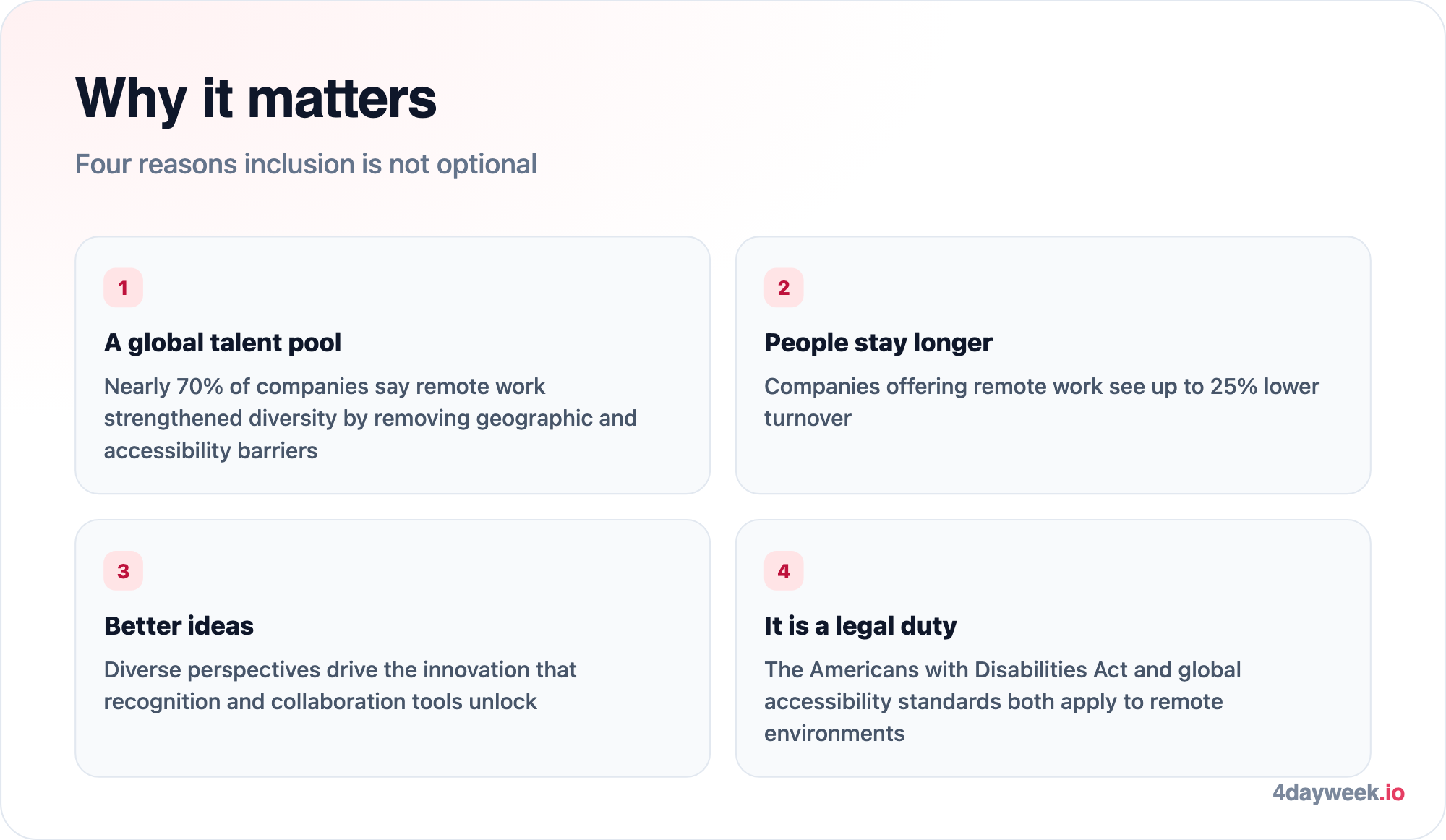
Remote work gives companies the freedom to hire talent anywhere, whether that’s across time zones or across continents. But hiring globally only works when inclusion is part of the plan.
Team members bring different cultures, languages, and perspectives, and they need policies that make them feel welcome. That’s why nearly 70% of companies say remote work has helped strengthen diversity and inclusion by removing geographic and accessibility barriers.
Higher Retention and Lower Turnover
Teams stay together longer when they feel seen, heard, and supported. Remote setups with inclusive communication tools, mentorship programs, and fair recognition lower turnover. Data shows companies offering remote work see up to 25% lower employee turnover.
Productivity and Innovation Benefits
Diverse perspectives fuel better ideas. An inclusive workplace encourages remote collaboration tools, virtual team-building activities, and recognition programs that spark creativity and improve business operations.
Legal and Ethical Responsibilities
Inclusive communication practices aren’t optional. Regulations like the Americans with Disabilities Act (ADA) and global accessibility standards require remote companies to create accessible environments and remove systemic barriers.
10 Key Strategies for Building an Inclusive Remote Work Culture
Now that we’ve seen the impact, let’s dive into the practical methods you can use to create inclusive remote work cultures.
1. Prioritize Accessibility in Digital Tools and Platforms
Virtual meetings and remote sessions only work when everyone can participate without barriers. That means choosing communication tools like Slack channels or Microsoft Teams and video conference technology such as Zoom or Google Meet with built-in captions, transcripts, and screen reader support.
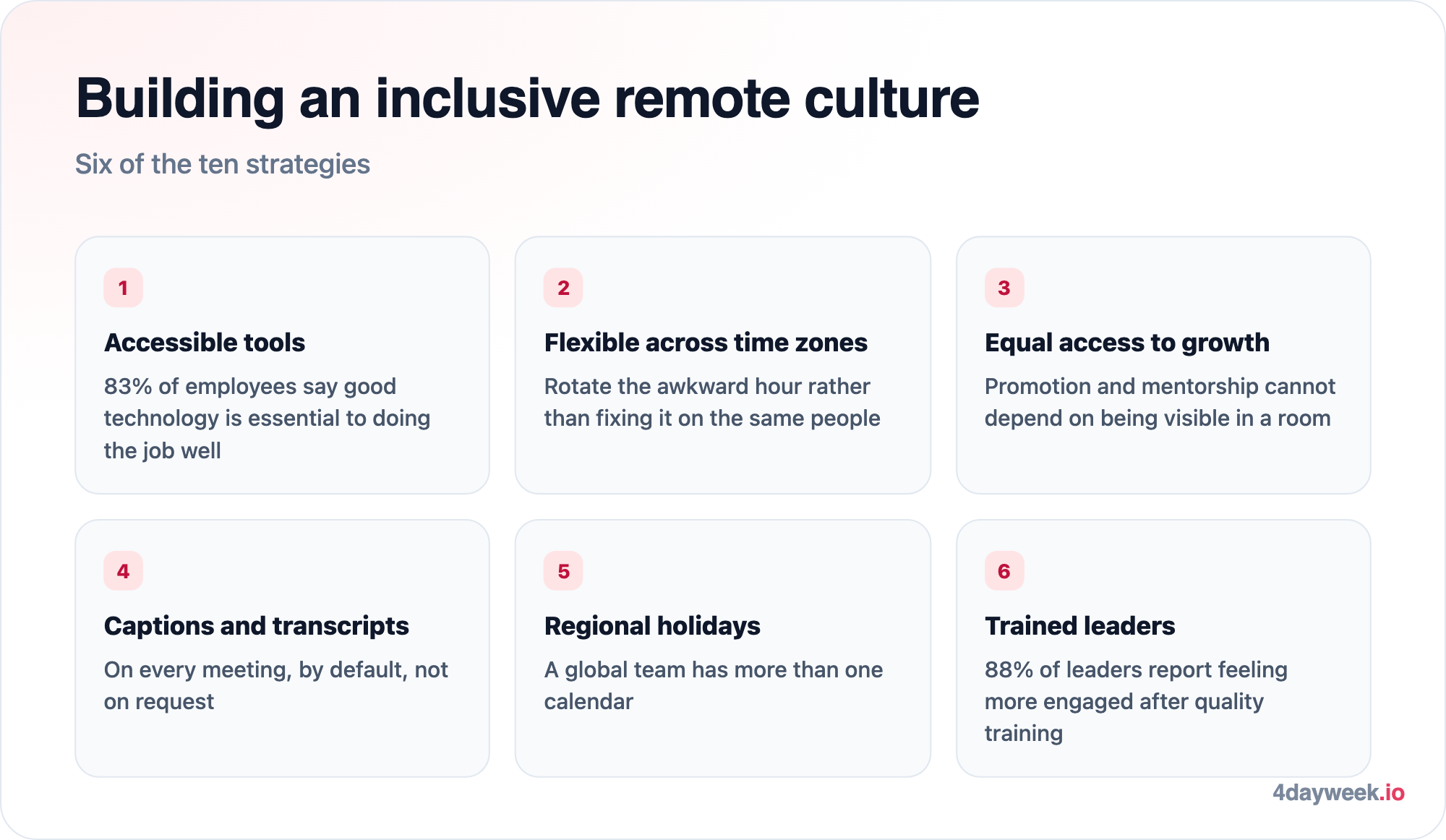
A recent report shows that 83% of employees say having good technology is essential for doing their remote job well. You can add assistive technology so team members with different needs feel supported from the start. When you focus on accessibility, you increase employee satisfaction, strengthen engagement, and create a healthier work environment.
2. Offer Flexible Scheduling Across Time Zones
One of the biggest perks of remote work is hiring talent from around the world. The challenge is time zones. If you expect everyone to join video meetings at 2 a.m. their time, engagement will drop quickly.
You can solve this by offering flexible schedules and leaning on asynchronous collaboration. Use chat platforms, Slack groups, and collaboration software so work continues even when team members aren’t online together. Add virtual knowledge sharing sessions or record video calls so no one misses key updates.
“Building an organization-wide communication strategy that maximizes asynchronous methods brings lasting benefits...workforces see increased productivity, time for deep work, and thoughtful responses, while enabling a more seamless employee experience regardless of location and time zone. These benefits create a more inclusive and supportive environment…” Laurel Farrer, Forbes
Respecting time zones shows real cultural understanding. That effort builds trust, reduces burnout, and improves employee retention across global teams.
3. Provide Equal Access to Career Growth Opportunities
Career advancement shouldn’t depend on where you log in from. In many remote companies, employees outside the headquarters miss out on promotions, mentoring programs, or recognition programs. That gap creates unconscious bias and hurts employee satisfaction.
You can change that by making growth opportunities accessible to everyone. Share clear job descriptions, open mentoring initiatives, and transparent training programs across your virtual environment. Host virtual sessions for skill-building and encourage cross-functional teams to collaborate, so all team members get equal visibility.
When you level the playing field, you strengthen employee engagement and retention.
4. Use Inclusive Language in All Communications
The words you use set the tone for your company culture. Inclusive communication practices help everyone feel respected during virtual meetings, instant messaging, or email etiquette. Avoid discriminatory language in recruitment ads, job descriptions, and daily chat platforms.
You can also provide DEI training or create employee resource groups to guide communication. When you build habits around inclusive language, you reduce unconscious bias and create a virtual environment where every team member feels valued.
“Inclusive language isn’t just about choosing different words. It’s a meaningful way to bring people together, helping us all to understand and respect each other’s unique lives and experiences." Rachel Evans
5. Ensure Meetings Include Captions and Transcripts
Virtual meetings should work for everyone. Captions and transcripts make video calls more accessible for employees with hearing challenges, different language backgrounds, or those who couldn’t attend live.
Most video conferencing tools already offer these features; you only need to enable them. When you treat accessibility as a standard, team members feel included, and communication becomes clearer across your virtual environment.
6. Respect Cultural and Regional Holidays Globally
When your team spans different time zones, cultural celebrations and regional holidays can easily get overlooked. Acknowledging them shows respect and builds stronger connections across your workforce.
You can create shared calendars, highlight events in Slack channels, or encourage virtual team-building activities based on local traditions. Small gestures like these improve employee satisfaction and reinforce a sense of belonging.
When people feel their culture is valued, they’re more engaged and connected to the company culture. In fact, when employees feel they belong, engagement jumps from just 20 percent to 91 percent.
7. Create Structured Onboarding with Accessibility in Mind
Remote Jobs with a Great Work-Life Balance
Save one to come back to it — it's free.



Onboarding should feel like a welcome instead of a hurdle. New hires often juggle unfamiliar systems, virtual communications, and cultural adjustments all at once. You can smooth the process by offering accessible training materials, captioned remote sessions, and clear introductions to collaboration software.
Simple steps like sharing Slack groups, setting up virtual team-building activities, or assigning mentorship initiatives help new employees feel supported right away. When onboarding is inclusive, team members feel part of the company culture from day one.
8. Collect Regular Employee Feedback on Inclusivity
You can’t improve what you don’t measure. Regular feedback gives you a clear picture of how inclusive your virtual environment really feels. Use organizational surveys, feedback loops, or anonymous chat platforms to let team members share openly. Analytics tools can also show trends around employee engagement and satisfaction.
When you act on this feedback, people see their voices matter. That builds trust, strengthens company culture, and creates an inclusive workplace that keeps evolving.
9. Train Leaders on Inclusive Management Practices
Inclusivity starts at the top. If leaders don’t model inclusive workplace practices, it’s tough for the rest of the team to follow. Research shows that 88% of leaders feel more engaged after receiving quality training. And their teams benefit too. 85% reported higher engagement, and 82% saw productivity rise.
You can build this impact with DEI training, mentoring programs, and guidance on addressing unconscious bias. Encourage managers to run fair virtual meetings, use inclusive communication practices, and support employee resource groups.
When leaders show inclusivity in action, team members feel safer, more engaged, and more willing to share diverse perspectives.
“Inclusive leadership means that every employee is seen, heard, and valued for their unique perspective and contributions. It is essential to create a culture of belonging, where employees feel safe to be themselves and bring their whole selves to work.” Magdalena Rogl, a Diversity and Inclusion Manager at Microsoft
10. Build Psychological Safety in Virtual Spaces
A truly inclusive workplace means team members feel safe sharing ideas, even if they challenge the norm. In virtual environments, this requires extra effort. You can encourage open discussions in Slack channels, set clear email etiquette, and make virtual meetings judgment-free zones.
Recognition programs and employee resource groups also help people feel supported. When psychological safety is strong, employees speak up, share diverse perspectives, and strengthen both innovation and collaboration across your virtual team.
Summing Up
Inclusive remote work helps companies grow stronger, improve employee satisfaction, and build teams that thrive across time zones. Simple changes like prioritizing accessibility, respecting cultural differences, and encouraging psychological safety can transform a virtual environment into a truly inclusive workplace.
If you’re looking for companies that truly prioritize inclusivity, flexibility, and balance, check out our job board. We list multiple remote and four-day work week jobs from renowned companies worldwide to help you find roles that match your skills while supporting your well-being.
Start exploring opportunities today and take the next step toward a healthier, more balanced career.
FAQs
What is meant by an inclusive workplace?
An inclusive workplace is one where every employee feels respected and supported, regardless of their background. It ensures fair opportunities, accessible environments, and inclusive communication so all team members can contribute fully and feel valued within the company culture.
What jobs can I do 100% remotely?
Many jobs can be done fully remotely, including roles in tech, design, marketing, writing, customer support, and teaching. Remote companies use collaboration software, chat platforms, and video calls to keep teams connected and productive.
What does it mean to work in an inclusive way?
Working in an inclusive way means respecting cultural differences, encouraging diverse perspectives, and using accessible communication practices. It also includes considering time zones, supporting team members fairly, and building psychological safety in a virtual environment.
What is an example of remote work?
An example is a project manager leading a team across time zones through Slack channels, video meetings, and collaboration software. Another is a customer support specialist handling inquiries online without going into a physical office.
What are reasonable accommodations for remote work?
Reasonable accommodations can include assistive technology, captioned video meetings, ergonomic furniture, flexible schedules, or a work-from-home stipend. These adjustments help create accessible environments and support employees in working effectively from home.




Get 4-day week jobs in your inbox
Create a free account to receive curated opportunities weekly.
Sign up for freeFree forever. No spam, unsubscribe anytime.