
With average job relocation packages ranging from $72K to $97K for homeowners and $19K to $24K for renters, around 62% of people have shown a willingness to relocate for work and the opportunity to make more money.
However, the prospect of moving to a new city can be quite challenging and stressful. Making an informed decision in such circumstances is crucial, as it involves significant life changes.
Let's explore the pros and cons of relocating for a job to aid in your decision-making process and achieve personal and professional growth through relocation.
Is it Worth Relocating for a Job?
Where the thought of leaving your family for career advancement scares you, the opportunity standing at your doorstep equally makes you wonder if relocating for a job would be a worthy decision.
However, it depends on location, job opportunity, salary status, etc.
According to a survey, 28.7% of people believe relocating to Europe would be a great decision, while only 18.2% choose to relocate to North America if allowed to get a full-time job or remote work.
For instance, there's a significant difference in salaries for software engineers in Europe and the United States.
Consequently, to help you make a well-informed decision, let's examine the advantages and disadvantages of moving to a new city or country.
Pros of Relocating for Work
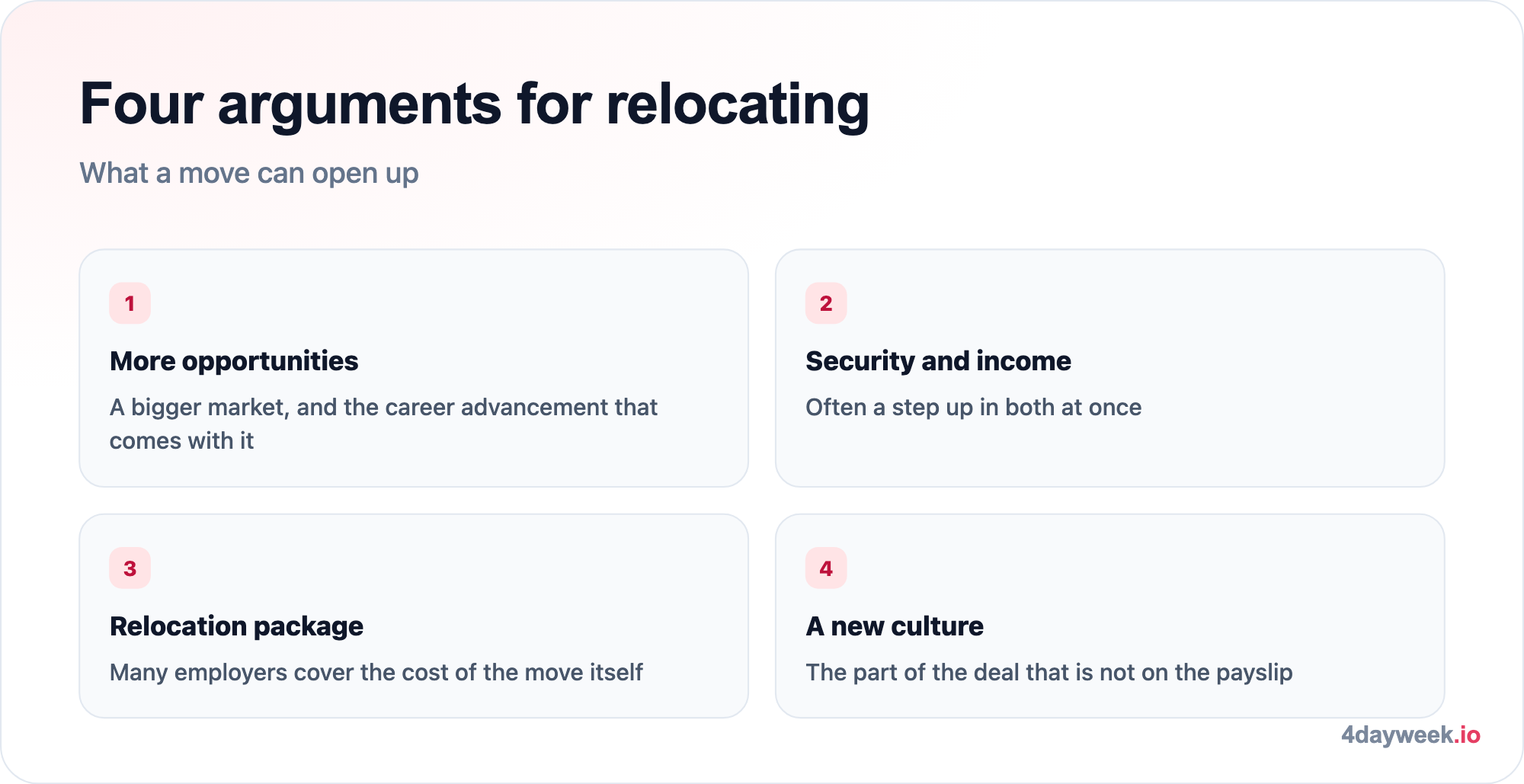
There are many benefits of relocating for work:
1. Bundle of Job Opportunities and Career Advancements
The most important benefit of relocating for a job is that it will help you open the door to exciting job opportunities while allowing you to boost your career.
A new position in a totally different location can bring fresh challenges, but it can also improve your work potential and provide career growth opportunities that are usually not available in your current position.
Therefore, relocation is considered a strategic move to escape stagnation and allow you to move up the career ladder, improving your future.
Moreover, exposure to different industries and markets can help you develop new skills, expand your professional network, and get better job offers.
2. Job Security, ty along with Increased Income
While relocating to work in a new company, the benefits of greater job security and higher salaries can be significant motivators for anyone.
Apart from getting a new position, you also get a chance to enjoy a higher salary with multiple benefits from your employer. Thus, you can get financial stability and enhance your overall quality of life while living away from your family and friends.
Also, an increased income or higher salary can help you save more, invest in your further education, or simply enjoy a high standard of living.
3. Relocation Package and Cost Compensation
If you are considering relocating for a job, the biggest benefit you may get is covering your moving expenses, housing costs, and other related moving expenditures.
Approximately 64.14% of respondents indicated that they received some form of compensation package for their relocation.
This assistance can alleviate your financial stress, especially during your initial adjustment period, allowing you to focus on your new job and surroundings.
However, these packages can vary significantly depending on your company policies.
So, it's crucial to carefully review the details and negotiate with your team to ensure you receive temporary housing or assistance when selling your current home.
Thus, you can avoid misunderstandings and enjoy the most comfortable relocation experience.
4. Chance to Explore New Culture
Whereas relocating to a new city or country can stress you out, it benefits you by offering a unique opportunity to engage with a different and vibrant culture.
Living in a new culture helps you broaden your horizons, enrich your life with unique experiences, and enhance your adaptability to work under various circumstances.
Additionally, learning about different customs, languages, and traditions can give you a whole new perspective on your personal life and boost your career.
This cultural exposure can enhance your views about different nations and improve your communication skills, which is important in connecting with people worldwide.
Cons of Relocating for Work
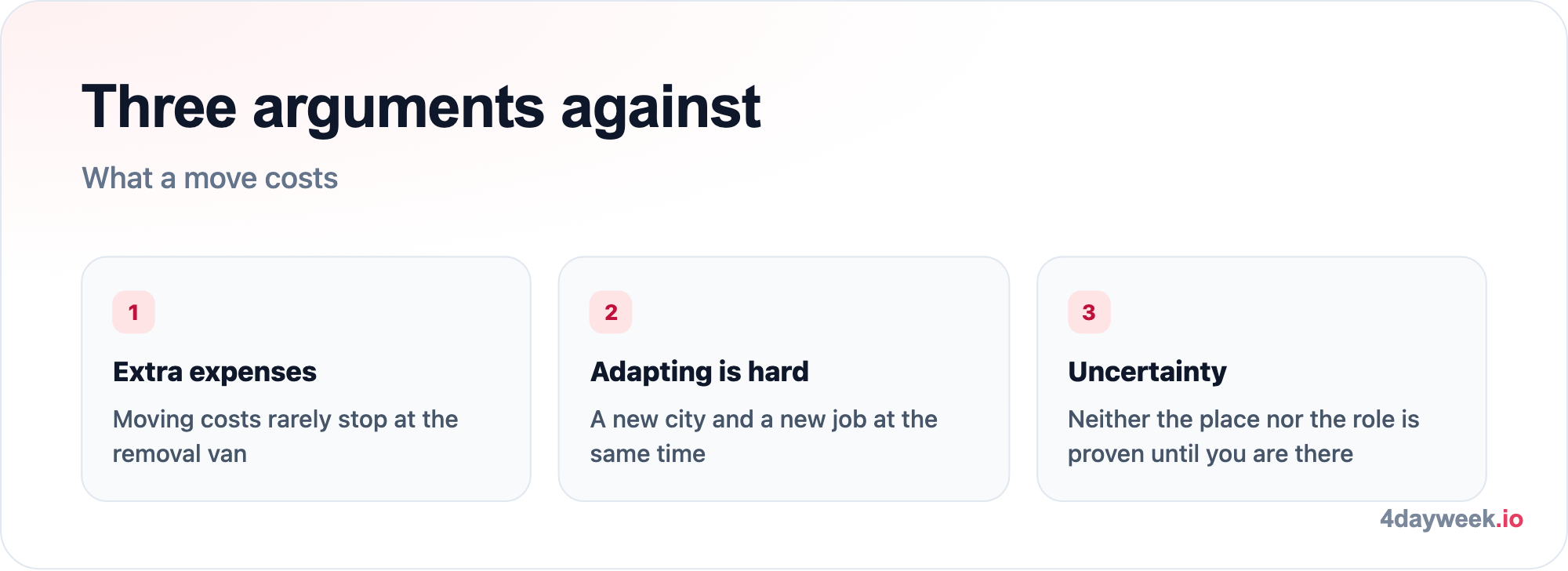
Now that you know the benefits of relocating for work, let's explore the cons carefully.
1. Extra Expenses for Relocation
As said earlier, different companies offer relocation expenses temporarily or permanently (terms and conditions applied).
Still, there may be additional costs or expenses when moving to a new location. If you were given a temporary relocation package, you may have to save money for future moving expenses or housing costs.
Otherwise, depending on your company's rules and regulations, you may need to sell your current home for permanent relocation.
How to Overcome: Budgeting carefully is essential to avoid unexpected financial straits when relocating for work. You can consider creating a detailed financial plan, including a cushion for sudden and unexpected expenses during the transition phase.
2. Adapting Difficulties
While relocating offers numerous professional and personal benefits, adapting to a new environment can be challenging.
You'll need to adjust while establishing a new social network, acclimating to the local culture, making new friends, and finding suitable housing—all of which can pose challenges.
These challenges may lead to significant adjustment problems, and you might find yourself trying to maintain contact with your family, which could potentially impact your professional growth and disrupt your work-life balance.
How to Overcome: To overcome these challenges, consider building a support system in your new location. You can do this by connecting with your new colleagues, engaging with social organizations, or seeking out local communities with similar backgrounds. This support network can greatly assist you in the adjustment process.
Work-Life Balance Jobs with Genuinely Reduced Hours
Save one to come back to it — it's free.



3. Skepticism About the New City and the Job
Working for a new employer or relocating to an unfamiliar city can induce skepticism, new challenges, and uncertainty. In addition to your long-term career goals, you may have concerns about job satisfaction, aligned career paths, and workplace compatibility.
How to Overcome: If you are concerned about this, thoroughly research the job opportunity and the prospective city or region. Also, speak with current or former employees to get a sense of the company culture and work environment.
Hodo, you to make a pros and cons list for moving?
Making a pros and cons list for moving is a thoughtful process that requires you to adapt a structured approach.
Here’s how you can evaluate whether a relocation for a career is the right decision for you or not:
-
Identify your goals and hopes you have to achieve with the move. For instance, career opportunities, personal growth, or a better quality of life.
-
Write down all the potential advantages and disadvantages discussed earlier. Considering your circumstances, note down the pros and cons based on your job prospects, cost of living, lifestyle, and social connections.
-
Now assign a level of importance depending on your priorities to each item on your list, depending on your goals and hopes.
-
Evaluate your list by considering the prioritized factors and compare the overall advantages-to-disadvantages ratio to make an informed decision.
-
Get insights and suggestions from trusted peers, family members, or mentors with experience. Or simply follow feelings.
Frequently Asked Questions
Why do people choose to relocate for work?
People often relocate for new job opportunities, seeking career advancement,nt or exploring different industries. They may switch job locations within their current company or move for better compensation and work-life balance to a different organization Some move due to job constraints like limited growth prospects or high living costs, seeking more career opportunities.
Beyond work, personal and lifestyle factors, such as improving quality of life, proximity to family, cultural access, or escaping harsh climates, also influence their decision.
How long should you relocate for a new job?
The duration you should relocate for a new job depends on various factors, including your personal and professional goals, the nature of the job, and your employer's expectations. For instance, some people relocate temporarily for a specific project, internship, or assignment, while others move permanently.
Therefore, it's important to discuss your expected duration with your employer beforehand and clarify if the relocation will be a short-term or long-term commitment.
Moving away from my family for a job is a good idea.
Whether it's a good idea to move away from your family and friends depends on your priorities, circumstances, and future goals.
While moving out can result in emotional challenges and a sense of missing out on important family occasions, it can also provide new opportunities for professional or personal growth.
However, make this decision while considering your long-term goals and the support systems you already have in place.
Final Thoughts
Everything comes with a cost! So, if you want a great opportunity while relocating for work, there will be various downsides that you can solve by following the tips shared in the article.
However, if you want a source to help you connect with amazing companies offering great work opportunities, you can always check out 4-Day Week offers.
We at 4dayweek.io offer a job board to help you find jobs with a flexible work schedule that matches your living standards. So, if you want to make sure you get connected with the right company, ensuring great opportunities, check out the 4-day work-week current job openings.




Get 4-day week jobs in your inbox
Create a free account to receive curated opportunities weekly.
Sign up for freeFree forever. No spam, unsubscribe anytime.