
Everyone has a bad week at work. A brutal deadline, a tense meeting, a project that goes sideways.
But there's a difference between a job that's hard and a job that's harming you, and it's a difference worth learning to spot, because your health depends on it.
This guide lays out the clearest signs of a toxic workplace, how to tell toxic apart from merely tough, and what to do once you recognise it.
What is a toxic workplace?
A toxic workplace is one where the culture, behaviours or systems routinely damage the people in it, their wellbeing, their confidence, their health, rather than the odd bad day everyone has.
The key word is routinely. One difficult manager or one stressful quarter isn't toxicity. A pattern, where the environment consistently leaves people anxious, drained, undermined or afraid, is.
Toxicity can come from the top (leadership), from peers, or from the systems themselves (impossible targets, punishing hours, no support). Often it's all three, reinforcing each other.
12 signs of a toxic workplace
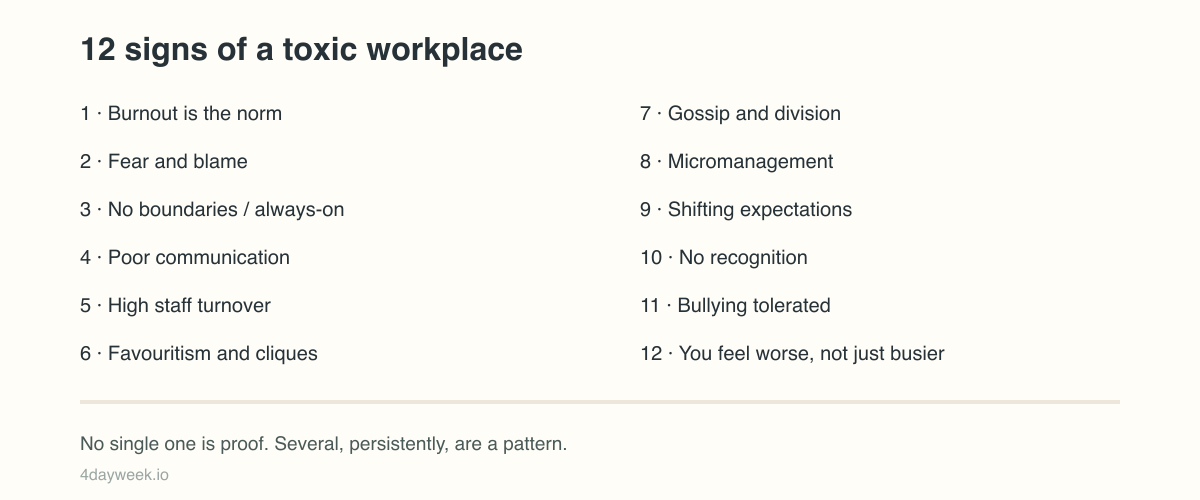
No single one is proof. Several, persistently, are a pattern:
- Burnout is the norm. Chronic overwork is expected, even celebrated, and rest is treated as weakness.
- Fear and blame. People are afraid to speak up, admit mistakes, or ask questions. Problems get hidden, not solved.
- No boundaries. Messages at all hours, no respect for time off, and an unspoken rule that you're always available.
- Poor communication. Mixed messages, information hoarded, decisions made in the dark.
- High turnover. Good people keep leaving, the clearest signal of all.
- Favouritism and cliques. Rewards and opportunities flow by politics, not merit.
- Gossip and division. Energy goes into factions and backchannels instead of the work.
- Micromanagement. No trust, no autonomy, every move scrutinised.
- Unclear or shifting expectations. The goalposts move, so you can never quite succeed.
- No recognition. Effort and results go unnoticed while criticism flows freely.
- Bullying or harassment, tolerated, minimised, or protected.
- You feel worse, not just busier. Dread on Sunday night, relief at every day off, a low that follows you home.
That last one matters most. Toxic workplaces don't just tire you out, they change how you feel about yourself.
Toxic vs tough: how to tell the difference
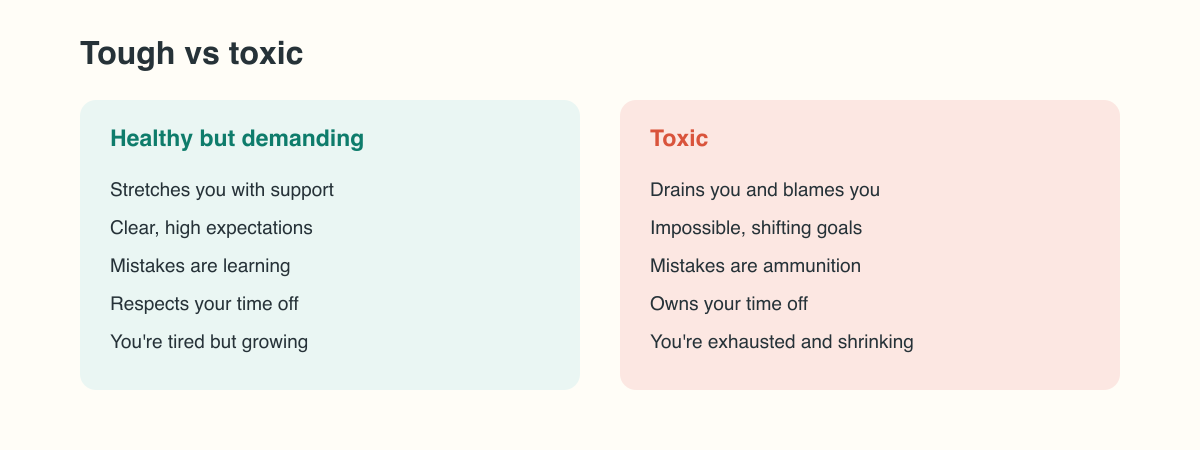
This is the distinction people agonise over, is it the job, or is it me? A demanding job can be healthy. A toxic one only looks like one from the outside.
| Healthy but demanding | Toxic |
|---|---|
| Stretches you with support | Drains you and blames you |
| High standards, clear expectations | Impossible or shifting expectations |
| Mistakes are learning | Mistakes are ammunition |
| You're tired but growing | You're exhausted and shrinking |
| Respects your time off | Owns your time off |
| You feel capable | You feel anxious and small |
The tell: a tough job leaves you stretched but growing; a toxic one leaves you drained and diminished, and quietly convinces you it's your fault.
Why it matters (don't just tough it out)
There's a cultural instinct to grit your teeth and endure. But sustained exposure to a toxic workplace is a genuine health risk, chronic stress feeds anxiety, depression, sleep problems, burnout and physical illness.
"Just push through" is fine for a hard fortnight. It's terrible advice for a hostile environment with no end in sight. Recognising toxicity isn't being dramatic or weak, it's accurate, and it's the first step to protecting yourself.
What causes a toxic workplace?
Toxicity is rarely one bad apple. It usually grows from the culture and the incentives:
- Leadership that models it. Cultures flow downhill. If leaders bully, blame or overwork themselves and everyone else, that becomes "how things are done here."
- The wrong incentives. Reward pure output at any human cost, or hours over results, and you build a machine that grinds people down and calls it high performance.
- Growth-at-all-costs pressure. Relentless targets with no regard for wellbeing breed fear, corner-cutting and burnout.
- Weak or absent HR. When there's nowhere safe to raise problems, bad behaviour goes unchecked and compounds.
- No boundaries by design. Always-on expectations aren't an accident; they're a choice, and a corrosive one.
Understanding the cause matters, because it tells you whether the problem is fixable. A single difficult manager might be. A culture rotten from the top rarely is.
How to spot a toxic workplace before you join
The best time to dodge a toxic job is in the interview, if you know what to look for. Red flags:
- High turnover. Ask how long the team has been there and why the last person left. Evasive answers are telling.
- "We're like a family." Sometimes lovely, but often code for blurred boundaries and guilt-driven overwork.
- Vague on hours and expectations. If no one will give a straight answer about working hours, assume the worst.
- Interviewers who seem stressed, rushed or afraid. The people you meet are a live sample of the culture.
- Glassdoor and word-of-mouth. Patterns in reviews (not one-off gripes) are worth heeding.
- How they talk about rest. Do they mention flexibility, wellbeing and reasonable hours unprompted, or only "hustle", "grind" and "wearing many hats"?
Work-Life Balance Jobs with Genuinely Reduced Hours
Save one to come back to it — it's free.


Ask directly: "How does the team handle work-life balance?" and "What does a normal week's hours look like?" How they answer, and whether they can, tells you a lot.
What to do about a toxic workplace
- Name it, and stop internalising it. A pattern of harm is about the environment, not your worth. That reframe alone helps.
- Set what boundaries you can. Protect your off-hours, document issues, and don't reward always-on demands.
- Find your allies. Toxic cultures isolate people; connection is protective. You're rarely the only one who sees it.
- Raise it, if it's safe. Sometimes a specific issue can be fixed with a manager or HR. Gauge whether that's realistic where you are.
- Protect your health first. No job is worth your wellbeing. Lean on support, in and out of work.
- Plan your exit. If the signs are consistent and leadership won't change, leaving is usually the healthiest choice, and rarely one people regret.
When you do move, move toward the opposite of everything above: a workplace built on trust, clear expectations, respect for your time, and sustainable hours. The kind of employers offering four-day weeks and reduced-hours roles tend to have healthier cultures almost by definition, because a company competing on how well it treats people can't afford to grind them down.
Can a toxic workplace be fixed?
Sometimes, but be honest with yourself about the odds, because they depend entirely on where the toxicity lives.
- A single bad manager, in an otherwise decent organisation, can sometimes be addressed, through HR, a move to another team, or the manager themselves moving on. Worth a try before you walk.
- A toxic culture set from the top is a much harder fight. When leadership models and rewards the behaviour, one person raising concerns rarely shifts it, and the personal cost of trying can be high.
Real change requires the people with power to want it, to admit there's a problem, and to change what they reward, not a poster about wellbeing. If you see genuine effort from leadership, staying to be part of the fix can be worth it. If you see denial, defensiveness, or "that's just how it is here", believe them.
You are not obliged to set yourself on fire to keep a toxic workplace warm. Sometimes the healthiest, bravest thing is simply to leave, and let it be their problem to fix, not yours to endure.
Frequently asked questions
What are the signs of a toxic workplace? Consistent patterns like normalised burnout, fear and blame, no boundaries, poor communication, high turnover, favouritism, micromanagement, no recognition, tolerated bullying, and feeling worse about yourself over time.
What's the difference between a toxic job and a hard job? A hard-but-healthy job stretches you with support and clear expectations, and you grow. A toxic job drains you, blames you, and shrinks your confidence, often while convincing you it's your fault.
Is a toxic workplace bad for your health? Yes. Sustained exposure to a toxic environment is a real risk to mental and physical health, chronic stress, anxiety, depression, sleep problems and burnout, so it's worth taking seriously rather than enduring indefinitely.
What should I do if my workplace is toxic? Stop internalising it, set what boundaries you can, find allies, raise specific issues if it's safe, protect your health, and, if leadership won't change, plan an exit to a healthier employer.
Ready to leave a toxic culture behind? Browse four-day-week and reduced-hours roles at people-first employers on 4dayweek.io →




Get 4-day week jobs in your inbox
Create a free account to receive curated opportunities weekly.
Sign up for freeFree forever. No spam, unsubscribe anytime.