
Stress and burnout are not the same thing, and treating them as if they were is how people end up in trouble. Stress is usually a temporary response to pressure — it spikes and it passes. Burnout is what happens when that pressure never lets up: a state of chronic physical, emotional, and mental exhaustion caused by prolonged, poorly managed stress.
The distinction matters enough that the World Health Organization includes burnout in the ICD-11 as an occupational phenomenon, defining it through three dimensions: energy depletion or exhaustion, increased mental distance or cynicism toward your job, and reduced professional efficacy. It is not classed as a medical condition — but it is a recognised, work-specific syndrome with real consequences for your health and your career.
This guide breaks down eight of the most common signs, so you can spot them early in yourself or a colleague — while they are still reversible. The earlier you catch burnout, the cheaper it is to fix. We will also look at why innovative work models, particularly the four-day week, target the structural causes rather than just the symptoms.
Burnout is not depression. Burnout is situation-specific and tends to centre on work; clinical depression affects every area of life and persists regardless of circumstances. The two overlap and can co-occur, but they are distinct. If low mood follows you home and outlasts time away from work, that points beyond burnout — and toward a conversation with a healthcare professional.
1. Persistent physical and mental exhaustion
The most foundational sign of burnout is a deep, unrelenting fatigue that does not respond to rest. This is not the ordinary tiredness of a long week. It is chronic depletion — where a full night's sleep, a weekend off, or even a holiday fails to restore your energy. It stems from prolonged, unmanaged stress draining your emotional and cognitive reserves, leaving you running near-empty before the workday even starts.
That exhaustion sabotages both performance and well-being. It shows up as constant brain fog, making it hard to concentrate on complex tasks, problem-solve creatively, or make sound decisions. Routine work starts to feel monumental.

What it looks like: A developer working 50-plus-hour weeks stares blankly at code they wrote days earlier. A marketing manager wakes Monday with dread instead of energy, despite a restful weekend. A project manager needs three coffees just to stay present in meetings and keeps losing the thread.
What to do about it:
- Track your energy. For a week or two, log your energy at different points in the day and note which tasks or meetings drain you most. The pattern usually points straight at the trigger.
- Set a hard stop. Define a firm end to your workday and hold it. Notifications off, laptop closed, a clear transition out of work mode.
- Take a real break. When you take time off, fully disconnect — no email, no "quick" calls. Partial breaks do not refill the tank.
- Look at the structure. For many people the root cause is an unsustainable work design. A compressed schedule like a four-day week builds in a dedicated recovery day. Understanding the importance of work-life balance is the first step toward advocating for that kind of change. Our guide on how to improve work-life balance in 5 steps covers the practical moves you can make right now.
- Rule out medical causes. Severe, persistent exhaustion can also signal an underlying health condition. It is worth checking with a healthcare provider.
2. Cynicism and detachment from work
Beyond simple frustration, one of the most corrosive signs of burnout is growing cynicism and emotional detachment — a negative, sarcastic, or indifferent attitude toward your job, your colleagues, and your organisation's mission. It is a defence mechanism: you distance yourself emotionally to cope with feeling overwhelmed and unappreciated. The "why bother?" mindset turns work that once mattered into a list of meaningless tasks.
This is especially damaging because it erodes both professional passion and working relationships. When you feel disconnected, engagement drops, collaboration suffers, and your contribution starts to feel forced. It is a fundamental shift — from an engaged contributor to a detached observer. If you find yourself in this pattern, taking mental health days can interrupt the cycle while you address the deeper causes.
What it looks like: A designer who loved brainstorming now treats every brief as "another thing to get through." A top salesperson turns cynical about targets and client calls. A senior engineer who enjoyed mentoring quietly stops offering help.
What to do about it:
- Re-examine your values. Reflect on what genuinely matters to you in a career. A mismatch between your values and your current role is often the real source of the cynicism.
- Seek meaningful work. Talk to your manager about projects that align better with your strengths and interests. Even one engaging project can counteract the drift.
- Rebuild team connections. Make a deliberate effort to engage with colleagues. Re-establishing social bonds makes work feel less isolating.
- Discuss your growth path. Stagnation is a major driver of detachment. A concrete development plan can restore a sense of forward momentum.
- Push for autonomy. A rigid schedule amplifies feeling trapped. More control over your time — flexible hours or a four-day week — can restore a sense of agency.
3. Reduced productivity and a decline in performance
One of the most paradoxical signs of burnout is a clear drop in productivity — often despite working longer hours and trying harder. This is not laziness. It is the cognitive and emotional cost of chronic stress, which erodes your ability to focus, think critically, and sustain momentum. The result is a vicious cycle: poor performance raises stress and anxiety, which deepens the burnout.
It shows up as missed deadlines, uncharacteristic errors, and difficulty with tasks that used to be routine. Mental exhaustion makes complex problems harder to engage with, so procrastination climbs and attention to detail slips. You feel like you are working harder than ever and achieving less.
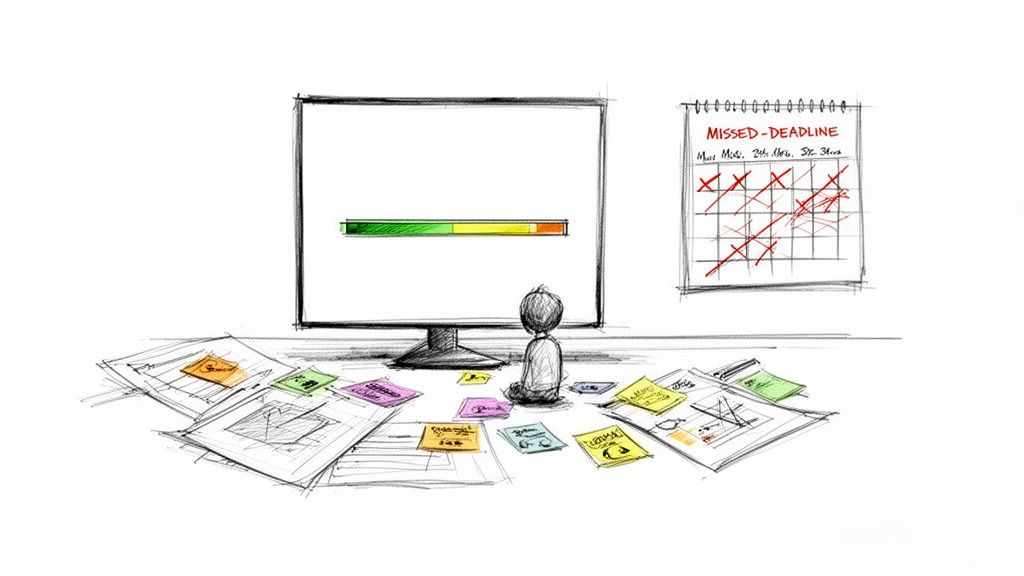
What it looks like: An analyst who once finished a detailed report in two days now takes five, with more errors. A writer's output turns generic and slow, and deadlines slip. A developer's commit frequency drops, defect rates rise, and they avoid complex work in favour of small fixes.
What to do about it:
- Break work down. Deconstruct large, overwhelming projects into smaller milestones. Completing them restores a sense of progress.
- Identify the draining tasks. Pinpoint which responsibilities feel most taxing, and discuss with your manager whether they can be delegated, automated, or restructured.
- Request a workload review. Have a candid conversation about your load. It may genuinely be unsustainable, and redistributing it can bring immediate relief.
- Focus on impact, not hours. Shift from "busy" to effective — prioritise high-impact work and cut low-value activity that drains limited energy.
- Reconsider your schedule. An inflexible schedule suffocates both deep work and recovery. A well-implemented shorter week can lift focused output; our Pro guide on productivity covers how reduced hours and better rest reinforce each other.
4. Increased irritability and emotional volatility
Burnout erodes your capacity for emotional regulation, producing heightened irritability and unpredictable mood swings. When your cognitive and emotional reserves are empty, patience wears thin and you become highly sensitive to everyday stressors. This is not "a bad day" — it is a consistent pattern where minor inconveniences trigger outsized reactions. Colleagues notice you becoming short-tempered, anxious, or uncharacteristically pessimistic.
This volatility is one of the more visible signs of burnout, and it directly damages team dynamics. Chronic stress keeps your nervous system in a state of high alert, so you might snap at a teammate over a simple question or feel a surge of anxiety before a routine meeting.
What it looks like: A normally composed HR manager snaps at staff over minor scheduling questions. An empathetic support specialist starts feeling personally attacked by standard complaints. A product manager turns defensive and anxious in routine status meetings.
What to do about it:
- Build a daily stress-management habit. A few minutes of box breathing (inhale four seconds, hold four, exhale four, hold four) or a short meditation creates real emotional space.
- Set emotional boundaries. Create a shutdown ritual — a short walk, changing clothes — that signals to your brain it is time to disengage from work.
- Communicate your capacity. With a trusted manager, you do not need to disclose everything. "My capacity is low right now, so I'd appreciate extra clarity on priorities" is enough.
- Use available support. Many companies offer confidential counselling through an Employee Assistance Program, designed to help with stress and coping strategies.
- Protect the basics. Sleep, nutrition, and movement are foundations of emotional regulation — and the first things to collapse when you are overworked. The link between work structure and employee mental health is well established.
5. Difficulty setting boundaries and chronic overworking
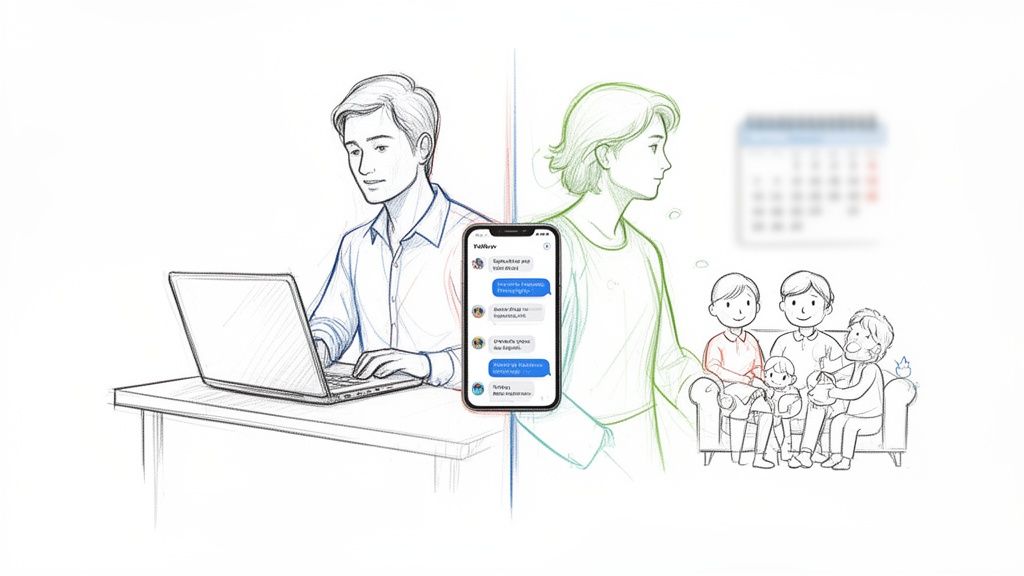
One of the most insidious signs of burnout is the collapse of the boundary between professional and personal life. This is not the occasional long day. It is a chronic inability to disconnect, driven by the feeling that you must always be available to keep pace with an overwhelming workload. It becomes self-reinforcing: overworking deepens exhaustion, exhaustion makes tasks take longer, which demands more overwork.
Constant connectivity sabotages the rest you need to function. When you are answering email at dinner or Slack on a Sunday, your brain never fully shifts out of work mode. That permanent "on" state prevents your mental resources from replenishing, leading to diminished creativity, more errors, and a pervasive sense of being trapped.
The risk here is not only psychological. The WHO and ILO estimate that working 55 or more hours a week carries a 35% higher risk of stroke and a 17% higher risk of dying from ischemic heart disease compared with a 35-40-hour week. Chronic overwork is a measurable health hazard, not just a bad habit.
What it looks like: A financial analyst with a 9-to-5 schedule still opens the laptop at 10pm to "get a head start," and feels anxious if they skip it. A project manager answers messages on weekends and during holidays, convinced their absence will create a bottleneck. An engineer keeps taking on extra features because they cannot say no.
What to do about it:
- Define and communicate your hours. Establish your working hours and make them visible through your calendar and status updates.
- Create a digital commute. End the day with a ritual — closing all work tabs, tidying your desk, a short walk — that tells your brain work is done.
- Get work off personal devices. The simplest way to stop checking work after hours is to remove the temptation: delete work email and Slack from your personal phone.
- Practise saying no, strategically. You do not have to decline everything — just requests outside your capacity. "I can't take that on right now, but I could help in two weeks" works.
- Address the system. Blurred boundaries are often a symptom of unrealistic workload or culture. A four-day work week builds a full recovery day into the structure, making it far easier to genuinely disconnect.
6. Loss of interest in growth and development
A subtler but telling sign of burnout is a complete disinterest in professional growth. This goes beyond being busy — it is a real loss of the drive to learn, improve, or advance. Activities that once felt exciting, like pursuing a certification or learning a new skill, now feel like insurmountable chores. Burnout depletes the cognitive and emotional energy that forward-thinking and self-investment require, leaving you stuck and resigned.
That apathy directly threatens long-term career satisfaction. When the desire to develop new skills disappears, you risk falling behind in your field, which feeds a cycle of feeling incompetent and even more disengaged. The bandwidth once spent on ambition and curiosity is now consumed by simply surviving the day.
What it looks like: An engineer who spent evenings reading tech blogs and on side projects now ignores industry news entirely. A marketer who prided themselves on staying current keeps skipping webinars and lets a valued certification lapse. A designer who explored new tools now sticks rigidly to familiar software.
What to do about it:
- Start small. Forget overwhelming certifications. Pick one low-effort goal — one industry article a week, a 15-minute tutorial on something you are genuinely curious about.
- Connect learning to real work. Ask your manager about a project that needs a skill you want to build. Applying development to a tangible outcome restores a sense of purpose.
- Carve out protected time. Ask for a few hours a week or month formally allocated to development, and block it on your calendar so it survives competing demands.
- Re-evaluate the role itself. Be honest about whether your current position offers a real path forward. Sometimes the lost interest is not burnout — it is a dead-end role signalling a change is needed.
Work-Life Balance Jobs with Genuinely Reduced Hours
Save one to come back to it — it's free.


7. Physical health deterioration and frequent illness
Beyond emotional and mental strain, one of the more alarming signs of burnout is a tangible decline in physical health. This is not just feeling tired — it is a systemic weakening of your body's defences. Chronic stress suppresses immune function and promotes inflammation, leaving you vulnerable to every bug going around the office. It shows up as a frustrating run of frequent colds, lingering flu symptoms, persistent headaches, or digestive issues with no other obvious cause.
This deterioration is the body sending a distress signal. Prolonged activation of the stress response, driven by unmanaged work pressure, disrupts processes throughout the body — it can create new problems like tension headaches or raised blood pressure, or trigger flare-ups of existing chronic conditions. Feeling unwell then raises stress, which worsens the burnout.
What it looks like: An account manager who was rarely sick now catches every office cold and develops recurring sinus infections. A designer gets chronic tension headaches during the week that clear over the weekend and return on Monday. A team lead's managed autoimmune condition flares more often and more severely during intense deadlines.
What to do about it:
- Treat sleep as non-negotiable. Aim for 7-9 hours of quality sleep. Make bedtime a fixed appointment with a calm pre-sleep routine.
- Add gentle movement. You do not need intense workouts — a 20-minute lunchtime walk or some stretching helps reduce stress hormones and supports immune function.
- Get a medical check-up. Establish a health baseline and be transparent with a provider about work-related stress; that context matters for an accurate diagnosis.
- Eat properly. Stress makes convenience food tempting. A conscious effort toward balanced meals supports both physical and mental resilience.
8. Social withdrawal and isolation
Another key behavioural sign of burnout is a growing tendency to withdraw from colleagues and avoid social interaction. When emotional and mental reserves are depleted, even casual conversation can feel like too much effort. That leads to a deliberate retreat from team activities, lunches, and after-work gatherings — creating a cycle of isolation that deepens the underlying disconnection. This is not introversion; it is a marked change from your previous patterns.
The withdrawal is counterproductive, because it cuts you off from the social support that buffers against burnout. The camaraderie and shared understanding among colleagues is an informal coping mechanism. By withdrawing, a burned-out employee loses that support and deepens their loneliness.
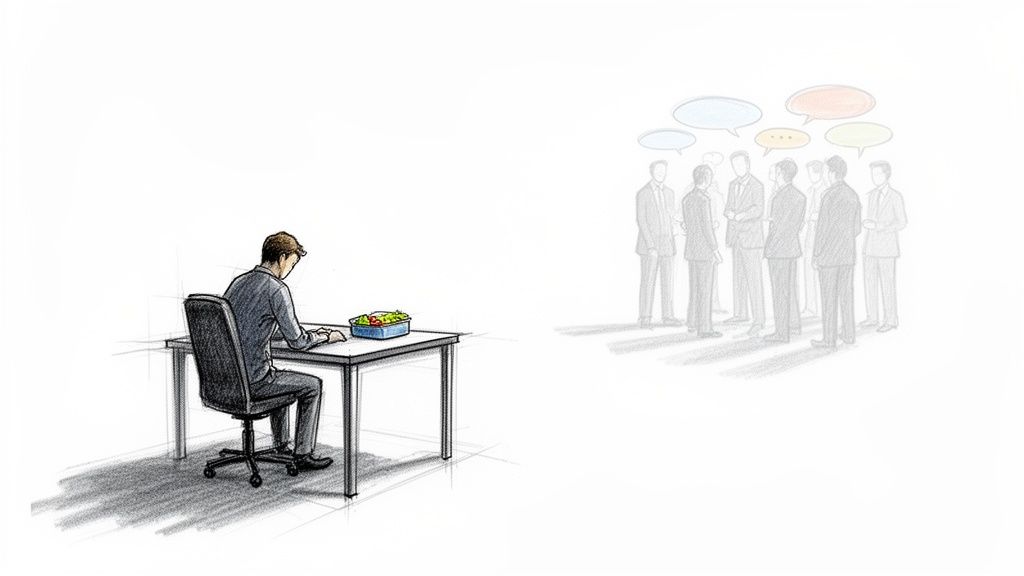
What it looks like: A remote engineer who used to join virtual coffee chats now keeps their camera off and ignores non-essential messages. An office-based designer who enjoyed team lunches now eats alone at their desk with headphones on. A salesperson who was a fixture at company events now declines every invitation.
What to do about it:
- Start small and low-pressure. Re-engagement does not mean a big social event. A 15-minute virtual coffee with one trusted colleague is far easier to manage.
- Set a modest goal. Commit to one small social activity a week or month — joining a team lunch, posting in a social channel, attending one after-work event.
- Find peer support. Colleagues facing similar challenges can be a genuine source of relief; sharing experiences in a safe space reduces isolation.
- Voice it. If you feel comfortable, telling a manager or trusted peer that you feel disconnected can itself be a powerful first step toward a solution.
Burnout at a glance: the eight signs
| Sign | Mainly affects | Earliest tell | First move |
|---|---|---|---|
| Persistent exhaustion | Energy, focus | Rest stops restoring you | Track energy; set a hard stop |
| Cynicism and detachment | Engagement, relationships | Work feels meaningless | Re-examine values; seek meaningful work |
| Reduced productivity | Output, quality | More effort, less done | Break work down; review workload |
| Irritability and volatility | Team dynamics | Small things trigger big reactions | Daily stress-management; protect sleep |
| Eroded boundaries | Work-life separation | Cannot stop checking work | Define hours; remove work apps |
| Loss of interest in growth | Career trajectory | Learning feels exhausting | Start small; protect development time |
| Physical health decline | Body, immunity | Frequent illness, headaches | Prioritise sleep; get a check-up |
| Social withdrawal | Support network | Avoiding colleagues | Low-pressure reconnection |
From awareness to action
Recognising the signs of burnout is a real first step — but it is only a step. Each sign is a data point telling you the current work dynamic is unsustainable. The key thing to internalise is that burnout is not a personal failing or a sign of weakness. It is an organisational problem with personal consequences, which means the response has to be both individual and structural.
If you are experiencing burnout
If several of the signs above resonate, move from passive recognition to active recovery:
- Open an honest dialogue. Schedule a private conversation with your manager. Use specific examples tied to the signs above, and frame it as collaborative problem-solving, not a complaint. Instead of "I'm overwhelmed," try: "To keep the quality high on Project X, I need to adjust the deadline or delegate task Y — my current load is affecting my focus."
- Reinforce your boundaries. Burnout thrives on an "always-on" culture. Reclaim your non-work hours — not just by skipping email, but by genuinely disconnecting. Set clear end-of-day signals and communicate them to your team.
- Use your company's resources. HR and Employee Assistance Programs are confidential and built to support you, whether through counselling or help renegotiating workload. Using them is strategic self-management, not failure.
If you manage a team
For leaders, addressing burnout is a core responsibility — your team's well-being is directly tied to its engagement and output. The goal is an environment where burnout struggles to take root:
- Run proactive check-ins. Do not wait for someone to come to you. Make well-being a regular part of one-on-ones: "What part of your workload is most draining right now?"
- Model healthy behaviour. If you send email at 10pm, you are endorsing an unhealthy culture. Take your own holiday, log off at a reasonable hour, and visibly encourage your team to do the same.
- Advocate for structural change. Individual support is not enough on its own. One of the most effective structural shifts is the four-day week. Our guide on how to reduce employee burnout at work gives leaders a practical roadmap for making that shift.
That structural point is worth dwelling on. Across 4 Day Week Global's international trials, a 32-hour week with no loss of pay produced lower burnout and stress with no meaningful drop in productivity — in the UK pilot specifically, 71% of participants reported reduced burnout. It shifts the focus from hours logged to output achieved, directly challenging the outdated belief that presence equals performance.
Burnout is not inevitable, and it is not the price of a serious career. By naming the signs early, acting on them, and pushing for work structures that are sustainable by design, you can change your relationship with work from something that drains you into something that does not.




Get 4-day week jobs in your inbox
Create a free account to receive curated opportunities weekly.
Sign up for freeFree forever. No spam, unsubscribe anytime.