
Workplace flexibility is no longer a perk. It’s a key driver of employee loyalty. According to a recent Owl Labs survey, nearly 74% of employees say they’re less likely to leave a company that offers remote work options. That’s a clear sign of what professionals value today: autonomy, balance, and control over where and how work gets done.
While debates around hybrid vs. in-office models continue, the reasons to work from home have only grown stronger, for both individuals and organizations.
Below are 25 compelling, data-backed reasons why working from home remains one of the most meaningful shifts in the modern world of work.
Lifestyle & Personal Productivity Benefits
Remote work has reshaped daily routines in ways that go far beyond convenience. Each reason below shows how a flexible schedule supports both productivity and quality of life.
1. Eliminates Daily Commutes
Remote work removes the need for long drives, crowded trains, or last-minute rides in bad weather. According to a global study across 27 countries, remote workers saved an average of 72 minutes per day when not commuting. Even as workplace models evolve, researchers expect remote work to continue saving about an hour per week per worker.
That time isn’t wasted. Around 40% is typically spent on job-related tasks, while 11% goes toward caregiving. For workers with children, more of that extra time goes directly into family responsibilities. It's a shift that improves productivity, personal well-being, and the rhythm of daily life, all without changing the workload.
As Thalia-Maria Tourikis, certified health coach and burnout prevention expert at Headway, puts it:
“You save time and money by not commuting, avoid the stress of chasing trains or being crammed into subways and enjoy the comfort of working from your home—or even from a beach or any location that suits you. You can often get more done and structure your day to balance work and personal errands.”
2. Supports Healthier Work-Life Balance
Flexible scheduling makes it easier to align personal routines with work demands. Midday walks, root canal appointments, or a sudden water leak can be handled without the pressure of missing core hours.
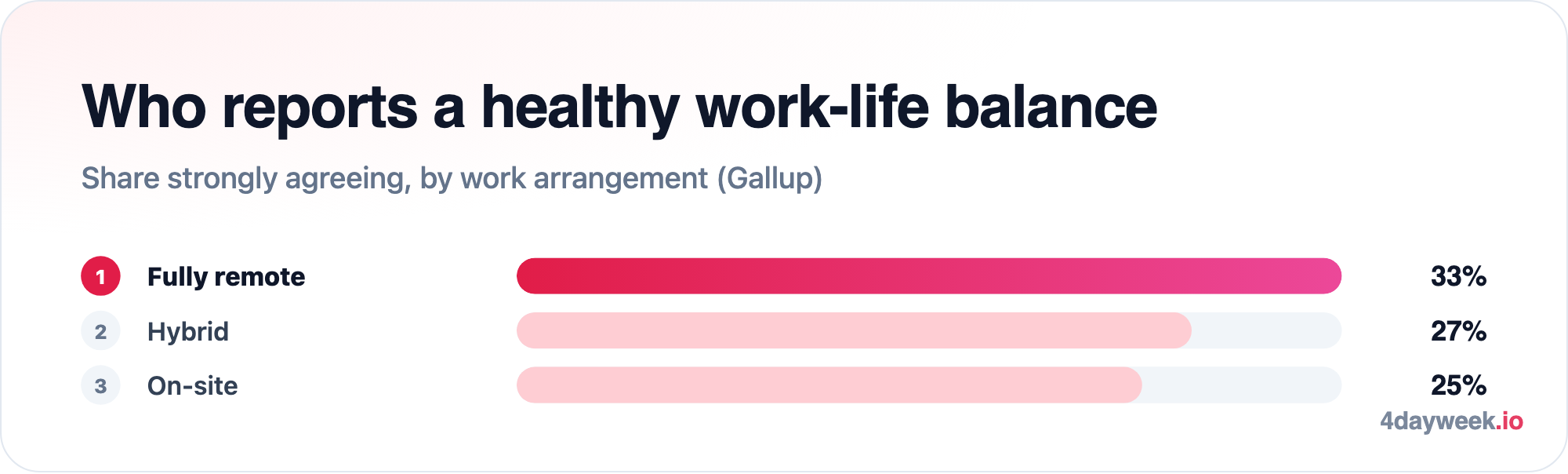
Remote workers report clear benefits. According to Gallup, 33% of fully remote employees strongly agree they maintain a healthy balance, compared to 27% of hybrid and 25% of on-site workers.
Bad weather, childcare costs, or unexpected home repairs become easier to manage when the office is only a few steps away. As a result, stress levels drop, focus improves, and daily rhythms become more sustainable, without sacrificing productivity.
3. Lower Daily Expenses for Workers
Working from home can significantly reduce day-to-day spending. Transportation, work clothes, meals on the go, and unexpected costs during commutes all contribute to higher monthly expenses.
Estimates show that hybrid employees can save up to $6,000 per year, while full-time remote workers may save as much as $12,000 annually. These savings often cover real-life costs, things like childcare, car repairs, food, or unplanned medical expenses.
It’s one of the most immediate and consistent financial benefits of remote work, especially for those balancing tight budgets and unpredictable expenses.
4. Enables Personalized Workspaces for Better Focus
Remote work allows you to create a space that suits your physical and mental needs. An ergonomic chair, natural lighting, soothing music, or even the presence of a pet can help create a sense of calm and control.
For individuals dealing with sensory sensitivities, a medical condition, or recovering from a traumatic brain injury, being able to adjust the environment supports both cognitive rehabilitation and daily comfort.
5. Reduces Workplace Distractions and Interruptions
Traditional offices often come with distractions, unscheduled chats, noisy spaces, sudden meetings. Working from home limits these interruptions. You can set boundaries around your time, minimize outside noise, and avoid unnecessary disruptions.
This makes it easier to maintain focus, get into deep work, and stay in flow for longer stretches especially during tasks that require sustained attention.
6. Improves Mental and Physical Well-Being
Working from home creates real space for habits that promote long-term health. Surveys show that 48% of remote workers experience less stress, 36% report reduced burnout, and 35% make healthier food choices.
Fewer rushed mornings and crowded commutes make it easier to eat better, rest more, and stay active. These small changes build a daily routine that supports energy, mental health, and personal well-being.
7. Allows More Time with Family and Loved Ones
Working from home keeps the family closer. There's more time for breakfast with kids, quick check-ins with a partner, or helping a parent during a medical appointment.
Even simple things like sharing lunch or being nearby “just in case” can strengthen the connection. These daily moments improve relational well-being without taking away from work responsibilities.
8. Creates Time for Hobbies, Passion Projects, or Learning
A flexible schedule gives you the chance to carve out space for things that matter outside of work. It could be an online course, a creative outlet, or even testing out a small business idea. Remote work makes it easier to reconnect with personal goals and explore new interests, without waiting for weekends or vacation days to make it happen.
9. Improves Sleep Quality and Energy Levels
Working from home gives you more control over how the day starts and ends. Without early alarms or long drives, it’s easier to build a routine that supports better sleep. Studies show that remote workers average nearly 24 minutes more sleep each night. Over time, that adds up to better rest, stronger focus, and more consistent energy throughout the week.
10. Minimizes Exposure to Office Politics
When you’re not tied to a physical office, there’s less room for performative check-ins, cliques, or unspoken power plays. Remote teams tend to focus more on the work itself and less on who’s grabbing coffee with whom.
You still connect with your team, but without the background noise. That shift makes it easier to focus, communicate clearly, and spend less energy on things that don’t actually move the work forward.
11. Encourages Autonomy and Trust-Based Performance Models
Remote work shifts the focus from being seen to getting things done. Teams prioritize outcomes instead of tracking hours. In a two-year study of over 800,000 employees, Great Place to Work found that remote workers maintained or improved productivity after going fully remote.
This level of consistency shows what happens when people are trusted to manage their time. Autonomy builds confidence, supports accountability, and gives you more control over how work gets done.
12. Supports Pet Companionship and Home-Centered Wellness
Spending the day around pets can ease stress and improve focus. A dog ready for a walk or a cat curled up nearby creates a calmer environment that supports mental health. Working from home gives you more time to care for your pets and enjoy their presence throughout the day. This small shift adds to a daily routine that feels more balanced, grounded, and human.
Career Development & Workflow Advantages
Remote work changes more than just where the job gets done. It also shapes how people grow, communicate, and contribute. The reasons below show how working from home builds valuable skills, sharpens focus, and supports long-term career growth.
13. Improves Measurable Productivity Levels
Remote work isn’t a trade-off when it comes to output. The U.S. Bureau of Labor Statistics found that industries with more remote-capable workers showed measurable gains in total factor productivity.
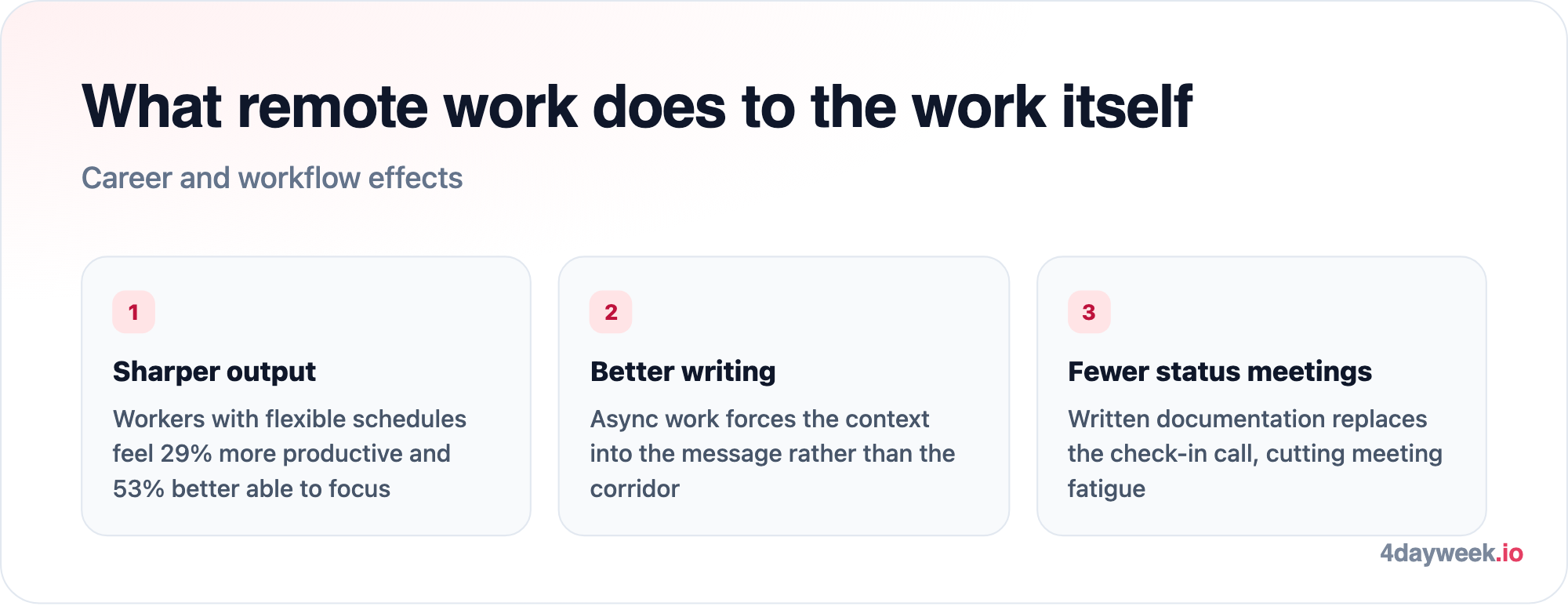
Surveys also show that employees with flexible schedules feel 29% more productive and 53% better able to focus compared to those without that flexibility.
The combination of fewer distractions, greater schedule control, and stronger alignment between energy and effort often leads to better results and more consistent performance.
14. Improves Written and Asynchronous Communication Skills
Remote work places more focus on how clearly people write, share updates, and collaborate across tools. When video meetings aren’t constant, asynchronous communication becomes essential.
Over time, you naturally get better at being concise, thoughtful, and clear. Strong written communication helps teams stay aligned and builds a skill set that applies far beyond remote jobs.
Harvard Business Review found that:
“Employees who caught glimpses of colleagues’ non‑work lives during video calls… were more likely to view coworkers as authentic, trustworthy, and relatable, helping to strengthen workplace bonds.”
Even without office chatter, communication becomes more intentional and often more human.
15. Accelerates Digital Skill Development
Working from home means using digital platforms every day to stay connected. Tools like Slack, Zoom, Notion, Trello, and Loom become part of the routine. Over time, you build fluency with remote collaboration tools, learn how to communicate asynchronously, and pick up new ways to stay organized. The skills gained in a remote setting carry across teams, roles, and industries.
16. Reduces Meeting Fatigue Through Asynchronous Collaboration
When every update doesn’t require a video call, the day feels lighter and more focused. Asynchronous collaboration lets teams share progress, ask questions, and make decisions without blocking calendars.
According to SHRM, 64 percent of employees rank endless meetings as the top cause of fatigue. Remote work cuts back on meeting overload, clears space for deep work, and gives you focused time for high-value tasks.
17. Improves Documentation and Process Clarity
Remote teams rely less on hallway conversations and more on written clarity. Important updates, how-to guides, and decisions are usually documented, whether in shared folders, project tools, or async threads.
This makes onboarding smoother, keeps knowledge accessible, and reduces the chance of things slipping through the cracks. When processes are clearly laid out, everyone knows where to look and what to do, even across time zones.
Remote Jobs with a Great Work-Life Balance
Save one to come back to it — it's free.



18. Encourages Intentional and Inclusive Collaboration
Remote teams move away from spontaneous conversations and informal decision-making. Instead, collaboration takes place through shared docs, async threads, and scheduled check-ins. This gives everyone time to process and contribute.
Tools like virtual chats and structured video calls make space for different voices and working styles. This leads to more thoughtful input, clearer communication, and a team culture built on purpose, not presence.
Strategic & Organizational Benefits
Remote work benefits go beyond individual productivity. As workplace models shift, more companies are seeing the long-term value of going remote. These next reasons focus on what flexible work makes possible at an organizational level.
19. Attracts High-Quality Talent Across Geographies
Remote roles make it easier to hire based on skill, not ZIP code. Teams can tap into a broader pool of qualified candidates, from small towns to entirely different countries. This shift is already changing how companies hire.
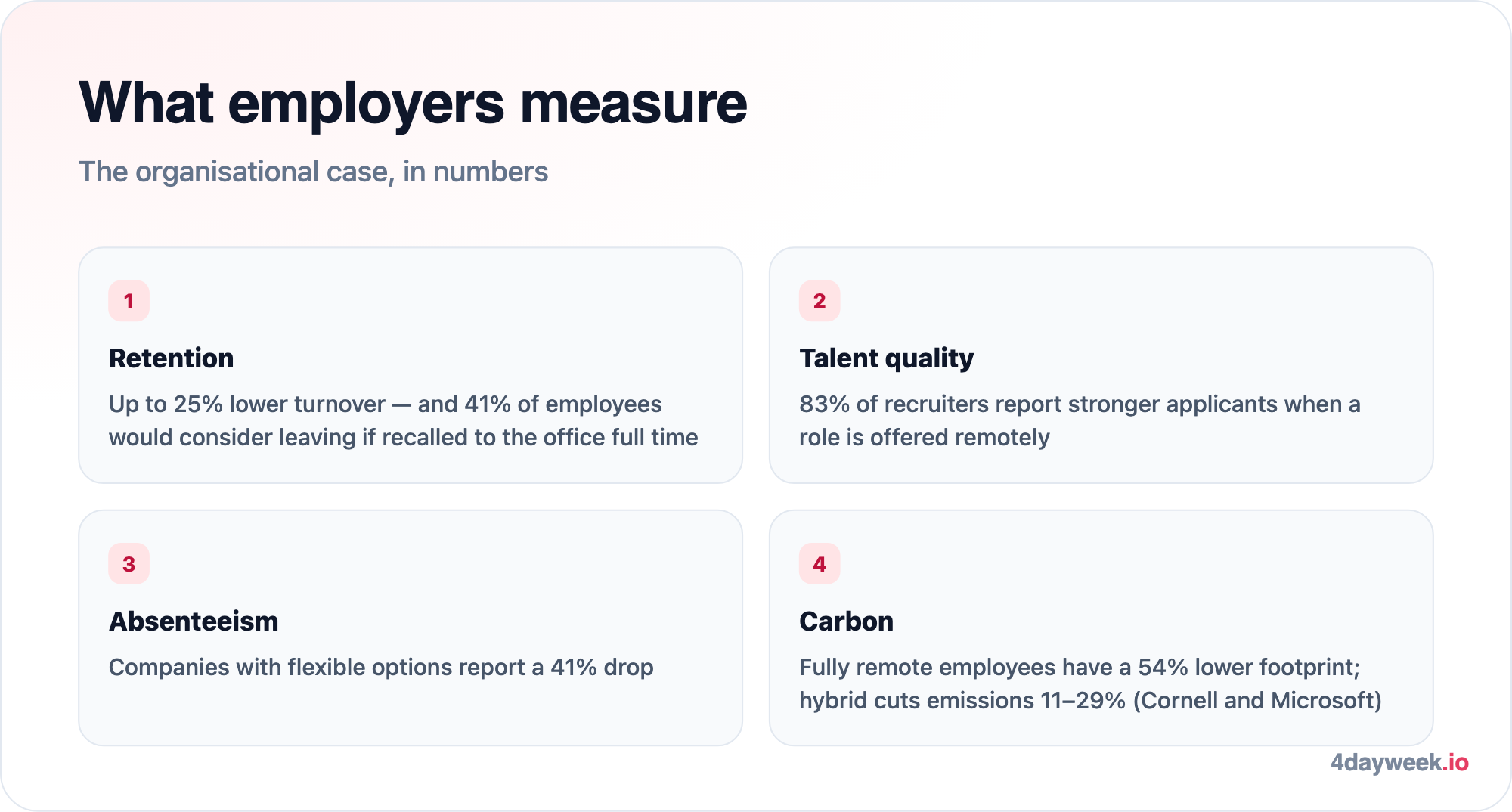
According to FlexJobs, remote job listings grew 8% in Q2 2025, especially in fields like IT and communications. Another survey found that 83% of recruiters see stronger applicant quality when remote options are available. With fewer limits on location, it becomes easier to find the right fit, fast.
“Startups and smaller companies offering flexible work arrangements could better challenge larger rivals less willing to let employees log on from home, and many may already be doing so,” according to workplace researchers. Nicole Kyle, who studies the future of work, added: “It’s a great way for small companies to compete with big companies for talent.”
20. Improves Employee Retention and Satisfaction
Remote work sends a clear message that loyalty and well-being matter. Nearly 41% of employees say they’d consider leaving if asked to return to the office full-time, which shows how much flexibility factors into long-term decisions.
Companies that offer remote options also see lower turnover on average, 25% less than those that don’t. When remote work is treated as a standard benefit, morale improves. Teams are more likely to stay engaged, and companies spend less time replacing people who would rather work elsewhere.
21. Lowers Operational Costs
Remote work lowers business expenses across the board. Companies save an average of $10,600 per employee per year on rent, utilities, office supplies, and related costs. Some organizations shrink their physical office space entirely. Those savings can be reinvested in tools, employee benefits, or strategic growth. For businesses aiming to operate efficiently without sacrificing quality, remote work adds real financial flexibility.
22. Increases Representation Across Roles and Locations
Remote work removes the limits of a single time zone or office hub. You can bring in talent from different regions, countries, and backgrounds, all without asking anyone to relocate.
Teams become more reflective of the world they serve, and collaboration can happen around the clock. With the right setup, your company can operate across borders, expand reach, and include voices that might’ve been missed in a traditional hiring model.
23. Reduces Absenteeism
Remote work helps people stay engaged even when plans change. Minor illness, car troubles, or childcare issues don’t always require a full day off. With more flexibility, employees can stay connected without pushing through commutes or calling out unnecessarily.
Companies with flexible work options report a 41% drop in absenteeism. This shows how much smoother daily operations can run when people are given room to adjust.
24. Supports Sustainability and ESG Goals
Remote work reduces environmental impact by cutting commuting and office energy use. A study by Cornell and Microsoft found that fully remote employees have a 54% lower carbon footprint compared to those working on-site.
Even hybrid schedules, working from home two to four days per week, can lower emissions by 11–29%. These reductions help companies make real progress on environmental and sustainability targets.
25. Prepares Companies for Future-Of-Work Demands
Workplace expectations are changing fast, and companies that adapt early stay ahead. Remote readiness makes it easier to scale, respond to disruptions, and support different working styles. It also signals flexibility to future hires.
Whether it's a main break, flight disruption, or cultural change, being able to operate without relying on a physical office keeps things moving. Long-term relevance depends on this kind of agility.
Summing Up
Remote work has moved from exception to expectation. It supports better health, stronger performance, and smarter business decisions. For both individuals and companies, the benefits are clear, and the future is flexible.
If you’re exploring flexible roles that match your lifestyle and goals, check out our job board. We list multiple remote jobs from top companies around the world. Start browsing today and find a role that actually fits your life.
FAQ’s
What’s a good reason to ask to work from home?
A good reason is one that shows how remote work supports both your responsibilities and your ability to perform well. For example, needing a quieter environment for focus, avoiding long commutes that impact energy levels, or managing responsibilities like childcare or medical appointments. If it helps you stay productive and consistent, it’s worth mentioning.
What excuse can I use for working from home?
Stick with honest and practical reasons. Common ones include waiting for a home repair, avoiding traffic disruptions, managing a mild illness, or needing uninterrupted time for deep work. Employers are more open to flexibility when the reason is clear and doesn't compromise performance.
How do you ask for work from home due to personal reasons?
Keep it respectful and to the point. You could say, “I have a personal matter to take care of, but that doesn’t prevent me from working. Would it be possible to work remotely that day?” If the situation is recurring, consider discussing a longer-term arrangement.
What are the reasons for working from home?
There are many benefits like better work-life balance, fewer distractions, lower stress, reduced commuting time, cost savings, and more control over your schedule. For employers, it also supports retention, productivity, and access to a wider talent pool. The reasons are both personal and strategic.




Get 4-day week jobs in your inbox
Create a free account to receive curated opportunities weekly.
Sign up for freeFree forever. No spam, unsubscribe anytime.