
Working from home isn’t just a perk. For many people, dealing with a medical condition it’s essential to well-being and productivity.
Around 93% of remote workers report improved mental health, while 90% notice better physical health when working from home . And that’s real.
Take a chronic illness, back pain, or respiratory conditions. They make in-person work tough. A flexible setup at home supports symptom management, scheduling doctor’s notes, and meeting project deadlines.
Remote work also reduces travel fatigue, lowers exposure to illness, and allows you to create an ergonomic setup that actually works for you. And under the Americans with Disabilities Act, employers must take accommodation requests seriously.
Today, we’ll share the most common medical reasons for telework and explore your legal rights under employment law. We will even share practical tips and email templates to strengthen your request.
Why Medical Reasons Can Justify Remote Work
Health issues don’t stay at home when you clock in at the office. A chronic illness, mental health disorder, or even recurring back pain can directly affect attendance, focus, and overall productivity.
Remote work creates space to manage these conditions without losing the ability to contribute. And the law backs this up.
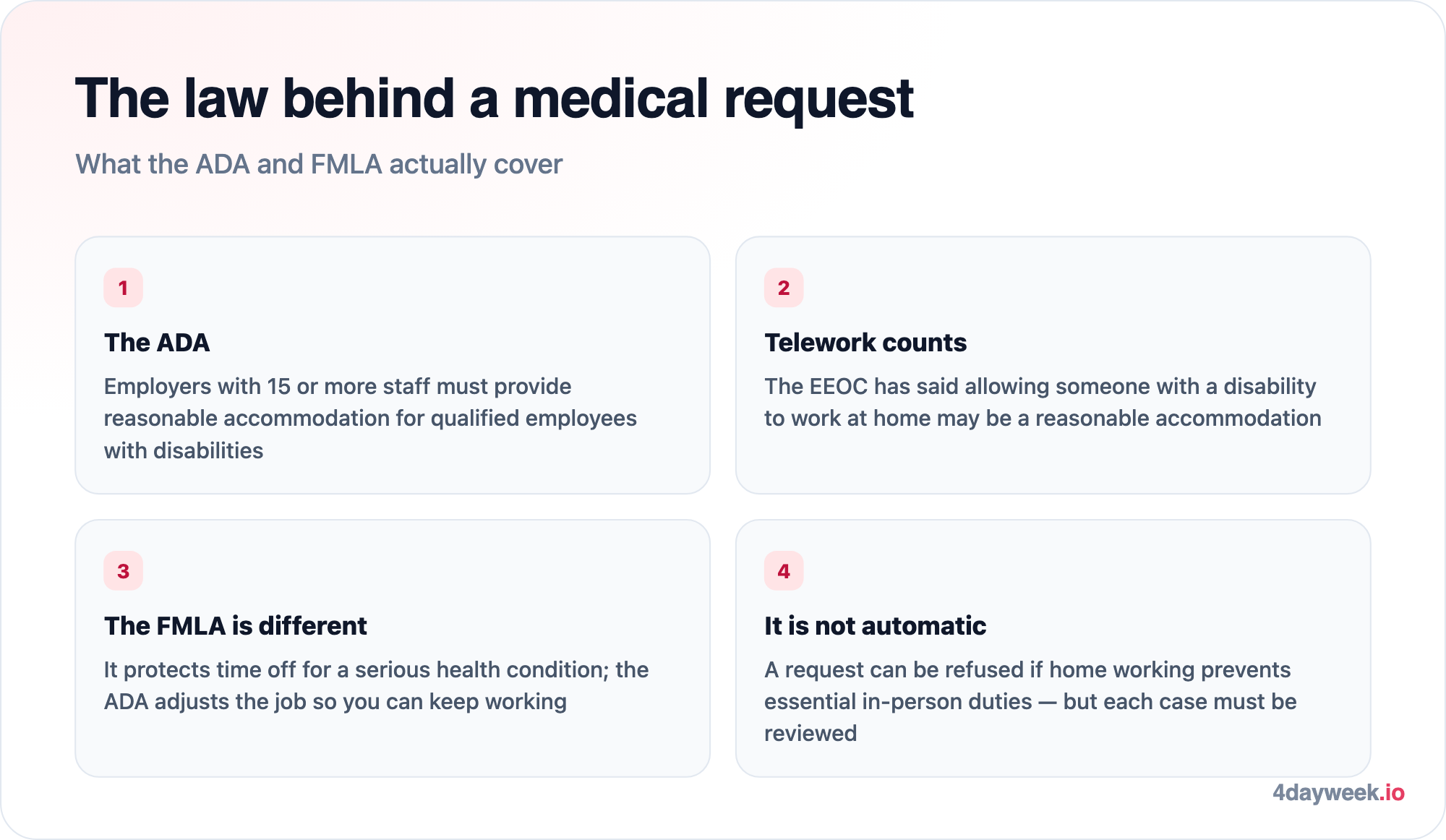
Under the Americans with Disabilities Act (ADA), employers must go through an interactive process to provide reasonable accommodations when a medical condition limits major life activities. For some employees, that accommodation looks like Work at Home/Telework. In other cases, flexible schedules or fewer in-office meetings may be enough.
“The EEOC said that allowing an individual with a disability to work at home may be a form of reasonable accommodation. The Americans with Disabilities Act (ADA) requires employers with 15 or more employees to provide reasonable accommodation for qualified applicants and employees with disabilities.” EEOC-NVTA-2003-1
What about leave? That’s where the Family and Medical Leave Act (FMLA) comes in. FMLA protects employees who need time off for serious health conditions, while the ADA is more about adjusting your work environment so you can keep working.
Of course, employers don’t have to approve every request. If working from home creates work environment issues or prevents the performance of essential duties that require in-person work, they may deny the request.
Still, under employment law, they must carefully review each case, weigh medical certificates or a doctor’s note, and avoid disability discrimination.
If a medical condition impacts your ability to perform in a traditional office environment, remote work is a legitimate request, both practically and legally.
Common Medical Reasons to Work From Home
Not every medical condition presents itself in the same way at work. Some flare up suddenly, others demand ongoing care, and a few make the traditional office environment nearly impossible.
That’s where remote work becomes more than convenience; it becomes a lifeline.
Let’s break down the most common health situations where working from home just makes sense.
A. Chronic & Ongoing Conditions
These are long-term health issues that often require flexibility, making remote work a practical solution.
Autoimmune Disorders
Conditions like lupus or rheumatoid arthritis can drain energy fast and require frequent rest. Remote work allows people to pace their day, avoid commuting strain, and still keep up with deadlines.
Chronic Pain
Arthritis, fibromyalgia, and ongoing back pain often worsen in rigid office environments. At home, workers can adjust their ergonomic setup, move around freely, and manage flare-ups without stigma.
Respiratory Conditions
Asthma, COPD, and long COVID can be aggravated by dust, poor ventilation, or exposure to illness in the office. Working from home lowers those risks and creates a safer breathing environment.
Digestive Disorders
IBS, Crohn’s disease, or food reactions require quick restroom access and control over diet. Home environments provide comfort, privacy, and flexibility without constant interruptions or embarrassment.
Neurological Conditions
Migraines, epilepsy, multiple sclerosis, or traumatic brain injury demand quiet, controlled environments. Remote work helps limit triggers like bright office lights or noise and allows for flexible breaks during health-related interruptions.
Immunocompromised Conditions
For people undergoing cancer treatment, transplant recovery, or living with HIV, avoiding exposure to illness is critical. Remote work provides a safer space with reduced infection risk and greater control.
B. Disabilities & Impairments
Some disabilities make the daily office routine exhausting, while others create barriers that workplaces often overlook. Remote work removes many of those hurdles and gives employees more control over how they manage their jobs.
Mobility Impairments
Whether it’s arthritis, a serious injury, or recovery after surgery, commuting and navigating office spaces can be draining. Working from home removes those physical barriers and lets people focus on their tasks instead of their pain.
Visual and Hearing Impairments
Traditional office environments aren’t always set up with accessibility in mind. At home, workers can customize their space with assistive technology, from screen readers to captioned video calls, and communicate on their own terms.
Short-Term Disabilities
Not every disability is permanent. A broken leg, a sprain, or even recovery after a medical procedure can make in-person work tough. Remote work offers a temporary but effective way to stay productive while healing.
C. Mental Health & Neurodiversity
Workplaces don’t always make space for different brains. Offices can overwhelm people with constant noise, pressures, and distractions. Remote work cuts through that noise and offers a more comfortable setup where productivity and well‑being can coexist.
Over 56% of workers say remote work has definitely improved their mental health. That speaks volumes.
Some common scenarios where telework helps are:
Anxiety, Depression, PTSD
Mental health disorders often get worse in crowded, rigid office setups. Remote work gives folks the space to ease anxiety, juggle therapy or doctor’s appointments, and still contribute meaningfully.
ADHD
Working in noisy, distraction-heavy spaces can tank focus. At home, people with ADHD can curate an environment that sparks deep work instead of friction.
Social Anxiety
For those who feel drained by small talk or crowded meeting rooms, remote work offers a calmer alternative, participation without pressure.
D. Family Health & Caregiving Needs
Health events don’t just affect one person, it’s often a ripple effect throughout a household. Caring for kids, elderly family members, or other dependents while trying to keep up with work is a balancing act.
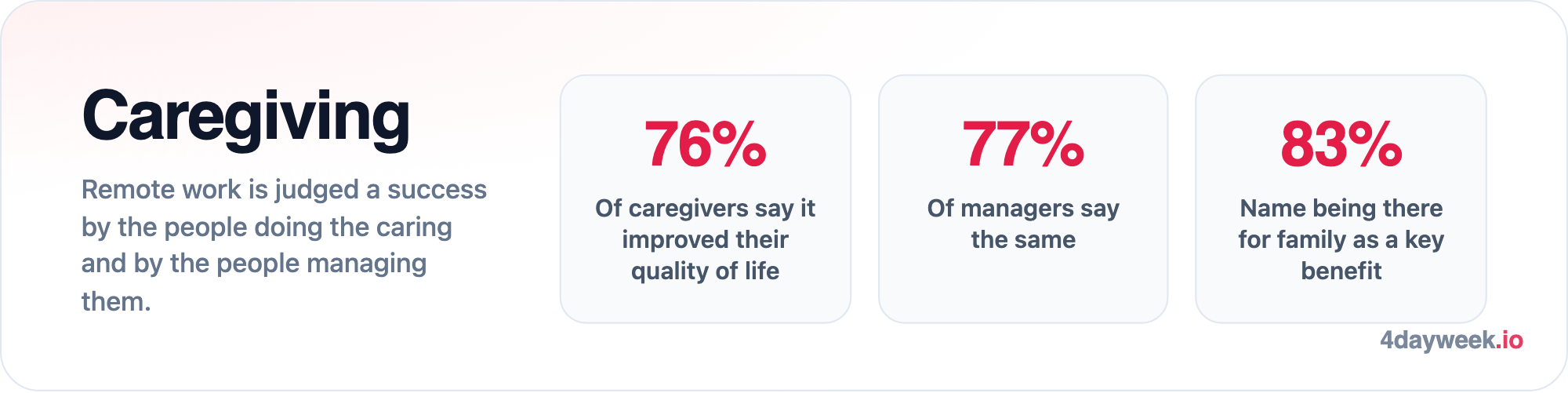
In fact, surveys show that 76% of caregivers and 77% of managers believe remote work has improved their overall quality of life. That’s a clear sign it supports both families and workplaces.
Caring for Children, the Elderly, or Dependents
Juggling work with caregiving responsibilities is no joke. Remote work gives you control over your day, it makes attending appointments or stepping in for family emergencies easier without sacrificing productivity.
Single Parents Without Childcare
Childcare gaps hit single parents hard. Having the ability to work from home means fewer interruptions, more flexibility, and fewer career disruptions.
Pregnancy, Fertility Treatments, Post-Partum Recovery
Pregnancy and postpartum life come with doctor’s visits, fatigue, and unpredictability. Legally protected by the Pregnancy Discrimination Act and Pregnant Workers Fairness Act (PWFA), remote work offers comfort during these sensitive periods.
“If your patient has a physical or mental condition related to, affected by, or arising out of pregnancy, childbirth, or related medical conditions that interferes with their work, your patient may be able to get a reasonable accommodation under the PWFA.” EEOC-NVTA-2025-3
Breastfeeding
Going back to the office while breastfeeding can be stressful. At home, you’ve got the privacy and flexibility you need to follow your feeding schedule without embarrassment or time pressure.
In fact, 83% of employees say that being there for family is one of the most important benefits of working from home.
E. General Health & Lifestyle Reasons
Remote work supports well-being in ways that go beyond specific medical conditions. It creates a daily routine where health, comfort, and productivity can align.
Reduced Exposure To Illness
Sitting in shared office spaces means more chances to catch sniffles or the flu. One study showed that working people are about 35% more likely to get the flu compared to others. This suggests the workplace itself increases exposure risk.
Remote work lets you stay home when you're sick, which helps cut down on passing germs around, something the Centers for Disease Control (CDC) highlights as a key move during flu season.
Healthier Breaks
At home, breaks can actually be restorative. A short nap, stretching session, or even five minutes of meditation helps recharge energy levels and reduce stress.
Physical Activity Integration
Remote work makes it easier to weave in small movements throughout the day. For example, a quick walk, light exercise, or even standing to stretch. Those little changes add up to stronger long-term health.
Improved Air Quality
Offices aren’t always known for great ventilation. Home environments often have better air quality, which can reduce breathing issues for people with respiratory conditions.
Remote Jobs with a Great Work-Life Balance
Save one to come back to it — it's free.

Customized Ergonomic Setups
One size rarely fits all in the office. At home, workers can design their ergonomic setup, from desk height to chair support. This reduces the risk of back pain and repetitive strain injuries.
Better Diet Control
Access to a kitchen means healthier food choices. Instead of fast food lunches, home-prepared meals help manage digestive disorders and support overall well-being.
Lower stress and burnout
Cutting out long commutes and rigid office schedules often eases daily pressure. Still, stress isn’t eliminated completely. Surveys show that about 82% of employees who work from home report feeling stressed at least once a week, compared with 66% of on-site workers. This shows remote work helps reduce certain stressors, but staying mindful of balance is key.
How to Request Work From Home for Medical Reasons
To ask for remote work because of a medical condition can feel intimidating, but it doesn’t have to be. The key is to maintain a professional, clear, and well-supported approach, backed by the right documentation.
Let’s see how you can make a strong case.
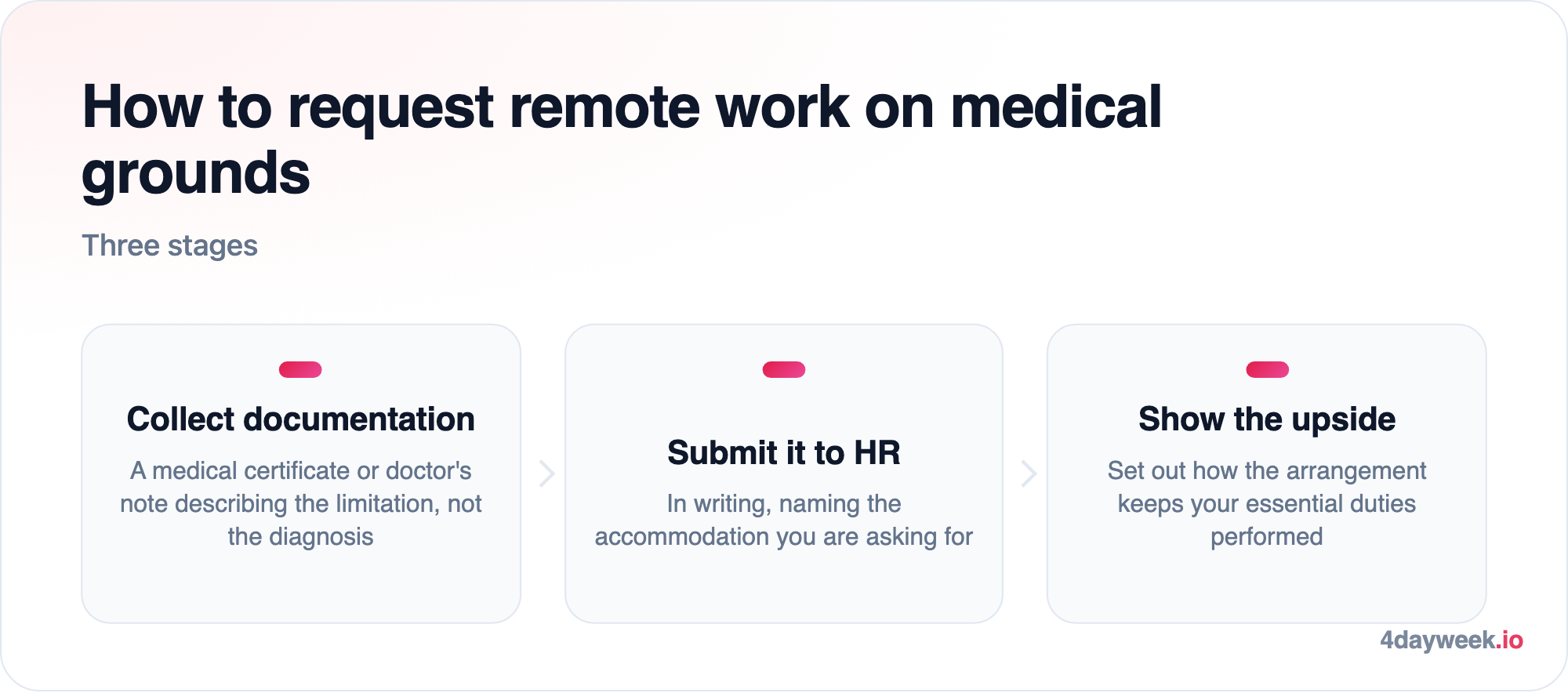
Collect Medical Documentation
Start by visiting your doctor and getting a medical certificate, fit note, or professional diagnosis that explains how your condition affects your work. This could include chronic illness, back pain, respiratory conditions, or mental health disorders.
The note doesn’t need to share private details; medical confidentiality and data protection laws are there to protect you.
Submit Request to HR
Send your request through the process outlined in your employee handbook or employment contract. HR professionals are trained to handle accommodation requests under disability law, including the Americans with Disabilities Act (ADA) and the Rehabilitation Act of 1973.
If your company has a company doctor, they may be involved in reviewing the request.
Include Productivity Benefits
Frame your request in a way that shows you can still meet project deadlines, attend video calls, and maintain employee productivity. Mention how working from home minimizes health-related interruptions like doctor’s appointments or flare-ups that are harder to manage in an office environment.
Example Request Letter to Work From Home
Here’s a simple email template you can adapt:
Subject: Request for Remote Work Accommodation
Dear [Manager/HR],
I am writing to formally request a work-at-home/telework arrangement due to a medical condition. My doctor has recommended adjustments to reduce the impact on my health and ability to perform my role.
Remote work would allow me to manage medical appointments and health-related needs while continuing to meet project deadlines and maintain productivity. I have attached my doctor’s note for reference.
Thank you for considering this accommodation request in line with the Americans with Disabilities Act. I’m happy to discuss this further and explore options through the interactive process.
Best regards,
[Your Name]
P.S. Thinking about remote work but not sure how to bring it up in an interview? Check out our guide “How to Ask About Remote Work in an Interview” for practical tips, email templates, and expert advice to help you ask with confidence.
Summing Up
Working from home for medical reasons helps you manage health while staying productive. With the right documentation and protections under employment law, remote work can be a practical way to balance well-being and career.
Looking for jobs that truly value flexibility? Check out our job board. It features remote and four-day work week roles from top companies worldwide.
Start exploring today and take the next step toward a healthier work-life balance.
FAQs
How do I ask for medical reasons to work from home?
Obtain a doctor’s note or medical certificate that explains your condition, and then submit a formal request to HR or your manager. Mention how remote work supports both your health and productivity. Referencing the Americans with Disabilities Act and offering to discuss accommodations through the interactive process shows professionalism and increases the chance of approval.
What is a medical reason to get permanent work from home?
Permanent telework may be approved for conditions like chronic illness, autoimmune disorders, back pain, respiratory conditions, or compromised immunity during cancer treatment. If your medical condition consistently affects attendance or workplace safety, you may qualify for permanent work-from-home under disability law.
The ADA protects employees who require ongoing accommodations to manage serious health concerns.
How to say medical issues professionally?
Use terms like “medical condition,” “health concern,” or “ongoing treatment needs” when speaking with HR or managers. These phrases are professional, respectful, and protect privacy while maintaining medical confidentiality. They communicate the seriousness of your situation without oversharing personal details.
What is the best reason for work from home?
The best reason is striking a balance between health needs and productivity. For example, managing a chronic illness or mental health disorder can require flexibility for doctor’s appointments and recovery. Showing how remote work reduces interruptions, limits stress, and helps you meet deadlines demonstrates to employers that you can stay reliable while protecting your well-being.
What is a good reason for working from home?
Strong reasons include medical conditions like migraines, respiratory disorders, autoimmune diseases, or recovery after surgery. Family caregiving responsibilities and workplace safety needs may also qualify. The key is to show that remote work supports both your health and productivity.
How can I convince my employer to let me work from home?
Make your case with documentation and professionalism. Share a doctor’s note, reference protections under the ADA, and explain how remote work supports your medical needs while keeping you productive.
How to ask to work from home when ill?
Keep it professional and brief. Let your manager or HR know you’re unwell and request to work remotely to avoid spreading illness. Ensure they know you’ll stay reachable via video calls and keep project deadlines on track. Employers usually approve because it protects workplace safety and aligns with Centers for Disease Control recommendations on preventing flu and other infections.




Get 4-day week jobs in your inbox
Create a free account to receive curated opportunities weekly.
Sign up for freeFree forever. No spam, unsubscribe anytime.