
Did you know that 32% of Canadian businesses have permanently switched to a hybrid work model, with remote employees being 13% more productive than those working in offices.
As countries worldwide roll out tailored digital nomad visa programs, Canada remains a popular destination for remote workers and foreign nationals looking for flexibility and a high quality of life.
But does Canada actually offer a digital nomad visa? And how do people working for a foreign employer or a Canadian employer legally stay and work in Canadian cities like Vancouver, Toronto, or Montreal?
In this blog, we break it all down, with real data, sources, and a full guide to how remote work is evolving in North America.
Is There a Digital Nomad Visa in Canada?
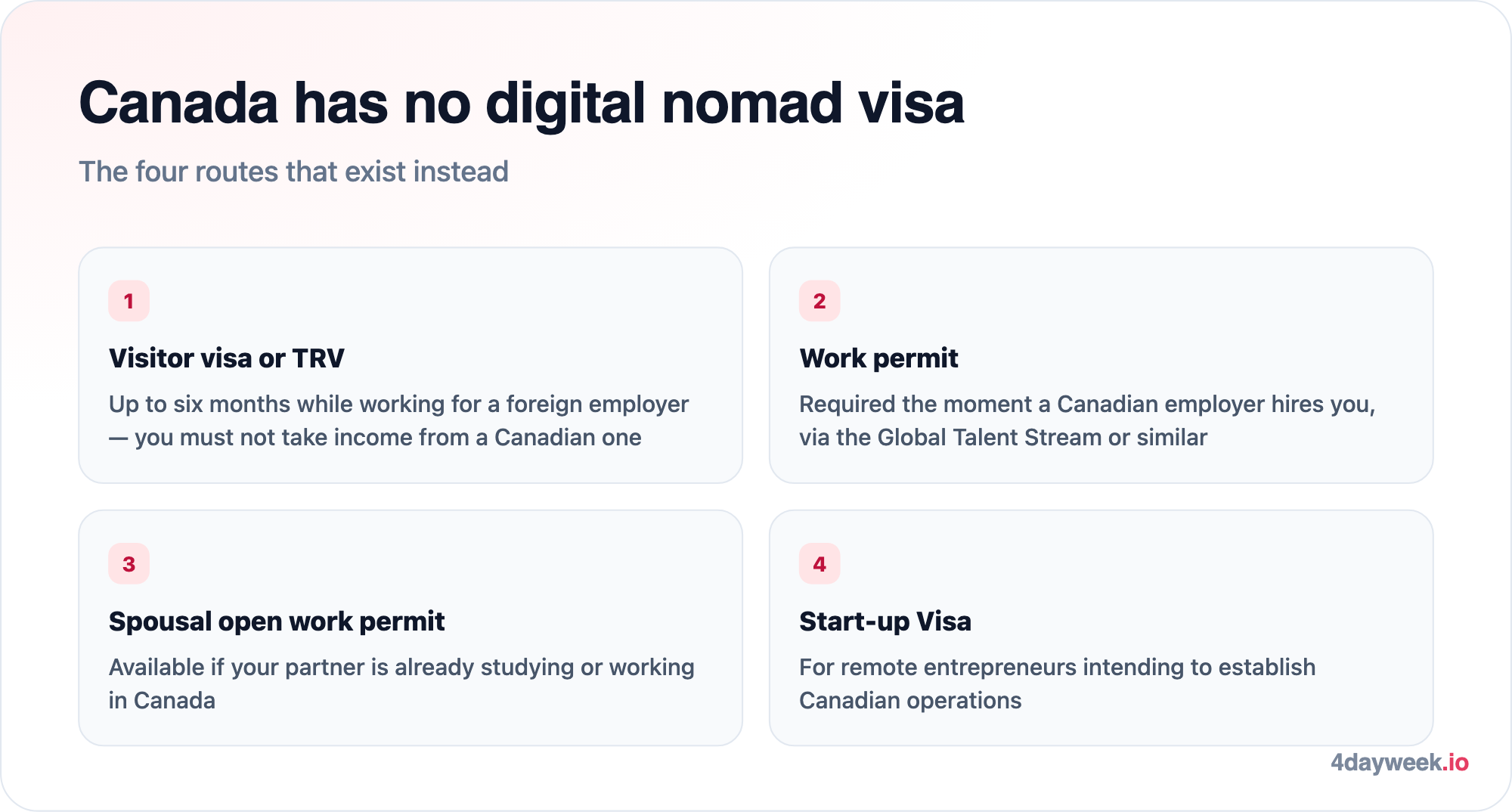
As of 2026, Canada does not offer a dedicated "Digital Nomad Visa. Foreign remote workers can enter Canada through two remote work visa options: Temporary Resident Visa (TRV) and Visitor Visa, and can later access work permits and permanent residency.
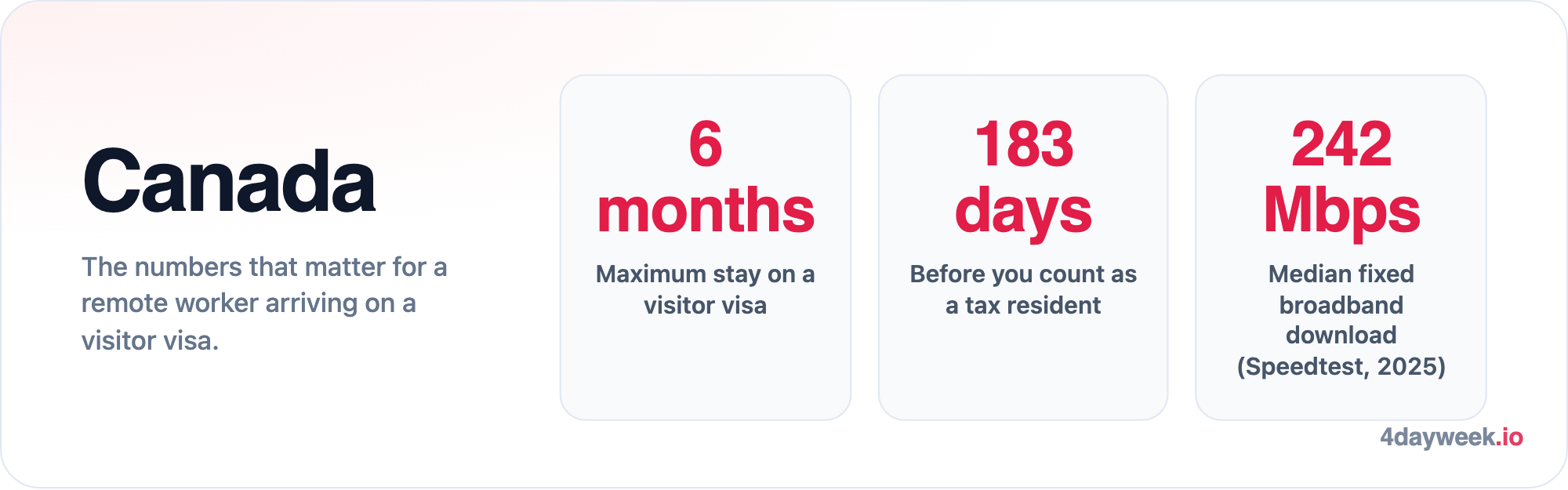
According to Immigration, Refugees and Citizenship Canada (IRCC), foreign nationals can occupy a visitor visa position in Canada for up to 6 months to earn income for companies residing abroad. This benefit proves particularly helpful to distant workers maintaining employment under foreign companies operating outside Canada.
How Does Canada’s Remote Work-Friendly Framework Work
Canadian immigration policy accepts various categories of foreign workers and entrepreneurs through its admission provisions. While there is no formal “Digital Nomad Visa,” the Canadian government encourages innovation and mobility.
In June 2023, Immigration Minister Sean Fraser stated that:
“That digital nomad strategy will allow people who have a foreign employer to come live in Canada for up to six months, live and spend money in communities in this country and, should they receive a job offer while they’re here, we’re going to allow them to continue to stay and work in Canada”.
Canada’s digital nomad plan is part of a bigger Tech Talent Strategy that focuses on four main goals:
-
New Innovation Stream to attract top talent
-
Make Canada a hub for digital nomads
-
Easier work permits for U.S. H-1B visa holders
-
Improve the current IRCC immigration programs
P.S. If you're considering other remote work destinations, make sure to check out our list of the 11 Best Countries to Work Remotely for more great options.
How Remote Workers Can Legally Stay in Canada
If you are a remote worker, here are your legal options in Canada:
-
Visitor Visa / TRV: Stay up to 6 months while working for a foreign employer. You must not enter the Canadian labor market or take income from a Canadian employer unless authorized.
-
Work Permit: If you get hired by a Canadian employer, you’ll need a work permit via the Global Talent Stream or similar programs.
-
Open Work Permit for Spouses: If your partner is studying or working in Canada, you may qualify for an open work permit.
-
Startup Visa Program: For remote entrepreneurs wanting to establish Canadian operations.
For details on the Canada Remote Work Visa Application Process, visit the official site: IRCC – Apply for a visa.
Documentation and Bank Requirements For Visitor Visa
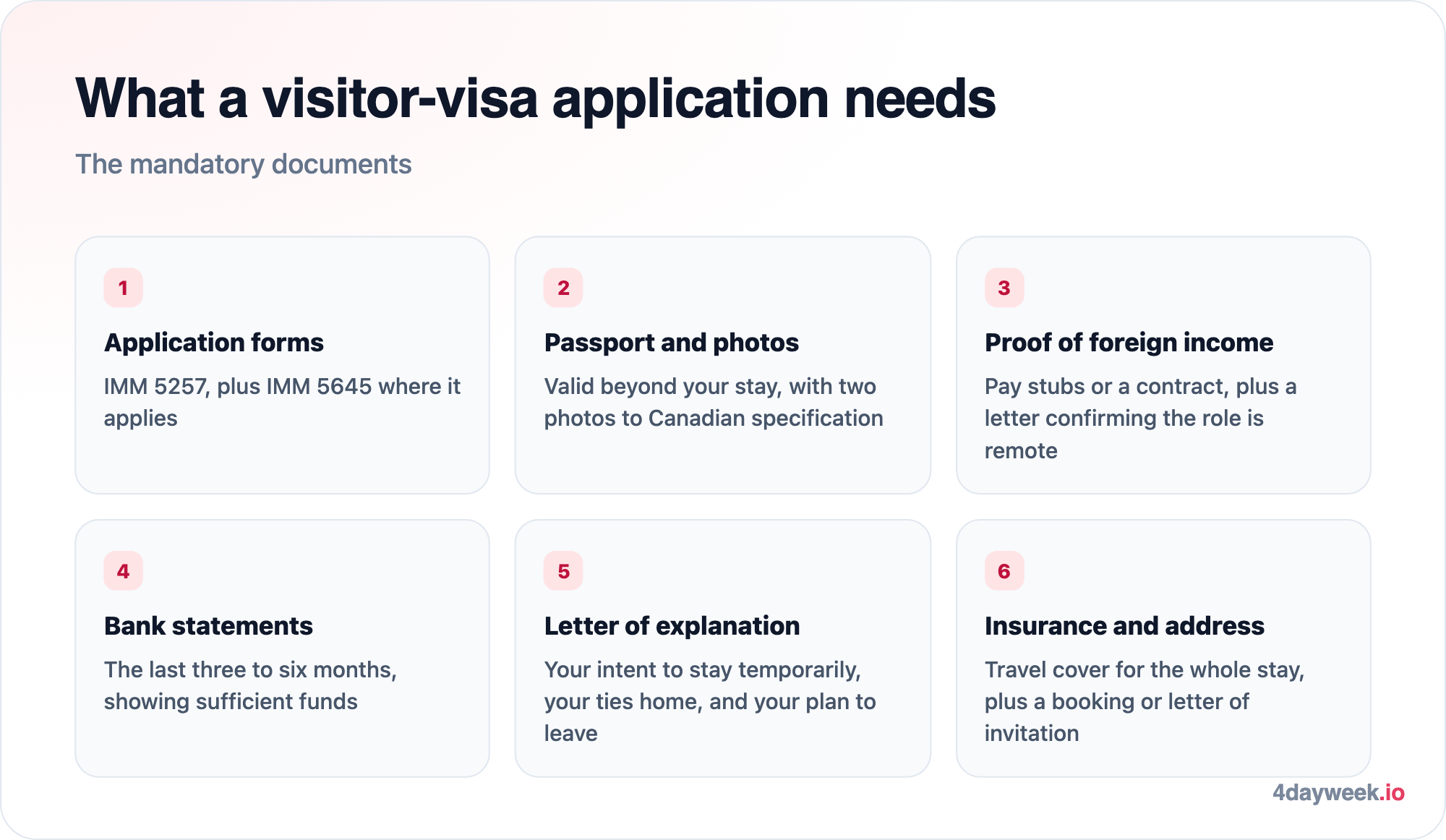
Remote workers entering Canada on a visitor visa should prepare:
Mandatory Documents:
-
Completed Application Forms (including IMM 5257, IMM 5645 if applicable)
-
Valid Passport (must not expire during your intended stay)
-
Two Passport-sized Photos (meeting Canadian specifications)
-
Proof of Income from Abroad
-
Pay stubs or an employment contract from a foreign company
-
A letter from your employer stating that your job is remote
-
-
Bank Statements (last 3–6 months showing sufficient funds)
-
Letter of Explanation
-
Explaining intent to stay temporarily as a remote worker
-
Outlining ties to your home country and plan to leave Canada at the end of your stay
-
-
Travel Insurance (valid for the entire duration of your stay)
-
Proof of Accommodation in Canada
- Hotel bookings or a letter of invitation if staying with friends/family
-
Travel Itinerary (if available)
-
Visa Application Fee Payment Receipt
Additional Possible Requirements (Depending on Your Country):
-
Biometrics (photo and fingerprints)
-
Police Clearance Certificate
-
Medical Exam (if staying longer than 6 months or from a designated country)
Visit a Visa Application Center or apply online via IRCC. You may be required to submit additional documents, depending on your country of origin.
Taxes and Legal Responsibilities in Canada For Visitors
While on a visitor visa, you are not considered a tax resident of Canada unless you stay for over 183 days or establish significant ties. However, for long-term stays, it is recommended to consult a Canadian immigration lawyer or tax advisor. The biggest advantage for digital nomads is the ability to enjoy Canadian life without immediate tax obligations, provided the structure is set up correctly.
Why Is Canada One of the Best Digital Nomad Destinations
According to Forbes, Canadian cities consistently rank in the top 20 for digital nomad destinations. Canadian cities are particularly loved for their balance of quality of life, internet coverage, and coworking space options.
Remote Jobs with a Great Work-Life Balance
Save one to come back to it — it's free.



Internet and Co-working Infrastructure
-
Average internet speed (GMT-5, Eastern Standard Time): 241.96 Mbps download / 81.54 Mbps upload on fixed broadband, and 107.35 Mbps download / 12.48 Mbps upload on Mobile (Canada Median Country Speeds – Speedtest Global Index, 2025).
-
Best-rated coworking space: Spaces in Toronto and Montreal like Crew Collective and WeWork, offer reliable internet, aesthetic environments, and are located near city centers.
-
Local, independently-owned spaces: In cities like Halifax and Calgary, smaller but well-reviewed co-working spaces are gaining popularity among digital nomads.
Work Culture, Time Zones, and Download Speeds in Canada
Working in Canada’s time zones is highly compatible with both North America and Europe:
-
Atlantic Standard Time (GMT-4) – Halifax, Fredericton
-
Eastern Standard Time (GMT-5) – Toronto, Montreal, Ottawa
-
Central Standard Time (GMT-6) – Winnipeg, Regina
This facilitates smooth coordination with American cities or European clients.
What is The Cost of Living in Canada
The cost of living in Canadian cities varies depending on the location.
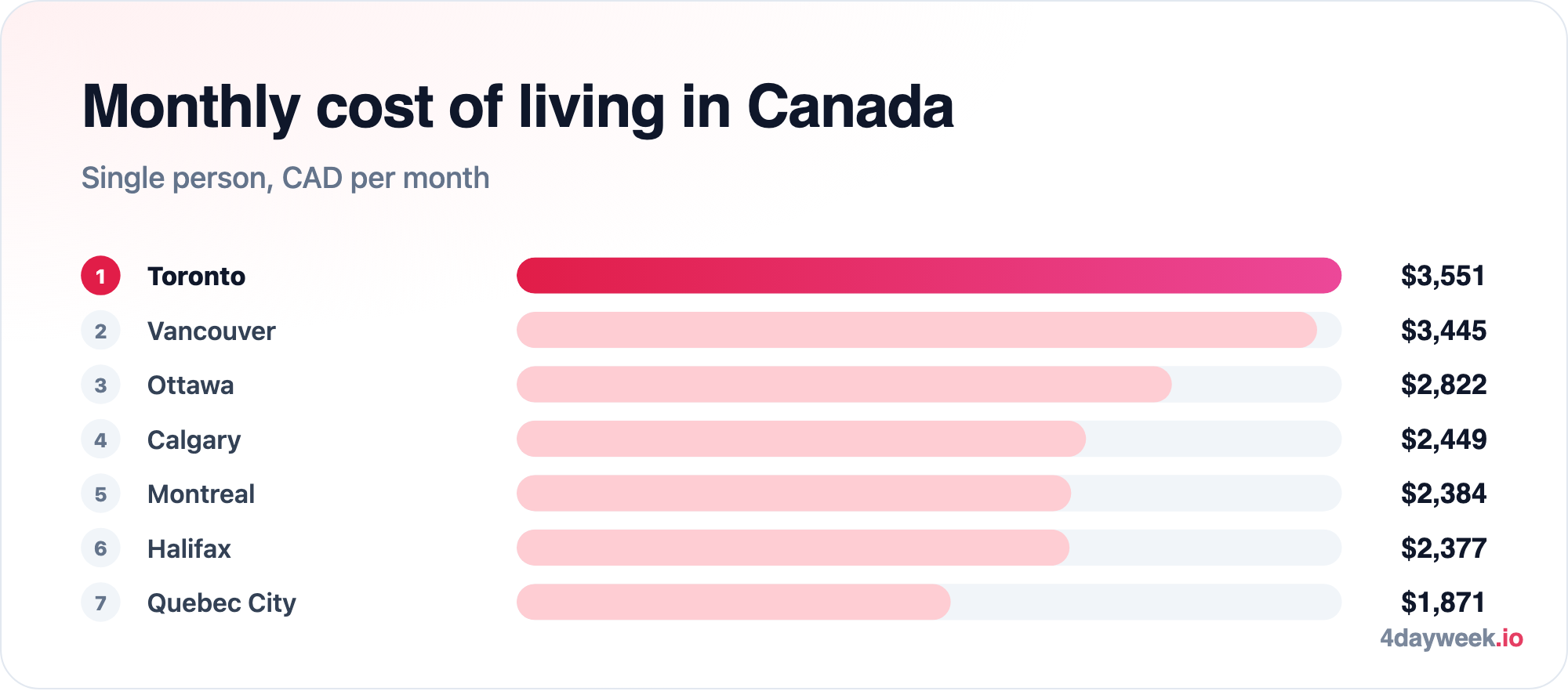
Let’s take a look at some figures for a single person living in popular and major cities in Canada:
| City Name | Single Person Monthly Cost (CAD) | Family of 4 Monthly Cost (CAD) | Average Rent (2-Bedroom) per Month (CAD) |
|---|---|---|---|
| Toronto | $3,551 | $6,144 | $1,666 |
| Vancouver | $3,445 | $5,955 | $1,571 |
| Montreal | $2,384 | $4,799 | $1,550 |
| Ottawa | $2,822 | $5,329 | $1,550 |
| Calgary | $2,449 | $5,110 | $1,355 |
| Quebec City | $1,871 | $4,126 | $1,132 |
| Halifax | $2,377 | $4,698 | $1,300 |
As per data, Toronto and Vancouver are known as expensive cities, while Halifax and Montreal are increasingly viewed as affordable cost alternatives.
Final Thoughts
Canada currently lacks an official Digital Nomad Visa; however, it offers ample immigration pathways and beneficial conditions for remote workers and skilled individuals, as well as for holders of the Canada Remote Work Visa.
If you’re looking for remote jobs or 4-day workweek roles that support a better work-life balance, make sure to explore our job board. We feature a variety of remote opportunities from renowned companies worldwide, across different industries.
It’s the perfect place to find a role that suits your digital nomad lifestyle, allowing you to enjoy more freedom and flexibility.
FAQ’s
Does Canada offer a remote work visa?
No, Canada does not offer a separate "Digital Nomad Visa." But remote workers can stay in Canada using a Visitor Visa (TRV) and work for foreign employers while living there for up to 6 months.
Can a US citizen work in Canada remotely?
Yes, a US citizen can stay in Canada on a Visitor Visa and work remotely for a foreign (non-Canadian) employer. However, they can't officially enter the Canadian job market unless they get a proper work permit.
Are you allowed to work remotely in Canada?
Yes, you are allowed to work remotely in Canada if you are employed by a company outside of Canada while on a Visitor Visa. You cannot work for a Canadian employer without a valid work permit.
Can I live in Canada as a digital nomad?
Yes, you can live in Canada as a digital nomad by using a Visitor Visa to stay up to 6 months. If you get a Canadian job offer while you're there, you can apply for a work permit to stay longer.




Get 4-day week jobs in your inbox
Create a free account to receive curated opportunities weekly.
Sign up for freeFree forever. No spam, unsubscribe anytime.