
Flexible benefits are perks and compensation options that employees can tailor to fit their own lives. The model moves past the classic one-size-fits-all package — the one that quietly assumes everyone on the payroll wants the same things.
That assumption no longer holds. A flexible approach gives your team genuine choice: a stipend toward a home office, a wellness allowance for a gym membership, a different health plan, support with childcare. For employers competing for good people, it has become one of the more powerful levers available — alongside workplace wellness programmes that address the full picture of what employees need.
Why Flexible Benefits Are a Strategic Necessity
The standardised benefits package is showing its age. Today's workforce spans several generations working side by side, with widely different priorities, family structures, and life goals.
A recent graduate has very different needs from a mid-career parent or an employee approaching retirement. Forcing all of them into one rigid structure isn't just inefficient — it's a missed chance to show that you value people as individuals rather than headcount.
This is why flexible benefits have moved from "nice-to-have" perk to a core part of a competitive compensation strategy. It's a direct response to a working world where personalisation isn't merely appreciated; it is expected.
Meeting the Demands of a Modern Workforce
A benefits package is an extension of company culture. It signals what an organisation actually values, and employees read it that way. A generic plan that ignores personal choice feels impersonal and dated, and that perception can quietly erode engagement and loyalty.
Pet insurance might be transformative for one person while another would get far more value from stronger retirement matching or help with student-loan repayment. A flexible model lets you serve those different needs without blowing up the budget.
The aim is maximum perceived value: giving people the autonomy to direct resources toward what matters most to them. For more on what employees consistently rank highly, see our guide to what benefits employees value most.
Offering choice does more than deliver perks. It builds a culture of trust — an acknowledgement that your team has lives outside work, and that supporting those lives is good for the business.
It helps to set the old model against the new one directly.
The Evolution from Traditional to Flexible Benefits
| Attribute | Traditional Benefits Model | Flexible Benefits Model |
|---|---|---|
| Approach | One-size-fits-all; uniform for every employee. | Customisable; employees choose from a menu of options. |
| Focus | Primarily health, retirement, and insurance. | Holistic wellbeing — physical, mental, and financial. |
| Employee experience | Passive; employees receive a pre-set package. | Active; employees build their own package. |
| Value proposition | Seen as a standard, expected offering. | Seen as a personalised perk that reflects employer care. |
| Adaptability | Rigid and slow to change with workforce needs. | Agile; updated as priorities shift. |
| Communication | Often limited to enrolment periods and formal documents. | Requires ongoing, clear communication and education. |
| Impact on talent | Meets basic expectations but rarely differentiates. | A genuine tool for attracting and retaining diverse talent. |




Hiring for a 4-day week?
List your roles on 4dayweek.io and reach candidates who want a better balance.
Get started freeThe shift toward flexibility is a fundamental change in how employers support their teams — from a transactional relationship to a more human one.
A Global Shift Toward Personalisation
This is not a hunch; it is a measurable movement. Aon's 2025 Global Benefits Trends Study, which surveyed multinational employers, found that 65% of employees at multinationals would trade some of their current benefits for more choice — yet only 14% of those companies have global guidelines in place to deliver personalisation at scale. In other words, employee demand is well ahead of employer readiness.
That gap is the opportunity. Companies clinging to a rigid, uniform package risk looking out of touch and struggling to attract the talent they need. A flexible programme sends a clear signal that your organisation is forward-thinking and genuinely invested in its people — a decision that directly affects your employer branding and your ability to build and keep a strong team.
How to Design Your Flexible Benefits Framework
Building a good flexible benefits programme isn't about throwing perks at the wall to see what sticks. It takes a structured approach, and the framework has to reflect your culture, fit your budget, and meet the real needs of your team.
It starts with one thing: listening.
You have to get past your own assumptions about what employees want. The only reliable way to do that is to gather direct feedback, and a well-designed survey is your best tool for surfacing which benefits will genuinely move the needle on wellbeing and engagement.

Start by Listening to Your Team
Before you build anything, you need a blueprint grounded in real data from the people who will use these benefits. Anonymous surveys work well here because they encourage honesty.
Move beyond yes/no questions and mix formats to get richer information:
- Ranked-choice questions. Ask employees to rank potential benefits — a wellness stipend, a remote-work allowance, a professional-development fund, pet insurance — from most to least valuable. This shows what genuinely matters.
- Rating-scale questions. Use a simple 1-to-5 scale to gauge interest in a specific option, such as "How valuable would a flexible work schedule be to you?" This gives a clear read on demand.
- Open-ended questions. Always include at least one, such as "Is there a benefit not listed that would meaningfully improve your work-life balance?" This is often where the most useful ideas surface.
This feedback is the foundation for everything that follows. It ensures you spend money on benefits people will actually use and value.
Aligning Benefits with Culture and Budget
Once you know what employees value, filter those preferences through two lenses: culture and budget. Not every popular benefit is the right fit for your organisation, and that is fine.
For cultural alignment, ask whether a benefit reinforces your stated values. If "continuous learning" is one, a generous professional-development stipend is an obvious move. If you talk about work-life balance, introducing genuinely flexible working hours is a way to walk the talk rather than just claim it.
A benefits package is a tangible expression of company culture. The choices you offer should feel authentic to who you are — not a copy-paste of a competitor's programme.
On the financial side, the goal is a model you can sustain. Rather than locking into fixed, expensive perks, many companies now use a defined-contribution approach: you allocate a set amount per employee, often through a Lifestyle Spending Account, which they can direct across a menu of approved categories. The company gets cost predictability; the employee gets real choice.
Crafting Your Benefit Mix
With employee data and budget constraints in hand, you can build the menu. A well-rounded mix usually pairs a foundation of core benefits with a layer of flexible options on top.
1. Core foundational benefits. The non-negotiables — the safety net everyone gets. This tier typically includes:
- Comprehensive health insurance options
- A retirement savings plan, ideally with an employer match
- Paid time off and sick leave
2. Flexible allowances and stipends. This is where personalisation happens — monetary allowances employees direct toward what they need most:
- Wellness stipend — gym memberships, meditation apps, therapy, fitness classes.
- Remote-work stipend — home internet, an ergonomic chair, co-working space.
- Professional-development fund — courses, certifications, conferences, industry books.
- Family and caregiving support — childcare, elder care, or pet care costs.
This layered approach lets organisations manage cost while still delivering high perceived value to their teams.
Getting the Financial and Legal Stuff Right
Two questions tend to nag at any leader rolling out a flexible programme: how much will this cost, and how do we keep it compliant? Both are answerable without writing a blank cheque.
A Smarter Way to Budget for Benefits
The old model was a fixed-cost commitment: pick a rigid set of perks and pay the bill regardless of who actually used them.
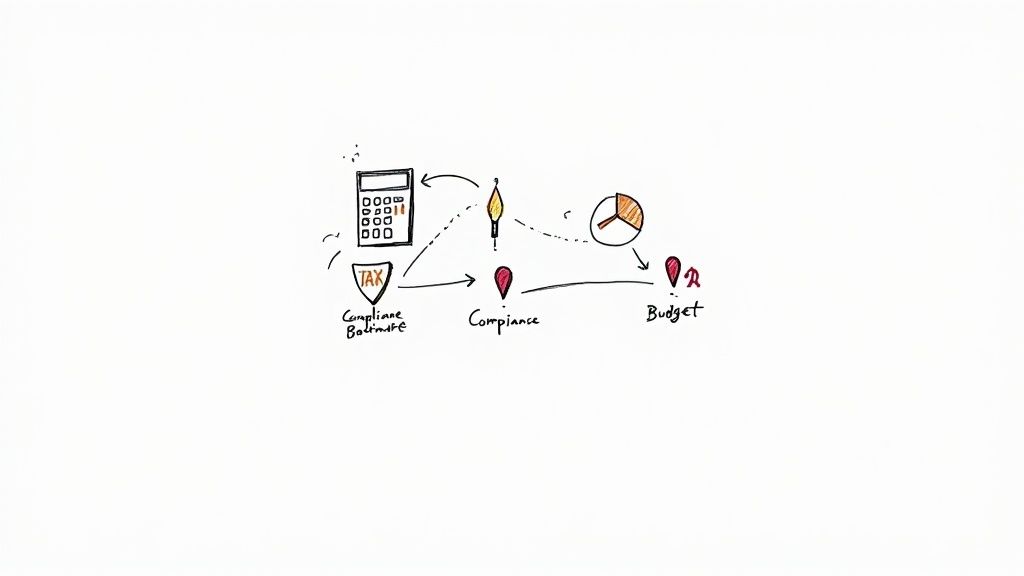
The modern approach inverts that. With a defined-contribution model, you allocate a specific budgeted amount to each employee as a flexible allowance. They use those funds to "shop" a menu you create. Employees get meaningful choice, and you get predictable, year-on-year cost control.
Building a Fair and Sustainable Budget
Once you have a funding model, the next step is applying it fairly. The goal is an equitable total-rewards package across the organisation, and that means more than salary.
Calculate the full value for each person: base pay, potential bonuses, and the cash value of their benefits allowance. A "total rewards statement" built from those figures is a powerful communication tool — it helps the team see the full picture of what you invest in them beyond the paycheck.
An equitable programme isn't about giving everyone the identical perks. It's about giving everyone the same level of investment and the freedom to direct it where it matters most to them.
This kind of flexibility matters more as healthcare costs climb. The KFF 2025 Employer Health Benefits Survey found that the average annual deductible for single coverage reached $1,886, with more than a third of covered workers in a plan carrying a single-coverage deductible of $2,000 or more. Layering in flexible benefits gives employees a way to manage those growing out-of-pocket costs.
Avoiding Common Legal and Tax Traps
The biggest source of confusion with flexible benefits is almost always tax. The rules for different accounts and allowances vary, and so do the implications for you and your employees.
Money paid into a Health Savings Account (HSA) is generally a pre-tax contribution, which lowers an employee's taxable income. Funds provided through a Lifestyle Spending Account (LSA), by contrast, are generally treated as taxable income. Getting these distinctions right is the foundation of a compliant programme.
Popular Flexible Benefits and Their Tax Considerations
| Benefit Type | Description | Common Tax Treatment (Employee) |
|---|---|---|
| HSA contributions | Funds for out-of-pocket medical costs, tied to a high-deductible health plan. | Pre-tax contributions, tax-free growth, and tax-free withdrawals for qualified medical expenses. |
| Lifestyle Spending Account (LSA) | A flexible allowance for wellness, remote-work, or personal-development expenses. | Generally treated as taxable income, in exchange for maximum flexibility. |
| Commuter benefits | Pre-tax funds set aside for mass transit or qualified parking. | Pre-tax up to a monthly IRS limit, reducing taxable income. |
| Dependent Care FSA | A pre-tax account for eligible childcare or adult-dependent-care expenses. | Pre-tax contributions up to an annual limit, a significant saving for caregivers. |
Tax treatment is summarised here for general orientation only; specific limits change year to year and depend on plan design, so confirm the current figures with a benefits adviser before you communicate anything to employees.
Beyond tax, you also have to keep up with regulations such as the Affordable Care Act. How you structure health benefits — particularly if you offer something like a Health Reimbursement Arrangement — can affect your ACA reporting duties.
One final point for distributed teams: state and local laws differ. A programme that works cleanly in one state may need adjustment in another, especially around paid leave and expense reimbursement. When in doubt, involve your legal and tax advisers early — it is far cheaper than unwinding a problem later.
Launching and Communicating Your New Program
A well-designed programme still falls flat if employees don't understand it, don't see the value, or don't know how to enrol. A successful rollout is far more than a single, easily ignored email. It needs a real communication plan — one that builds genuine interest and gives crystal-clear instructions.
The job is to explain the why behind the change, not just the what.
Crafting a Multi-Channel Communication Strategy
People absorb information differently, so a single channel never does the job. Treat the launch like a campaign: mix formats and repeat the key messages across several platforms.
A solid communication mix includes:
- A company-wide town hall. A live presentation from leadership to share the vision and generate initial momentum.
- A dedicated intranet hub. One easy-to-find home that becomes the single source of truth — no hunting through old emails.
- Manager talking points. Managers field the first questions, so equip them with a simple script and an FAQ so they can answer with confidence.
- Digital and physical guides. A clear PDF guide or a short video series that walks employees through their options visually.
The goal of your communication isn't only to inform — it's to empower. Every employee should feel confident they can make the best choices for themselves and their families.
Making the Message Human and Compelling
How you frame the launch matters enormously. Drop the corporate jargon and connect the new benefits to real life.
Rather than listing perks, tell a story. Explain why the company is making this investment — ideally as a direct response to employee feedback and a genuine commitment to wellbeing. That turns a policy update into a statement about culture.
A few tactics that help the message land:
- Use real scenarios. Instead of "we now offer a wellness stipend," try "you can use your wellness allowance for that yoga class, or a meditation-app subscription."
- Lead with what's in it for them. Connect each benefit to a tangible outcome — less financial stress, better work-life balance, support for personal growth.
- Keep it simple. Plain language, short sentences, visuals. Break complex topics into digestible pieces.
For more on how thoughtful initiatives like this lift morale, see our guide to proven employee motivation techniques.
Hosting Interactive and Supportive Sessions
However clear your guides are, people will have questions. Creating dedicated space for them is essential to building trust and getting everyone on board.
Plan interactive Q&A sessions where people get answers in real time — small team-based meetings led by managers, or larger "ask HR anything" webinars. Keep them accessible and welcoming rather than intimidating.
If you're a larger organisation, consider a phased launch. Rolling out to a smaller pilot group first lets you gather early feedback, spot confusing points in your messaging, and make quick fixes before the company-wide launch.
Measuring Success and Refining Your Offerings
Launching the programme is a milestone, not the finish line. The real value of flexible benefits comes from treating the programme as a living part of your culture — one that needs regular attention to stay effective.
Success isn't only about the rollout. It's about an ongoing conversation: consistently measuring what works, what doesn't, and adjusting accordingly. A programme that still feels relevant a year from now is one built on data and direct employee feedback.
Identifying Your Key Performance Indicators
To know whether you're succeeding, define what success looks like. Skip vague feelings and focus on tangible metrics:
- Benefit adoption rates. Which specific benefits are employees enrolling in? High uptake on the wellness stipend but low uptake on commuter benefits tells you exactly where the value sits.
- Employee satisfaction scores. Use regular pulse surveys with direct questions, such as "How satisfied are you with our benefits offering?" Track the trend over time.
- Impact on hiring and retention. Are recruiters mentioning the benefits in interviews? Are candidates responding well? Most importantly, watch turnover — a decline in voluntary departures after launch is a strong indicator of success. See our guide on the true cost of replacing employees for context on why that number matters so much.
Focusing on these numbers moves you beyond guesswork to a data-driven picture of how the programme performs.
Your benefits data is a direct line to understanding what your workforce actually needs to feel supported. High engagement with a particular perk isn't just a number — it's a signal.
Digging into the Data for Actionable Insights
Once you have the numbers, the real work is reading the story they tell. Are different groups using benefits differently? You might find employees with families maximising the dependent-care FSA while younger employees lean heavily on the professional-development fund.
That kind of segmentation is valuable. It shows whether the programme is genuinely equitable and where gaps exist.
If an entire department is underusing a key benefit, the problem may not be the perk — it could be communication. Perhaps that team's manager needs more support to champion the offering. Don't be afraid to cross-reference benefits data with other HR metrics; overlaying adoption with engagement or retention can reveal useful connections.
Creating a Framework for Annual Review
A flexible benefits programme should evolve alongside the company. The needs of a 50-person startup differ sharply from those of a 500-person organisation, so a structured annual review is essential.
A simple, repeatable process:
- Gather the year's data. Pull together adoption rates, survey feedback, retention numbers, and anonymised employee comments.
- Run a fresh survey. Priorities shift as the workforce changes — check whether what mattered last year still does.
- Hold feedback sessions. Go beyond the numbers with small, informal focus groups across a cross-section of employees.
- Review and refine. Decide what to keep, tweak, and replace. Maybe an underused commuter benefit gets swapped for a more popular home-office stipend.
This yearly check-in keeps the programme from going stale and reinforces a clear message: you are listening, and you are committed to supporting your team for the long haul.
Common Questions About Flexible Benefits
Rolling out a new benefits programme reliably raises a few questions. Here are straight answers to the ones HR leaders and executives ask most.
How Can a Small Business Afford Flexible Benefits?
This is the biggest myth in the space — that flexible benefits are only for large companies with deep pockets. You don't need a sprawling corporate plan to compete; you need to be smart and focus on high-impact, low-cost options.
Rather than building a complex cafeteria-style plan, start with a Lifestyle Spending Account funded with a modest but meaningful budget. That gives your team the power to choose what genuinely supports them, and the perceived value is often well above the actual cost.
It's also worth remembering that some of the most in-demand perks cost almost nothing. Flexible hours, a hybrid model, or a compressed workweek are major wins for employees with minimal impact on the bottom line. It comes down to offering meaningful choice within your budget.
What's the Difference Between an FSA and an LSA?
Both give employees access to funds, but they work differently and serve different purposes.
A Flexible Spending Account (FSA) is a pre-tax account regulated by the IRS, designed for out-of-pocket healthcare or dependent-care costs. Being pre-tax lowers an employee's taxable income, but the money can only be spent on specific qualified expenses.
A Lifestyle Spending Account (LSA) is a taxable, employer-funded allowance built for flexibility. As the employer, you decide what counts — gym memberships, financial coaching, pet insurance, hobbies. Because LSAs support overall wellbeing, they have become a go-to for companies building a modern, holistic package.
The simplest framing: FSAs are for IRS-defined health needs and carry tax advantages. LSAs are for employer-defined lifestyle and wellbeing needs and offer maximum flexibility.
This is exactly why many companies offer both — an FSA for essential medical costs and an LSA for everything else.
How Do You Keep a Flexible Program Fair for Everyone?
Equity is non-negotiable. The point of the programme is for every person to feel valued and supported regardless of role, location, or life stage, and you build that fairness through deliberate design and clear communication.
First, lock in a solid foundation of core benefits for everyone — comprehensive health insurance above all. That ensures essential needs are covered before any customisation begins.
From there, use an objective method to allocate the flexible perks. Two work well:
- A points-based system. Every employee receives a "points" budget to spend across the menu.
- A fixed monetary allowance. Everyone in a given level or tier receives the same flat amount.
A structured approach like this removes bias and distributes the value of the benefits equitably. Fairness doesn't stop at launch, though — keep checking your utilisation data. If one group is barely touching the programme, treat it as a flag: you may need to adjust the offering or communicate it differently.
Done well, a flexible benefits programme is one of the clearest ways to show a team that you understand them as individuals. It signals trust, it adapts as your people do, and it turns your compensation budget into something employees genuinely feel — which is exactly what keeps good people from looking elsewhere.
Hiring for a 4-day week?
List your roles on 4dayweek.io and reach candidates who want a better balance.
Get started free