
Everyone wishes they could get more done in less time—the problem is figuring out how.
You can think of productivity like a battle between the human instinct to seek out instant gratification and the long-term benefits of hard work and discipline. To be more productive, we need to find ways to incentivize our brains to choose the latter over the former. That's no easy feat!
Luckily, the Pomodoro Technique is one time management technique that may be able to help with this. In this article, 4 Day Week will be explaining what the Pomodoro Method is, how it works, and what it can tell us about optimizing productivity.
Let's dive in!
What Is the Pomodoro Technique?
The Pomodoro Technique is a time management technique that was developed by Francesco Cirillo in the 1980s. Pomodoro—Italian for “tomato”—refers to the tomato shaped kitchen timer that Cirillo used to time his study and break sessions as a university student.
The Pomodoro Technique is based on the principle that if we break down our work into smaller, more manageable tasks and take regular breaks in between, we can be more productive overall.
How Does the Pomodoro Technique Work?
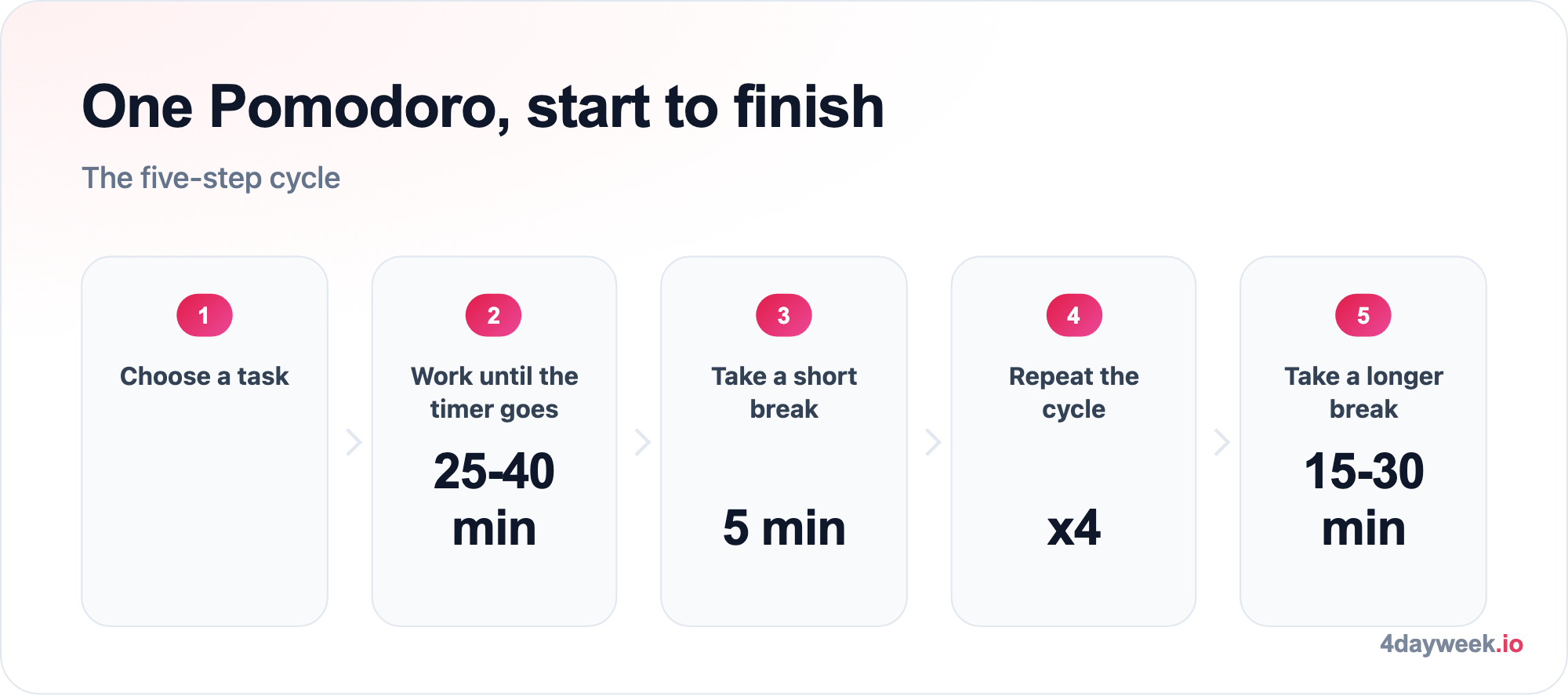
The Pomodoro Technique is incredibly simple, which is in-part why it has become so popular among students and professionals as a productivity booster. To use the Pomodoro Technique, you need to:
-
Choose a task to work on
-
Set a timer for 25-40 minutes and work on the task until the timer goes off
-
Take a short, 5-minute break
-
Repeat the process four times
-
Take a longer, 15-30 minute break
When you're finished with this five-step cycle, you've completed one Pomodoro—or Pom for short. Now, you can either start a new Pom focusing on a different task or continue where you left off with the previous task.
Why Is the Pomodoro Technique Effective?
When Francesco Cirillo started using the Pomodoro Technique as a university student, there wasn't any research to inform his work-break cycle. He landed on the structure after some good old trial and error.
Now that the Pomodoro Technique has become popular, research supporting the Pomodoro Technique's effectiveness as a productivity booster is starting to surface.
In a 2016 article, Larry Hoover identified four reasons why the Pomodoro Technique is effective:
-
It limits the amount of time the brain has to focus.
-
It demolishes the tendency to procrastinate.
-
It reduces distraction born of multitasking.
-
It pushes the individual toward completing tasks rather than just working on them.
Let's look at each of these reasons in a bit more depth to see what we can learn about optimizing productivity!
1) Limiting Time Spent Focusing
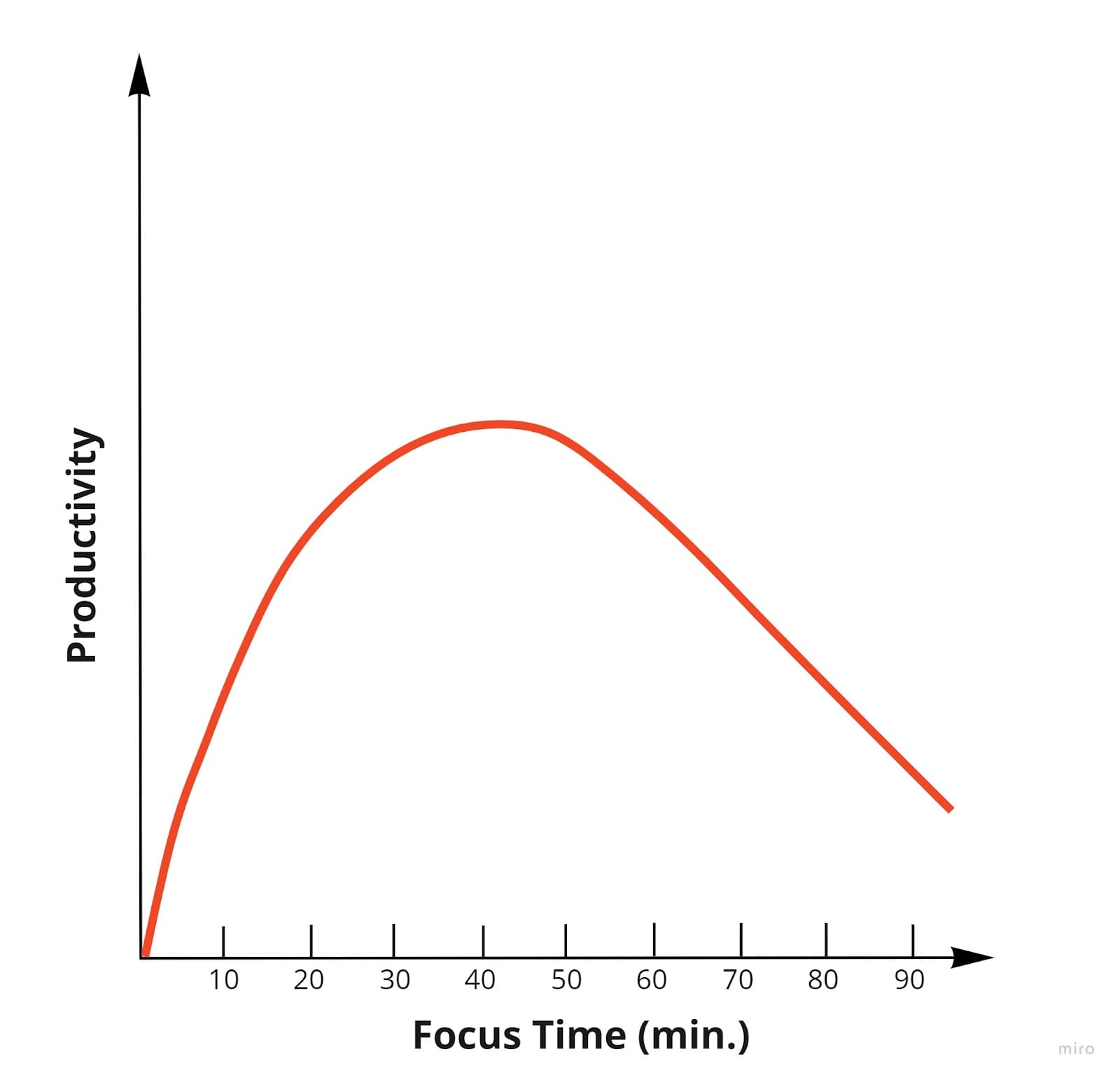
The human brain isn't a bottomless well of focused productivity—far from it. Some studies estimate that the maximum amount of time most people can focus on a task without getting distracted is 20-90 minutes at one time and 4-5 hours over the course of the day.
As an aside, that's one of many reasons why—contrary to popular belief—switching to a 4-day workweek doesn't negatively impact productivity!
Anyway, the Pomodoro Technique's 25-40 minutes of focus happens to fall within the range of time that the average person will be able to give a task their full attention. As a result, the breaks come at the perfect times to reset the brain's ability to focus!
2) Disincentivizing Procrastination
Procrastination is the tendency to put off tasks that we don't want to do. It's incredibly common—a 2019 study found that 88% of employees reported procrastinating on their responsibilities at least some time.
Work-Life Balance Jobs with Genuinely Reduced Hours
Save one to come back to it — it's free.

There are all sorts of reasons why people procrastinate, but one of the most common is what psychologists call the “analysis paralysis”. Analysis paralysis is a state of mind in which we become so bogged down in the details of our workload that we can't bring ourselves to start working on it.
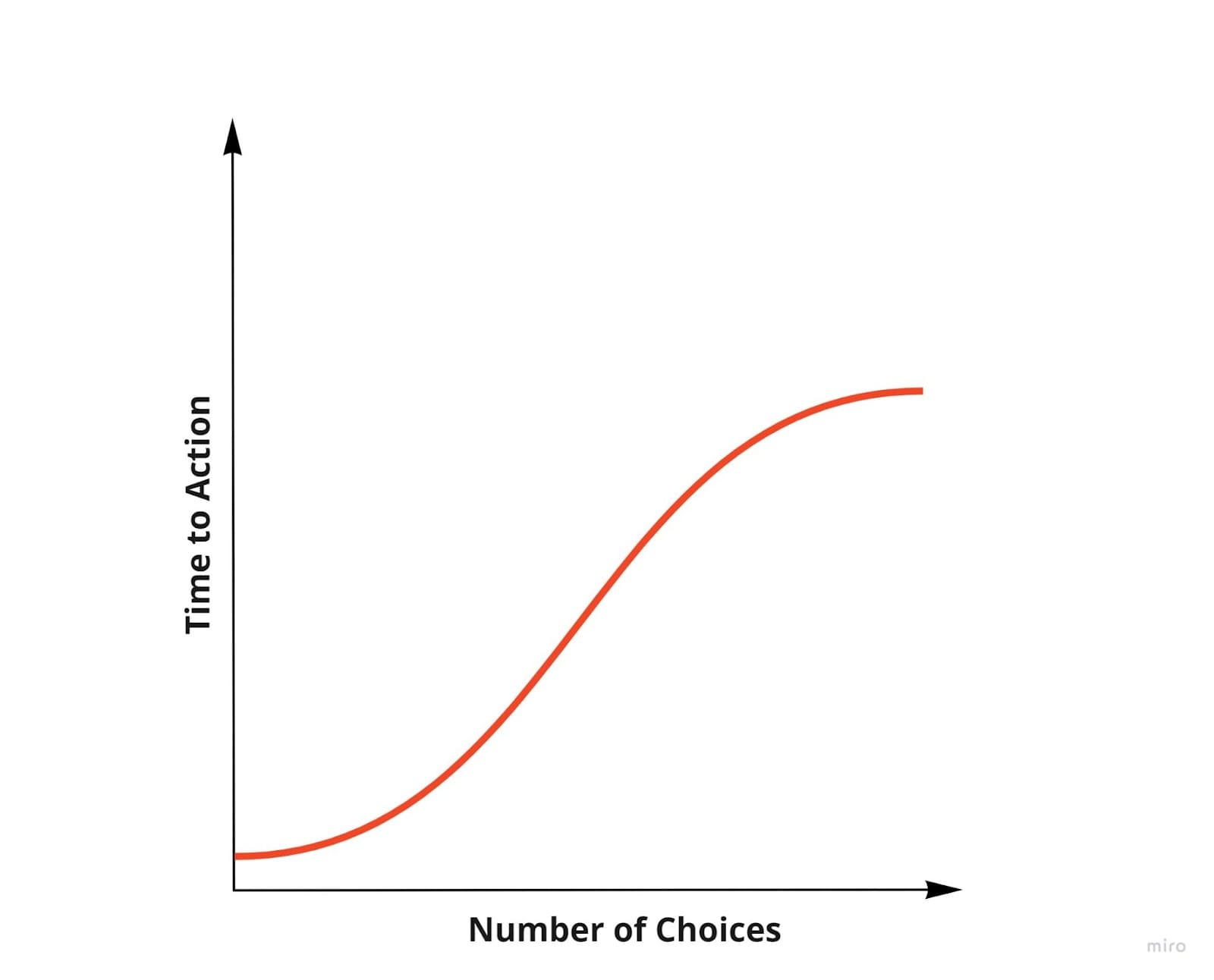
The Pomodoro Technique can help us avoid falling into analysis paralysis by breaking down tasks into smaller, more manageable chunks. When we're only responsible for completing one Pomodoro at a time, it's much easier to get started!
3) Reducing Distraction from Multitasking
In today's world, it's easier than ever to get distracted. With constant notifications and the always-on nature of the internet, it's hard to resist the urge to check our phones or email every few minutes.
This constant multitasking takes a toll on our productivity. Studies have shown that even “light” multitaskers (those who only occasionally check their email while working on something else) take 40% longer to complete tasks and make 33% more errors than those who don't multitask at all.
The Pomodoro Technique helps us to avoid the productivity-sapping effects of multitasking by encouraging us to focus on one task at a time. When we know that we only have to work on a task for 25 minutes, it's much easier to resist the urge to check our email or scroll through social media. As a result, we're able to give our full attention to the task at hand!
4) Completing Tasks Rather Than Working on Them
One of the most common productivity pitfalls is what's known as the “open-loop” problem. The open-loop problem occurs when we start working on a task but don't finish it, resulting in a lot of “unfinished business” that weighs on our minds and saps our productivity.
For example, let's say you're working on a report for work. You start writing, but after a few minutes you get an email from your boss asking you to do something else. You stop working on the report and start working on the new task. A few minutes later, you get another email, and then a phone call, and before you know it, an hour has passed, and you still haven't finished the report.
The Pomodoro Technique helps us to avoid the open-loop problem by encouraging us to work on tasks for short, focused periods of time. When we know that we only have to work on a task for 25 minutes, we're much more likely to finish it rather than getting sidetracked by other things. As a result, we can check tasks off our to-do lists and finally achieve that sense of accomplishment!
What Can the Pomodoro Technique Teaches Us About Workplace Productivity?
At 4 Day Week, we believe that workplaces should be designed around the needs of employees, not the other way around. The Pomodoro Technique (and the research backing it up) teaches clearly shows that workplace productivity has limits determined by the human brain's ability to focus.
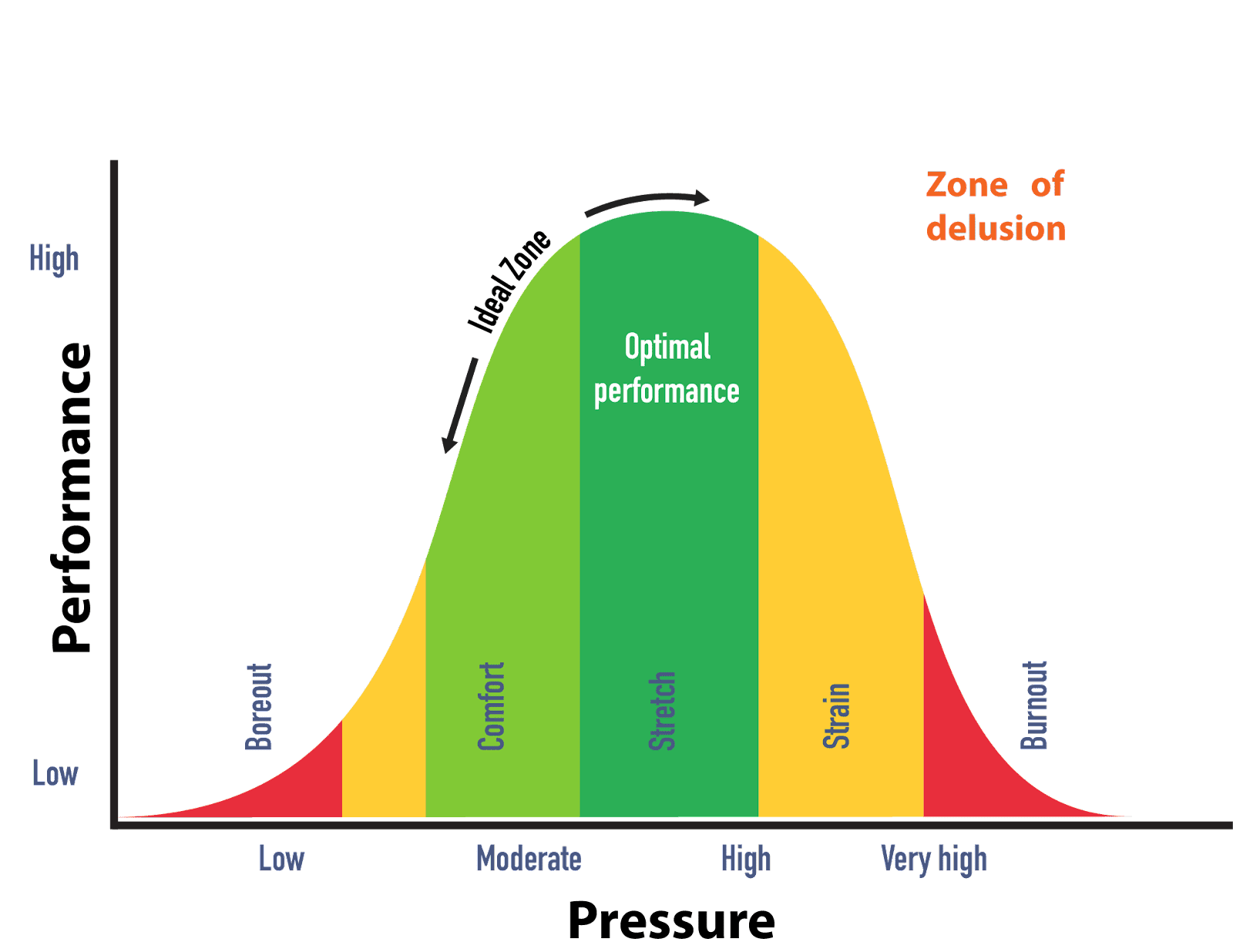
Too little work and your productivity isn't optimized. Too much work and the same is true. Unfortunately, the workplace cultures that exceed the optimal amount of work are the norm in our society. The standard 9-5 schedule exceeds the maximum amount of time that employees can focus in a day by 3-4 hours.
But all is not lost! More and more companies are making the switch to alternative working schedules like 4-day weeks and work from home that respect the limits of employee productivity.
Final Thoughts
The Pomodoro Technique is a simple yet effective productivity tool that can help us to avoid the pitfalls of multitasking, procrastination, and the open-loop problem.
By breaking down tasks into smaller, more manageable chunks and encouraging us to focus on one task at a time, the Pomodoro Technique can help us to boost our productivity and achieve our goals!
Want to know what else can boost your productivity? Landing a job at a 4-day workweek company! To browse opportunities from around the world, check out 4 Day Week's job board.




Get 4-day week jobs in your inbox
Create a free account to receive curated opportunities weekly.
Sign up for freeFree forever. No spam, unsubscribe anytime.